 Retro Replay Retro Replay gaming reviews, news, emulation, geek stuff and more!




Retro Replay Review
Gameplay
Rome: Total War masterfully combines a turn-based grand strategy layer with real-time tactical battles, offering a two-fold experience that few strategy games match. On the campaign map, you guide one of three Roman families—Julii, Scipii, or Brutii—across Europe, North Africa, and the Middle East, making decisions on recruitment, diplomacy, and economic development. Every decision you make, from assigning a newly born scion to govern a city to funding spies in enemy territory, ripples across centuries of play.
(HEY YOU!! We hope you enjoy! We try not to run ads. So basically, this is a very expensive hobby running this site. Please consider joining us for updates, forums, and more. Network w/ us to make some cash or friends while retro gaming, and you can win some free retro games for posting. Okay, carry on 👍)
In the turn-based mode, province management is rich and nuanced: you build temples to boost public order, construct barracks and archery ranges to diversify your army roster, and juggle population health against tax income. Family members grow over time, acquiring traits—such as “Coward” or “Honorable”—that influence their effectiveness in battle or as governors. This dynastic element injects emergent storytelling into the grand campaign: a beloved general might inspire troops one turn and lower morale the next if his reputation falters.
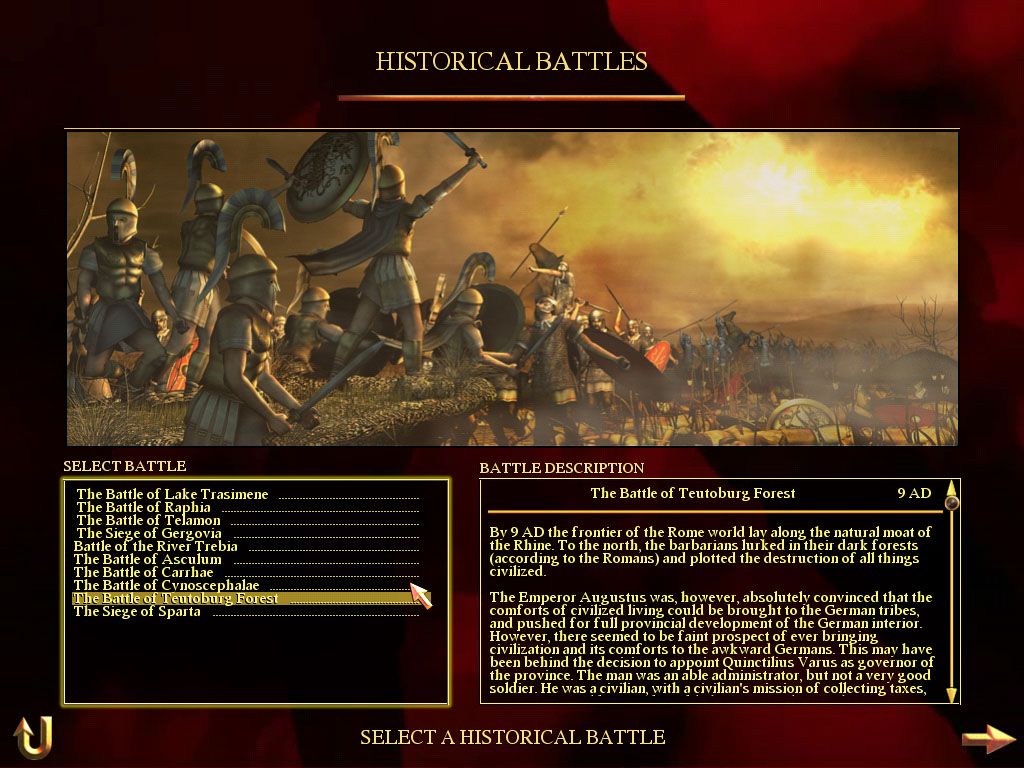
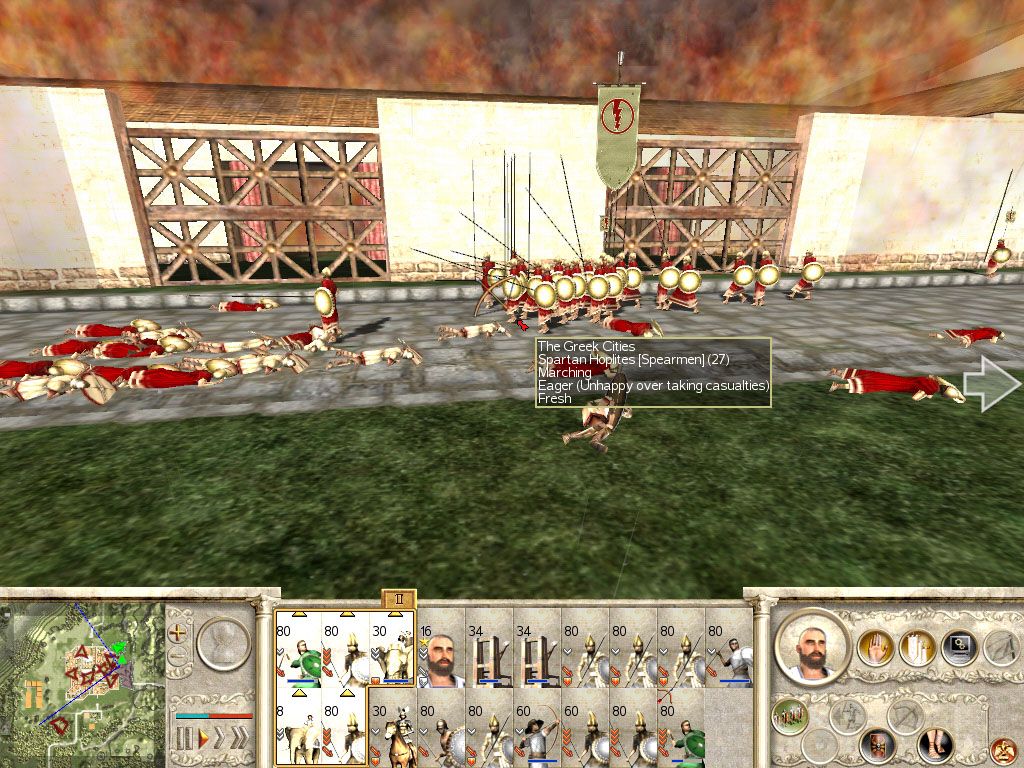
When armies clash, the game shifts into its 3D real-time battle mode, where tactical acumen truly shines. You can deploy heavy infantry in shield walls, send archers to pepper foes from a distance, or use cavalry to flank and rout. Formation commands, terrain advantage, and unit morale all factor into the outcome, rewarding careful planning and quick reactions. Pre-set historical battles provide quick skirmishes, while the campaign’s evolving frontiers and growing roster of playable factions ensure replayability over countless hours.
Graphics
Though originally released in 2004, Rome: Total War’s graphical presentation still holds up as a testament to its era. Unit models are distinct—Roman legions with their gleaming armor contrast nicely against Carthaginian warbands or Greek hoplites. Battlefields come alive with thousands of troops maneuvering in formation, raising spears and unfurling standards, and environmental details such as rivers, forests, and hills affect tactics as well as aesthetics.
The campaign map employs a stylized, painted look, clearly delineating provinces, roads, and settlement icons. While not photo-realistic, its clean interface lets you zoom out for a strategic overview or zoom in to appreciate city improvements and army positions. Menus for diplomacy, recruitment, and family trees are arranged logically, ensuring you spend more time planning conquests and less time hunting for the right button.
Modern mods have breathed new life into the visuals—HD textures, enhanced unit animations, and overhauled lighting systems elevate the original engine to near-contemporary standards. Even without community enhancements, the game’s design choices—distinctive unit silhouettes, clear UI cues, and evocative map palettes—make it both functional and atmospheric. It strikes a balance between performance and immersion that few legacy titles achieve.
Story
Rather than a fixed narrative, Rome: Total War delivers an emergent story defined by your ambitions and the ebb and flow of Roman politics. Selecting the Julii, Scipii, or Brutii sets you on different initial paths—whether you push against Gallic chieftains in the north, Carthaginian forces in the south, or Macedonian phalanxes to the east. As your power grows, so does your tension with the Senate and rival Roman families, leading to civil wars or uneasy alliances that you orchestrate.
The historical backdrop of 370 BC through the rise of the Roman Republic lends authenticity to every campaign. Sieges of Syracuse, pitched battles against Hannibal’s successors, and skirmishes along the Danube frontier feel grounded in real-world events. While individual characters remain creations of the game’s trait and retinue systems, they often develop arcs—heroes emerge, villains betray, and entire provinces can swing from loyal to rebel depending on your governance and military might.
Supplementary scripted events and family interactions enrich the world further. A general saved from a perilous fight may earn loyalty-boosting traits, while loyal governors can stave off uprisings in recently conquered cities. This dynamic interplay between personal ambition, empire management, and battlefield triumphs creates a cohesive narrative tapestry that unfolds differently with each playthrough.
Overall Experience
Rome: Total War remains a benchmark in strategy gaming, offering depth without sacrificing accessibility. Its layered campaign provides hours of empire building, political maneuvering, and territorial conquest, while the real-time battles deliver visceral satisfaction when legions clash on dusty plains or narrow passes. Whether you’re forging an unstoppable Julio-Scipionic alliance or carving out a Brutian legacy in the east, the sense of accomplishment is consistently rewarding.
The learning curve can be steep—mastering province economies, familial politics, and tactical formations takes time—but the payoff is immense for those who invest themselves. AI opponents sometimes exhibit quirks—occasional pathfinding hiccups or uneven strategic aggression—but these flaws rarely diminish the grand sweep of your imperial ambitions. Community mods further alleviate many of these issues, ensuring that the game still evolves with its fanbase.
For newcomers to the Total War series and veterans alike, Rome: Total War offers a timeless journey through antiquity’s most storied conflicts. Its blend of high-level strategy and ground-level tactics, combined with emergent storytelling and robust mod support, makes it a must-play for any strategy enthusiast. Prepare to spend hundreds of hours crafting your own Roman saga, from humble beginnings in Italy to domination of the known world.


Reviews
There are no reviews yet.