 Retro Replay Retro Gaming History, Reviews & Emulation


Retro Replay Review
Gameplay
Computer Acquire is built around a wonderfully simple temptation: buy into a hotel chain while its shares are cheap, then hope your stake becomes valuable before someone else turns the board in a different direction. You begin with $6,000, but that starting cash disappears quickly once you start trying to establish controlling interests. The first hour is about learning not to treat every bargain as a bargain. A low price is only useful if that chain has a future.
The turn-based pace suits the subject. You have time to consider whether expanding a chain is worth the risk, whether a merger will reward your holdings, and whether you are committing too much money to one position. Hotel chains span seven classes, from moderate to prestigious, which gives the board-game economy a useful sense of scale. The strongest moments come when a careful early investment suddenly matters because chains are joining together and ownership is being tested.
Luck is deliberately part of the equation, so a smart plan will not always survive the market. That can sting when you have read the situation well and the board does not cooperate, but it also stops each match from feeling solved. The game generally ends when a chain reaches 41 hotels, creating a clear race to make the market decisive before rivals can turn their own shares into the winning fortune.
You can face computer competition alongside as many as six other participants, and the five skill levels make it easier to start cautiously before taking on sharper opposition. There is also a computer-versus-computer observer option, which is a neat way to watch the game’s shifting investments and mergers play out. Give it a chance if you enjoy deliberate board-game strategy and can accept that patience, timing, and a little market fortune matter as much as a clever purchase.
Graphics
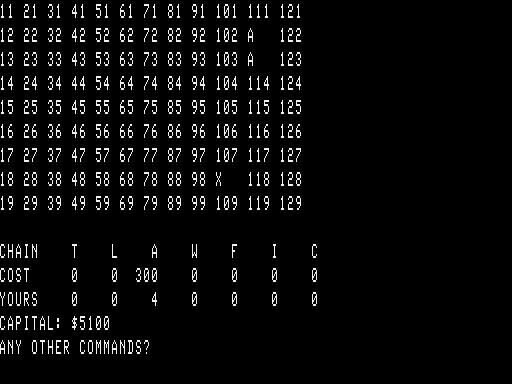
This is a text-based, spreadsheet-style game, so its look is centered on the information you need to make financial decisions rather than decorative scenery. Hotel chains, cash, shares, and changing market positions are the focus; the appeal is in watching the numbers behind your investments change as the board develops.
Story
There is no character-driven tale pulling you from match to match. Instead, each game creates its own small business drama: an inexpensive share becomes important, a growing hotel chain attracts attention, and a merger can redraw everyone’s plans.
Your role is defined by ambition rather than a scripted persona. You are trying to finish as the wealthiest player, and every decision feeds that single goal. That spare setup fits a board-game adaptation, because it keeps the attention on rival investors and the consequences of their holdings.
The closest thing to a climax is the late-game rush toward a 41-hotel chain. By then, earlier purchases have become a record of your judgment: which chains you backed, when you expanded, and whether you held enough control when it counted. It is an emergent story, not a written one, but finance-minded strategy fans can get plenty invested in it.
Overall Experience
Computer Acquire understands why hotel-stock board games work: they turn dry-looking arithmetic into rivalry. Buying low is easy to understand; knowing which cheap share will matter after the next merger is the real game. When your position pays off, the satisfaction comes from feeling that you spotted an opportunity before the rest of the table did.
Its limitations are also inseparable from that design. The pace is measured, the subject is narrowly focused, and market luck can frustrate anyone expecting strategy alone to decide every contest. If you want constant action, expressive characters, or a dramatic campaign, the game will feel remote. It asks you to care about ownership, timing, and the wealth total.
For fans of classic board games and economical strategy, that focus is a strength rather than a weakness. The escalating chain growth, share trading, and merger decisions give you enough to think about without burying the central objective. Start at a lower skill level, learn how quickly a promising investment can change, then move upward once you can recognize when control is worth paying for.
Ultimately, this is a solid fit when you want a quiet, competitive game of financial brinkmanship. Its payoff is not spectacle; it is the moment you realize a modest early purchase has put you in position to out-earn the table. That remains a satisfying kind of victory.



Reviews
There are no reviews yet.