 Retro Replay Retro Gaming History, Reviews & Emulation
Retro Replay Review
Gameplay
The first few turns invite the kind of confidence that gets commanders in trouble. A huge front lies ahead, your formations are measured in divisions and corps rather than individual squads, and each turn covers a week. That scale makes a single decision carry real weight: a push toward a city is not just an attack, but a commitment to keeping an entire line supplied and capable of moving again.
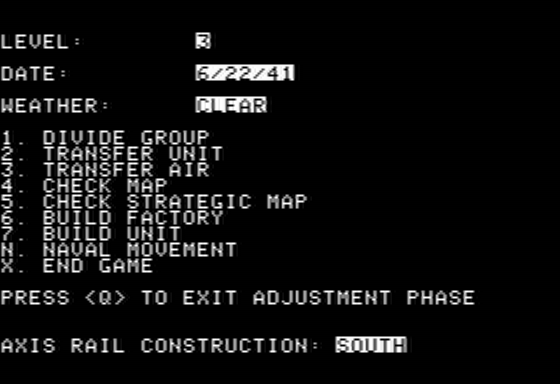
War in Russia earns its reputation through the way its pressures overlap. Experience, fatigue, supply, harsh weather, and rugged terrain all matter, so there is rarely a clean “best” move. A battered unit needs replacements, new infantry and armor can be built in cities, and both sides live with asymmetric headaches: Soviet Lend-Lease support arrives while German supply lines face partisan sabotage. You need to think beyond the next hex, because a local success can leave the wider front weak.
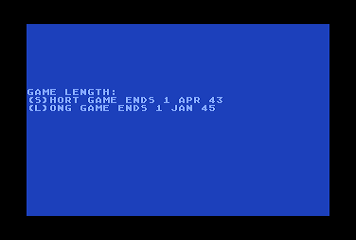
The campaign choices are well judged. Operation Barbarossa, Fall Blau, and Operation Zitadelle offer different points in the war rather than one giant scenario with a different starting date pasted on. Victory points give you a strategic yardstick, while the possibility of an earlier finish through key-city captures gives bold plans a concrete target. That said, this is firmly a deliberate wargame, not a quick tactical fix. The satisfaction comes when a cautious plan keeps working over several weekly turns.
Single-player is restricted to the German side, which narrows the solo package. Still, it is not a trivial consolation: commanding Germany puts you directly in the game’s most demanding balancing act, where territorial ambition repeatedly runs into supply and attrition. Two-player is where the full Axis-versus-Soviets contest naturally has the most bite.
Graphics
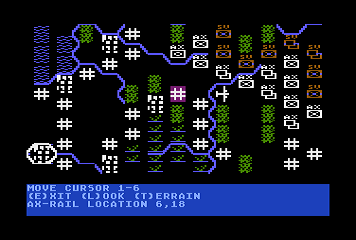
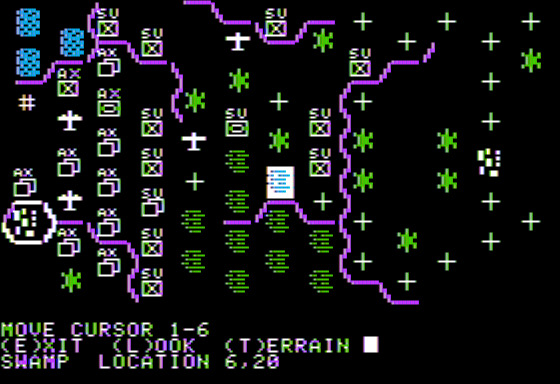
The action is viewed from above on a hex-grid map, with units representing large formations spread across the Eastern Front. It is a functional board-wargame view: you spend your attention on positions, distances, and the shape of the front rather than on battlefield drama.
Story
There is no authored character tale pulling you through the war. Its story is the historical framework of the Eastern Front, told through three campaigns: the 1941 invasion in Operation Barbarossa, the 1942 Fall Blau campaign, and 1943’s Operation Zitadelle.
That leaves the drama in your decisions. A city becomes important because it can decide the game early, not because a cutscene tells you to care. The stronger moments come from recognizing that a promising advance has become costly, then deciding whether to feed it replacements and supply or accept a slower, safer line.
The historical asymmetry gives the conflict some personality even without scripted narrative. Soviet forces benefit from Lend-Lease support, while German operations must contend with partisan disruption to supply. These are not decorative labels; they help make each side’s wider situation feel distinct when you are trying to hold momentum across such a large map.
Overall Experience
War in Russia is a demanding operational wargame with a strong sense of consequence. It does not ask you to win isolated fights; it asks you to manage an entire front through time, terrain, weather, wear, and logistics. When that starts to click, the game’s plain turn structure becomes surprisingly tense.
Frustration sets in if you want fast feedback or if you treat the opening as a race to grab every available hex. This is a game that makes overreach hurt, and its scale means repairing a bad position can take many turns. But that severity is also why a sustained offensive or a carefully stabilized front feels earned rather than handed to you.
Give it a chance if you enjoy historical strategy games that reward map reading, restraint, and long-term planning. The limited solo side and austere map-based look make it a narrower recommendation than a more immediately friendly strategy game, but its campaign structure and uncompromising logistical pressure give it real staying power for dedicated wargamers.

Reviews
There are no reviews yet.