 Retro Replay Retro Gaming History, Reviews & Emulation
Retro Replay Review
Gameplay
Denjinmakai has the immediate, uncomplicated pull you want from a scrolling brawler. You are sent down a straight route through a future city, enemies arrive in groups, and your answer is a fist, a throw, or whatever move puts them on the floor fastest. The first stretch does not waste time pretending it is something more elaborate. It gets you into fights quickly, then asks whether you can handle a growing pile of goons without losing control of the screen.
What lifts it above pure mash-first design is the defensive and movement toolkit. Every fighter can attack, jump, block, throw, and trigger a special by pressing attack and jump together. Crucially, specials consume a meter that recharges rather than shaving away health. That makes them feel like tools you should actively use when a crowd closes in, not panic buttons you regret touching. Blocking also matters once tougher enemies begin mixing projectiles into their approach.
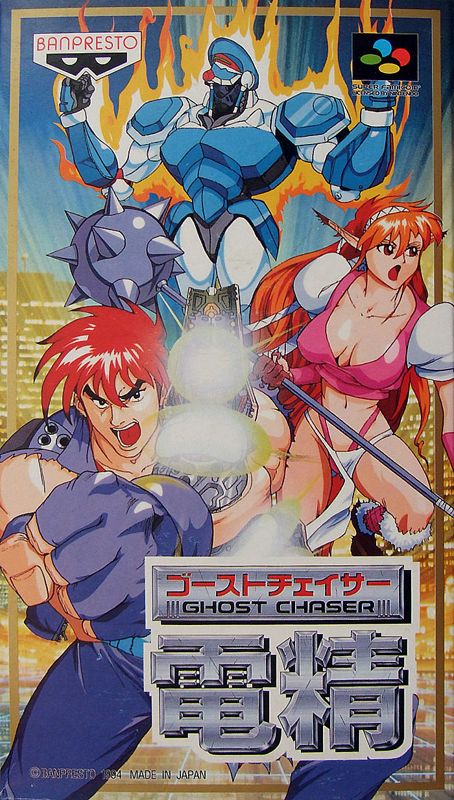
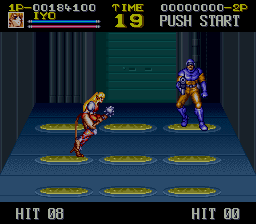
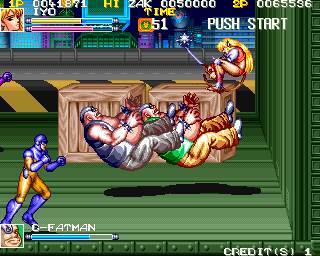
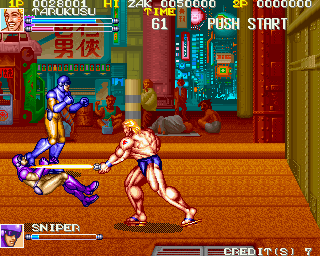
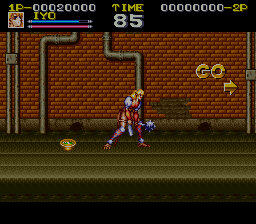
The characters give repeat runs a reason to exist. Makai brings fireballs and a midair flying kick, Iyo can triangle jump and use a spinning piledriver, and Belva has a double jump plus a grapple special. In the arcade version, Tarukusu, Zeldia, and Kurokishi expand the lineup further, along with the Highway stage. Two-player teams can also use a team-up special, a welcome bit of shared crowd control when the action gets busy.
Frustration can set in when the enemy roster starts revealing its basic pattern: weaker opponents rush, stronger ones fire a projectile and then rush too. The bosses help break that rhythm, since each has both short- and long-range attacks, but you are still playing a focused arcade-style brawler rather than a game built around constant surprises. Learn when to block, spend that regenerating meter freely, and choose a fighter whose mobility suits you; the combat is much better when you meet it on those terms.
Graphics
The action is shown from the expected side-view perspective, with a sci-fi city route populated by armored soldiers, lizard men, and robots. The cast is easy to tell apart in motion: Makai is the martial artist, Iyo fights with a mace, and Belva is a robot, while the arcade roster adds a wrestler, a beastman, and purple-haired Kurokishi.
Story
The story is deliberately thin. A terrorist organization threatens a city twenty minutes into the future, and your job is to punch through its forces before the place is lost. It is the sort of premise that exists to give the next wave of enemies a destination, and Denjinmakai is honest about that.
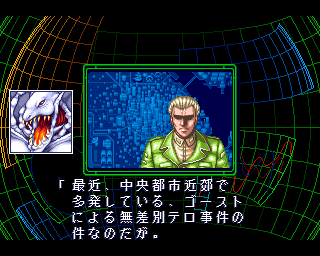
Your boss delivers orders before stages, and there are brief exchanges with bosses or the occasional NPC. These moments add a little connective tissue without slowing the pace or demanding that you track a complicated plot. If you like brawlers that keep dialogue out of the way, that restraint is a strength.
Do not come here expecting the narrative to deepen the conflict or change how you play. The real personality comes from the fighters and their move sets, not from the mission briefings. The city-saving hook is serviceable, then quickly steps aside for the important business of clearing the street.
Overall Experience
Denjinmakai is a solid choice when you want a brawler with more than a basic attack string but no interest in overcomplicating itself. Its best idea is simple and effective: give players a rechargeable special meter, then let them use it without the familiar punishment of sacrificing health. Combined with blocking, throws, and distinct character options, that makes the moment-to-moment fighting more deliberate than its straightforward premise suggests.
The arcade version is the fuller package because the additional three characters and Highway stage add welcome variety. The SNES version still has three notably different fighters, though, and Makai, Iyo, and Belva are not interchangeable skins. Try Iyo if you value her triangle jump and piledriver, Belva if double-jump mobility sounds useful, or Makai for fireballs and aerial pressure.
Its limits are also clear. The campaign follows a long, direct line of fights, much of the opposition works from a familiar rush-or-shoot-then-rush hierarchy, and the story barely pauses the action. Yet that concentration works in its favor if you are after a direct, replayable beat-’em-up. Denjinmakai is worth your time for its character-specific tools and forgiving-but-tactical special system, especially with a second player alongside you.


Reviews
There are no reviews yet.