 Retro Replay Retro Gaming History, Reviews & Emulation

Retro Replay Review
Gameplay
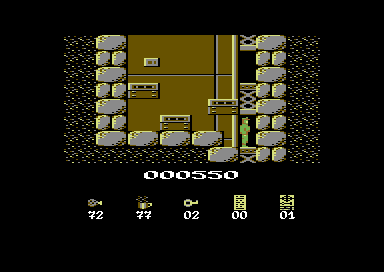
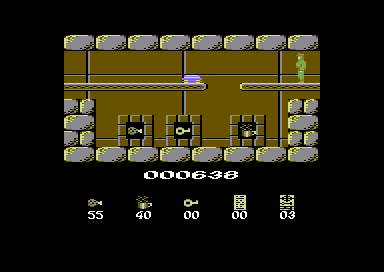
The first few screens of Hans Kloss pull you in because they ask for more than clean jumps. You are trying to penetrate a base, collect plan fragments, locate keys, and work out how its interconnected rooms fit together. Elevators add vertical routes to the usual platform hopping, while locked doors make each key feel like a small but consequential resource.
Then the game’s cruelty becomes impossible to ignore. Keys are single-use, and opening the wrong door or falling through the wrong hole can make completion impossible. That is not merely difficult platforming; it is a maze built around permanent mistakes. If you enjoy taking notes, replaying from the beginning, and gradually building a mental map, that tension can become the point. If you expect a game to let you recover from a wrong turn, it will feel merciless.
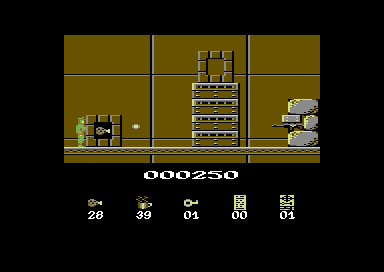
The paired hunger and thirst meters make every second matter. Both steadily decline, pickups are needed to restore them, and tracked mines can shred both meters when they collide with you. Sensors are another nasty obstacle: walk into one and its defense turret ends the attempt, unless you have found a switch to temporarily disable it. The result is a game where exploration never relaxes; even a safe-looking route has a timer ticking underneath it.
There is satisfaction in learning how to turn that pressure into a route, but Hans Kloss asks for patience before it offers much of that satisfaction. It is less a breezy action game than a trial-and-error infiltration puzzle wearing platformer clothes. Go in ready to restart and study the layout, not to improvise your way through on a first pass.
Graphics
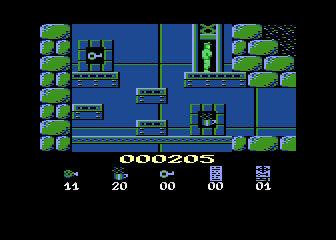
The action is viewed from the side across fixed, flip-screen sections of the base. Platforms, elevators, doors, holes, sensors, pickups, and the small tracked mines all serve the immediate business of plotting your next move through a compact 8-bit maze.
Story
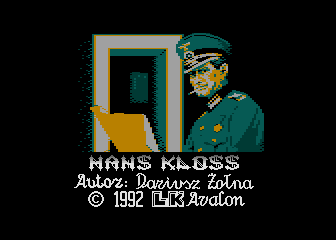
Hans Kloss gives its action a clear espionage frame: an agent enters a Nazi base to recover several pieces of secret plans. That objective is simple, but it suits the game’s locked doors, dangerous corridors, and incremental exploration well. Each fragment is a tangible reason to keep pushing deeper into the base.
The connection to the Polish television series Hans Kloss supplies the protagonist and wartime spy premise, though the game’s real storytelling comes from pressure rather than extended drama. You are not lingering over plot developments; you are trying to preserve enough resources to reach the next useful room.
That stripped-down approach works better than a more elaborate narrative would have here. The mission stays understandable, and the hostile base does the rest. Still, anyone arriving chiefly for a richly told spy story may find the setting more motivating than expressive.
Overall Experience
Hans Kloss is an unapologetically punishing piece of 8-bit design. Its best moments arrive when a confusing cluster of doors, lifts, and drops finally becomes a route you understand, and when a previously fatal screen turns manageable because you know where the danger sits. That feeling is earned through repetition, sometimes more repetition than the game can comfortably justify.
The hunger and thirst systems give it a distinctive edge, but they also intensify its most frustrating trait: failure can come from accumulated logistical errors, not just a missed jump. Mines and turret sensors ensure that even experienced runs remain tense, yet the possibility of unknowingly making the whole run unwinnable can sour that tension.
Give it a chance if you have a real appetite for severe maze-platformers and enjoy extracting order from a hostile map. For everyone else, Hans Kloss is more interesting as a determinedly old-school challenge than as a relaxing action game. Its payoff is real, but it is reserved for the stubborn.


Reviews
There are no reviews yet.