 Retro Replay Retro Gaming History, Reviews & Emulation



Retro Replay Review
Gameplay
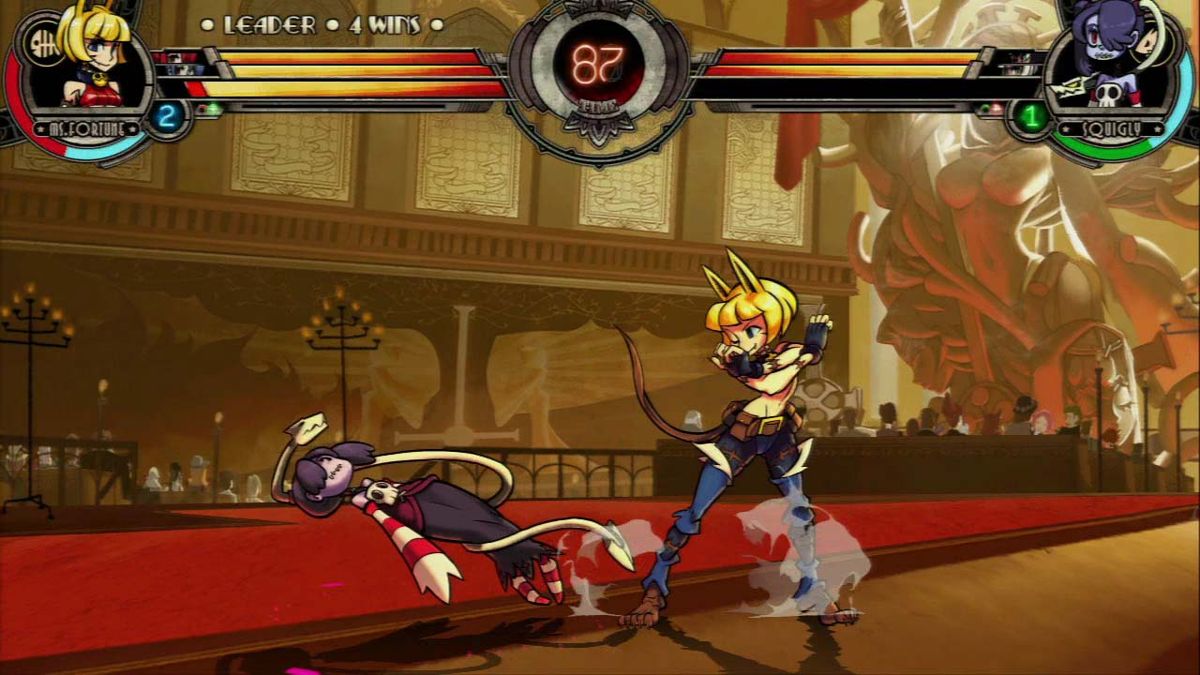
Skullgirls gets to its point quickly. Before a match, you choose the shape of your team: one powerful fighter, two fighters splitting the health bar in half, or three splitting it into thirds. It is a strong choice because it changes how you approach the whole game. A solo pick asks you to commit to one character and make that extra power count; larger teams let you spread responsibility across more of the roster, but demand that you protect a smaller health pool for each fighter.
That setup gives even a modest eight-character cast more room to breathe than the number first suggests. You are not merely picking a favorite; you are deciding how much variety and flexibility you want in a match. Two- and three-person teams naturally make bouts feel less settled, since a loss does not necessarily end the round, while solo fights put all the pressure on your individual selection. It is an elegantly direct way to make team composition matter without burying you under pre-match fuss.
There is plenty to do around the core fights. Random arcade mode is good for a quick run, while story modes offer a reason to spend time with individual fighters. Local play and tournament play make it easy to turn the game into a competitive group activity, and online ranked quick play and lobby play give you routes to more serious opposition. If you want to improve, ranked matches are the obvious test; if you would rather play a longer, more social set, lobbies are the better fit.
The limitation is roster scale. Eight fighters can feel focused rather than expansive, depending on how much character variety you need from a fighting game. Still, Skullgirls wisely puts its biggest decision in your hands before the first round starts, and that means the same cast can support several different match styles. It rewards you for experimenting with team sizes instead of treating the selection screen as a formality.
Graphics
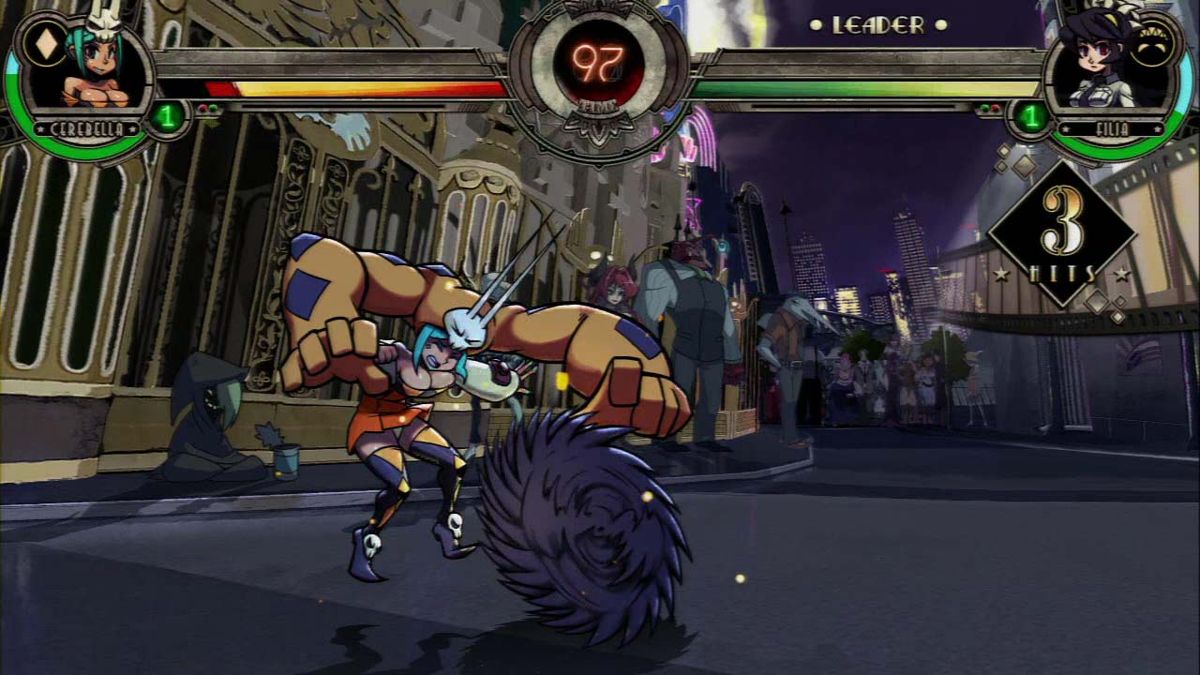
Skullgirls is a side-view 2D fighter with an anime and manga-inspired look. The action is built for the classic face-to-face fighting-game view, keeping both combatants in clear focus as the match unfolds.

Story
Story modes are present for the roster, giving you a character-specific alternative to jumping straight into arcade or versus play. That matters in a genre where many sessions are purely competitive: you can spend time with a chosen fighter without needing another person or an online match.
The supplied structure points to story as a companion to the combat, not the main reason to buy in. If you are hoping for a fighting game that lets you sample its cast through dedicated modes, Skullgirls meets that need. If your priority is a sweeping narrative campaign, the competitive systems remain the center of gravity.
Arcade mode also offers a more immediate solo route, with its random framing encouraging short, repeatable sessions. Between arcade and story modes, there is enough single-player material to learn the cast and test team ideas before taking them into local or online matches.
Overall Experience
Skullgirls is at its best when you treat team size as part of your strategy rather than a novelty. Start with one fighter if you want a clean, concentrated introduction, then try two or three once you want to explore more combinations. That progression makes the first hour approachable and gives later sessions a practical reason to revisit fighters you may have ignored.
You should give it a chance if you enjoy 2D fighters that turn roster selection into a meaningful risk-reward decision. It also fits nicely whether your preferred setting is a couch session, a tournament bracket, or online competition through ranked and lobby play. For additional background on the game, its Skullgirls history and releases are worth a look.
Its eight-fighter roster will not satisfy everyone, particularly if sheer character count is your measure of a fighting game’s longevity. But Skullgirls extracts more variety from that cast than you might expect through its one-, two-, and three-fighter choices. The payoff is a focused competitive game that gives you a real say in how demanding, flexible, and hectic each match becomes.

Reviews
There are no reviews yet.