 Retro Replay Retro Gaming History, Reviews & Emulation
Retro Replay Review
Gameplay
Checker starts with an immediately understandable goal: clear a skyscraper of mystical stones. The twist is that you cannot simply walk into every room and start detonating things. You need a magnetic card to gain access, then must locate bombs and use them to destroy the stones. That sequence gives each floor a small, practical puzzle to solve rather than making the job feel like routine collection.
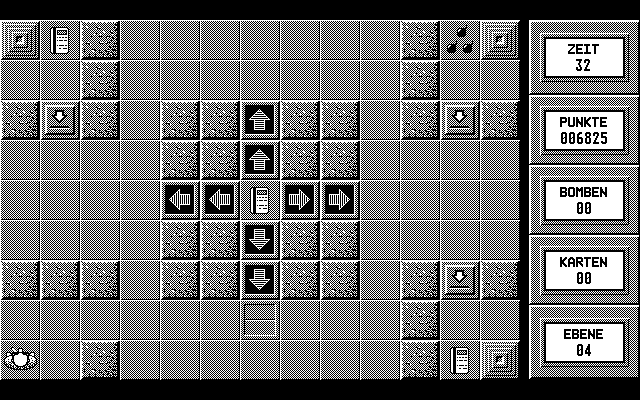
The fixed or flip-screen structure should make every new room matter. You are not just moving toward an exit; you are judging where danger sits, whether a route is safe, and how to get to the useful items without getting caught out. The game’s top-down viewpoint is a natural fit for that kind of spatial problem solving, where a bad decision can come from taking the obvious route too quickly.
Its main strength is that the objective has built-in friction. Access cards, bombs, stones, and hazards all pull your attention in different directions, so progress depends on staying deliberate. If you like old-school puzzles that ask you to read a room before committing yourself, Checker has a solid core. If you need constant novelty or a broad adventure around the puzzle action, its single-minded skyscraper clean-up premise may feel narrow.
Graphics
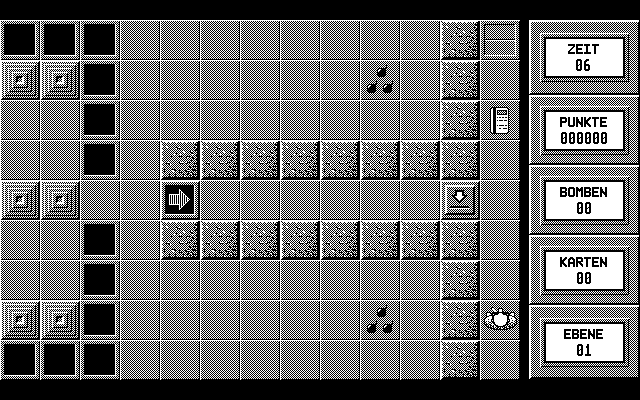
Checker uses a top-down view and fixed or flip-screen rooms, keeping the focus on the immediate layout around your character. The skyscraper setting, collectible bombs, mystical stones, and obstacles are the key visual elements, and the room-by-room framing suits a game built around carefully navigating contained spaces.
Story
There is not much narrative clutter between you and the puzzle. You are cleaning a skyscraper contaminated by mystical stones, gaining entry to rooms with a magnetic card, and collecting bombs to remove the problem.
That premise is strange enough to be memorable. “Skyscraper cleaner” and “mystical stones” are an odd pairing, but it gives the otherwise abstract task a touch of personality. More importantly, the story feeds directly into the goal: enter rooms, find the tools, and clear the floor.
Do not come to Checker for character drama or a sprawling mystery. The story is a clean excuse for a sequence of obstacle-filled rooms, and it works best when you treat it as flavor around the puzzle rather than the reason to play.
Overall Experience
Checker sounds most rewarding when you are in the mood for a concentrated, no-frills puzzle challenge. The first few rooms should establish its rhythm quickly, while the combination of restricted access, bombs, and hazards gives later progress a chance to feel earned rather than automatic.
Frustration is likely to come from the same thing that makes it interesting: hazards turn a straightforward errand into a careful route-planning exercise. That will be satisfying if you enjoy pausing to consider a room and learning through mistakes. It will be less inviting if you want a relaxed, forgiving puzzle game.
For Atari ST fans, Checker is worth a look as a focused piece of early-1990s puzzle design. It does not need a grander premise than its odd skyscraper clean-up mission. Its payoff is the satisfaction of turning a threatening room full of obstacles and stones into a cleared floor through careful movement and smart use of the tools you find.



Reviews
There are no reviews yet.