 Retro Replay Retro Replay gaming reviews, news, emulation, geek stuff and more!





Retro Replay Review
Gameplay
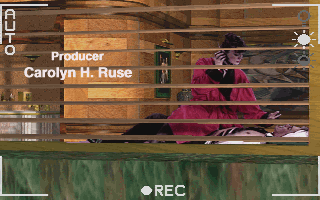
Voyeur’s core gameplay revolves around surveillance and deduction rather than direct action. Players step into the shoes of an anonymous investigator hired by a suspicious Hawke family member, tasked with unearthing Reed Hawke’s darkest secrets. The game unfolds across multiple rooms in the sprawling Hawke estate, each monitored by a network of interactive cameras. Switching between feeds at key moments is crucial: capturing the right conversation or illicit act triggers the next live-action scene, pushing the narrative forward.
(HEY YOU!! We hope you enjoy! We try not to run ads. So basically, this is a very expensive hobby running this site. Please consider joining us for updates, forums, and more. Network w/ us to make some cash or friends while retro gaming, and you can win some free retro games for posting. Okay, carry on 👍)
Unlike typical point-and-click adventures of its era, Voyeur introduces a time-based structure. The weekend of the announcement is broken into distinct time blocks, and failing to catch pivotal events within each window can lead to a dead end. This design injects palpable tension; you’re not just exploring—you’re racing against an invisible clock. The stakes feel real when you know that missing a single clue could mean failing your mission entirely.
Replays are highly encouraged, thanks to the game’s randomized informant mechanic. At the start of each new session, the identity of the family member who hired you changes. This shifts clues, alters which conversations are incriminating, and reorders certain events, vastly improving replay value. You’ll find that strategies must adapt when the puppet pulling your strings could be your uncle in one playthrough and your sister in the next.
Graphics
As an early foray into full-motion video (FMV) gaming, Voyeur’s graphical presentation feels dated by modern standards but remains impressive for its time. The game seamlessly integrates live-action footage with on-screen camera controls, giving a cinematic flair rarely seen in early ’90s CD-TV titles. While the resolution is limited and there’s a noticeable grain in darker scenes, the actors’ performances carry enough weight to keep you invested.
Camera transitions are generally smooth, though occasional loading pauses break immersion. The estate’s sets—luxurious living rooms, private studies, and dimly lit bedrooms—are well-dressed and believable, conveying the Hawkes’ wealth and secrecy. Costume and set design do a solid job of establishing character personalities: Reed Hawke’s sharply tailored suits contrast with his relatives’ more flamboyant or subdued attire, hinting at alliances and hidden grudges.
For all its novelty, the explicit nudity and sexual content are presented sparingly, woven into the plot instead of being gratuitous. Voyeur probably earned its reputation as the first interactive movie to feature such mature themes, but these sequences play a narrative role—often revealing blackmail material or emotional rifts—rather than serving as mere titillation.
Story
The narrative centers on Reed Hawke, a charismatic yet enigmatic CEO poised to launch a presidential campaign. To bolster his image, he gathers his extended family at a remote estate for a weekend announcement. Ostensibly supportive, each family member harbors private doubts and clandestine agendas. One relative, convinced of Reed’s corruption, hires you to expose the truth.
Story beats unfold through short FMV scenes triggered by your surveillance work. You’ll witness whispered conspiracies in hallways, clandestine trysts in bedrooms, and late-night phone calls hinting at illegal deals. The branching narrative ensures that no two playthroughs are identical: depending on who your informant is, different secrets come to light, and certain dialogues shift meaning. This variability keeps the suspense taut and encourages multiple investigations to see the full picture.
Despite its interactive format, the writing remains tight. Dialogue is sharp, often laced with subtext, and the actors deliver credible performances that heighten the tension. Reed Hawke himself is a compelling enigma—equal parts patriot and possible criminal mastermind. As revelations accumulate, the moral ambiguity of your mission comes into focus: are you serving justice or enabling political sabotage?
Overall Experience
Voyeur stands as a compelling relic of early FMV gaming, offering a unique blend of cinematic storytelling and interactive surveillance. Its greatest strength lies in the sense of agency it affords the player: you’re not wandering through static environments but actively manipulating cameras and timing your investigations. The looming threat of failure, underscored by the game’s time-sensitive design, creates genuine suspense.
That said, modern players should temper expectations regarding technical polish. The low-resolution video, occasional load times, and limited user interface reflect the era’s hardware constraints. However, if you approach Voyeur as a piece of interactive film history rather than a contemporary thriller, its storytelling ingenuity shines through. The randomized informant mechanic and branching scenes offer surprising depth that few FMV titles of the time could match.
For fans of mystery and espionage, Voyeur delivers an engrossing weekend of covert observation and detective work. Its mature themes and morally gray characters elevate it beyond mere novelty, making it a worthwhile experience for those curious about the origins of interactive cinema in gaming. Whether you’re drawn by nostalgic FMV charm or the thrill of unmasking a corrupt tycoon, Voyeur remains an intriguing journey into the art of digital sleuthing.



Reviews
There are no reviews yet.