 Retro Replay Retro Gaming History, Reviews & Emulation
Retro Replay Review
Gameplay
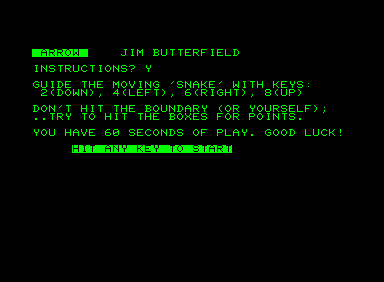
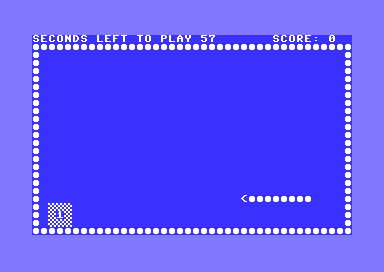
The first minute of Arrow is immediately legible: steer the snake, collect a numbered block, and try not to box yourself in. The timer gives the familiar Snake formula an urgent arcade rhythm. You are not simply trying to survive forever; you are deciding whether a number is worth the extra length it adds before the clock expires.
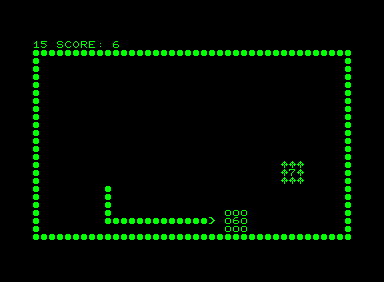
That numbered-block twist is the game’s best idea. Each pickup pays twice, raising both your score and the amount of snake you must guide around the field. A larger number can be tempting, but it also makes a self-collision more likely. When blocks appear and disappear, you have to make quick calls instead of following a safe, rehearsed route.
Frustration arrives in the way classic Snake frustration always does: one bad turn ends everything, whether you clip a wall or run into yourself. Here, that sting is amplified by the sixty-second limit, since a promising run can vanish before you have much time to recover momentum. Still, the rules are clean enough that failures feel like invitations to take one more shot.
Graphics
The game uses a top-down, fixed playfield built around the snake, its enclosing walls, and numbered blocks that come and go. That simple layout keeps the important information in view: where your body is, where the next score opportunity sits, and how little room remains to turn.
Story
Arrow has no story to carry between rounds. Its drama comes entirely from the growing trail behind you and the clock counting down on a short scoring attempt.
That suits the format. You do not need a setup before steering toward the first block; the situation explains itself as soon as taking a number makes the snake longer.
The tradeoff is that there is no narrative payoff waiting beyond a better run. The tension is immediate and disposable, built for the satisfaction of a close escape or the annoyance of a careless crash.
Overall Experience
Arrow is a compact variation on Snake rather than a reinvention, but the numbered pickups give its small idea real bite. Scoring and danger are tied together, so chasing points naturally creates the obstacles that can end you.
Its limited structure makes it easy to recommend in short bursts. With no high-score tracking, though, the game leaves you to remember your own best result, which weakens the long-term score-chasing pull.
Give it a chance if you enjoy direct, unforgiving arcade games where improvement means making better decisions under pressure. The payoff is modest but genuine: a quick sixty-second contest between greed, space, and your ability to keep a growing snake under control.


Reviews
There are no reviews yet.