 Retro Replay Retro Gaming History, Reviews & Emulation
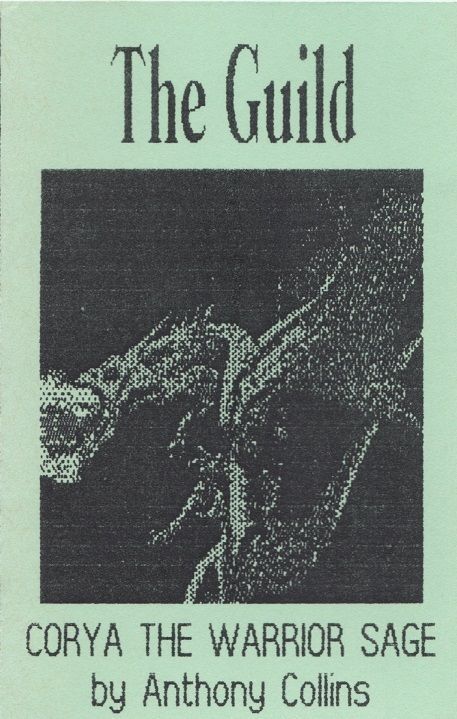

Retro Replay Review
Gameplay
The first stretch asks you to settle into the proper rhythm for a text adventure: read the description of your surroundings, decide what matters, and type a command. That slower, deliberate pace is the whole point. You are not being hurried through Corya’s journey; you are meant to investigate the space around you and take responsibility for the next move.
Its three-part structure gives the adventure a welcome shape. Beginning with equipment and exploration lets the quest establish Corya’s footing before it turns toward a rescue and a stolen artifact. The final section then shifts the focus to solving problems in a city before the confrontation with the dragon, so the journey is not framed as a straight dash from ruined village to final battle.
That said, this is firmly for gamers who enjoy the act of writing commands. The game asks you to meet it on its own terms rather than supplying graphics to carry the scene or fast action to cover a pause in your thinking. If typing your way through a fantasy problem sounds inviting, the escalating objectives offer a solid reason to stay with it; if you need immediate visual feedback, the format will feel austere from the start.
Graphics
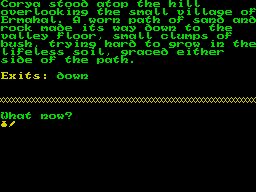
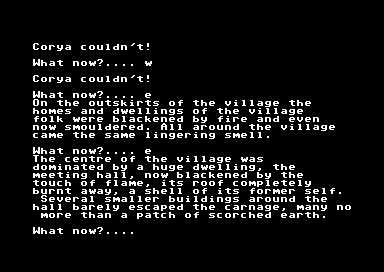
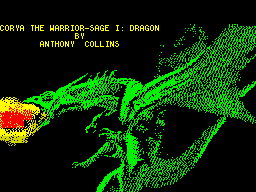
There are no graphics. The screen describes locations and situations in text, leaving you to build Ermahal, the surrounding land, the city, and the dragon in your own imagination. That makes every scene as vivid as the writing feels to you, but it also means there is no character art, animated action, or map to lean on.
Story
The opening is direct and effective: a dragon destroys the village of Ermahal, and Corya steps out of a life normally kept apart from the world of men. It gives the protagonist a credible reason to act without spending long on ceremony. You know what has gone wrong and why this particular figure is needed.
More importantly, the plot does not stay fixed on a single revenge-minded goal. The rescue and the recovery of a stolen artifact broaden Corya’s responsibilities in the middle portion, giving the adventure room to feel like a journey through a troubled land rather than one isolated dragon hunt.
The city section provides a final change of scene and purpose before the confrontation. Solving its problems puts some weight behind the finale: by the time Corya faces the dragon, the quest has moved through preparation, intervention, and wider responsibility. It is classic fantasy material, plainly stated, but the progression is sound.
Overall Experience
Corya the Warrior-Sage is a traditional fantasy text adventure with an uncomplicated but worthwhile hook. Its strongest quality is the clear progression from exploration to rescue, artifact recovery, city problems, and the final dragon confrontation. You always have the broad shape of a heroic mission in front of you.
The trade-off is equally clear: everything depends on your appetite for command-driven play and descriptive text. There is no graphical layer to soften that demand, so the pleasure comes from reading closely, experimenting with what to type, and imagining the journey for yourself.
Give it a chance if you want a straightforward three-act fantasy quest on Commodore 64 or ZX Spectrum and enjoy classic interactive fiction on its own terms. It is less likely to win over anyone looking for action or imagery, but for a patient text-adventure fan, Corya’s mission has a focused, appropriately old-school pull.

Reviews
There are no reviews yet.