 Retro Replay Retro Replay gaming reviews, news, emulation, geek stuff and more!


Retro Replay Review
Gameplay
James Clavell’s Shōgun is presented as classic Infocom interactive fiction, putting you directly in the sandals of John Blackthorne, the first Englishman to set foot on Japanese soil. Instead of relying on action-button sequences, the game challenges you with a text parser that understands a wide range of commands—everything from simple “go north” directives to more nuanced interactions like “show letter to Lord Toranaga.” This system allows for deep engagement, forcing you to think like an explorer and diplomat rather than a typical slash-and-shoot hero.
(HEY YOU!! We hope you enjoy! We try not to run ads. So basically, this is a very expensive hobby running this site. Please consider joining us for updates, forums, and more. Network w/ us to make some cash or friends while retro gaming, and you can win some free retro games for posting. Okay, carry on 👍)
Puzzle design in Shōgun is intricately woven around historical and cultural details drawn from Clavell’s original novel. You must navigate not only physical obstacles—such as finding safe passage through treacherous terrain or unlocking a hidden chamber—but also social puzzles, such as deciphering local etiquette, bribes, and secret codes. This dual focus on environment and etiquette rewards players who pay close attention to dialogue and descriptive text, elevating the experience from mere puzzle solving to genuine immersion in feudal Japan’s court politics.
Inventory management plays a surprisingly crucial role. Blackthorne must balance valuable trade goods, cultural artifacts, and personal effects while ensuring he maintains favor with his Japanese hosts. There are moments when carrying the wrong item or neglecting to deliver a critical message can lead to deadly consequences. Such stakes keep the tension high and encourage players to maintain detailed notes, just as Infocom intended, making each decision feel weighty and consequential.
Graphics
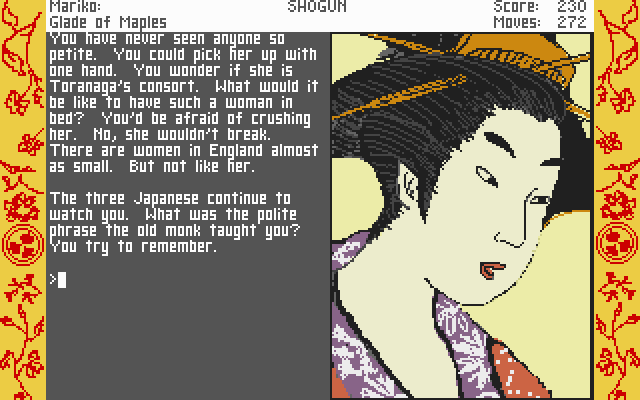
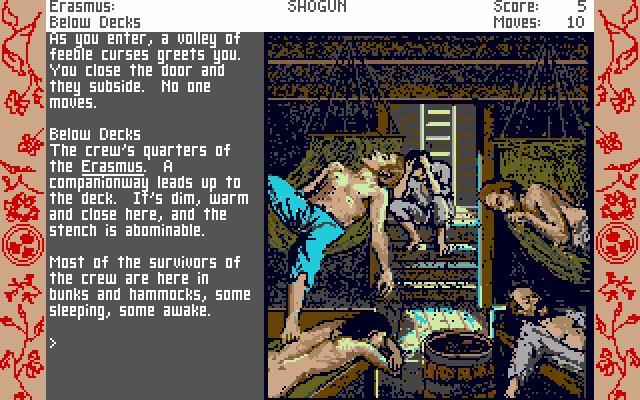
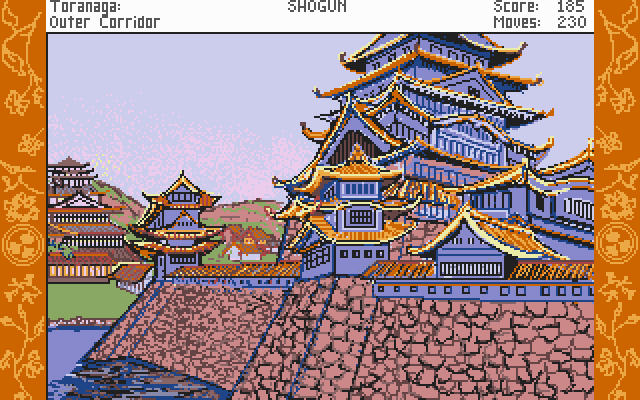
Strictly speaking, Shōgun offers no in-game graphics—Infocom’s strength has always been its text engine. For purists, the beauty lies in the lush descriptive prose that conjures vividly detailed landscapes, from the orderly corridors of Osaka Castle to the misty rice paddies of Izu Province. The lack of visuals actually encourages your imagination to fill in the gaps, crafting a mental picture that can often feel more personal and evocative than pixel art or 3D models.
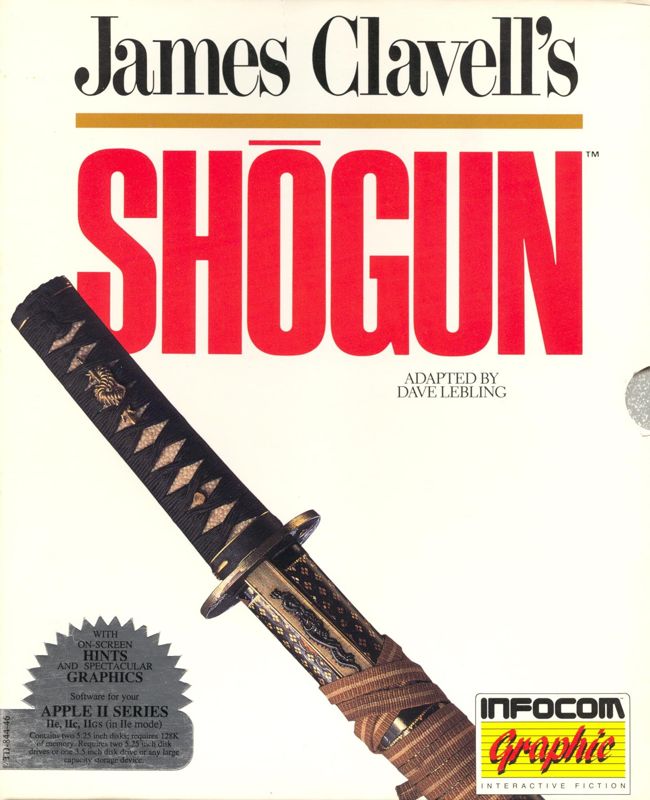
That said, the physical packaging—often referred to as “Feelies”—adds a layer of tangible artistry. Original releases included detailed maps of feudal Japan, a replica samurai crest, and fragmentary letters from Toranaga’s court. These inserts not only serve as gameplay aids but also function as immersive artifacts, enhancing the sense that you’re holding a genuine period document. Even modern reissues or fan reproductions strive to capture this tactile appeal.
While there’s no soundtrack or cut-scene animations, the game’s text layout remains clean and user-friendly. Infocom’s interface lets you adjust text speed, save anywhere, and review past text, ensuring that you never lose track of critical information. This functional design complements the historical setting—every descriptive passage reads like an excerpt from a travel journal or diplomatic dispatch, complete with proper formatting and period-appropriate language.
Story
The narrative follows John Blackthorne’s journey as he washes ashore on Japanese territory, immediately becoming a pawn in a dangerous game of political intrigue. Drawing faithfully from James Clavell’s dense novel, the game captures major plot beats—Blackthorne’s bond with Lord Toranaga, his clashes with rival samurai factions, and his gradual immersion into Japanese culture. Even if you’ve read the book, the interactive format provides new perspectives by allowing you to influence certain outcomes.
Character development unfolds through dialogue choices and observational commands. Interacting with Toranaga, the scheming Mariko, and rival warlords reveals layers of personality and hidden agendas. You must decide when to show deference, when to press for information, and when to keep your own counsel. As a result, the story feels personalized: two playthroughs can lead to notably different alliances and revelations, underscoring the narrative’s branching potential.
Shōgun’s pacing mirrors the novel’s rhythm—intense moments of political maneuvering are interspersed with quieter scenes of cultural acclimation. Whether you’re mastering tea ceremony protocols or racing against time to deliver coded messages, the game keeps you invested. Subplots involving espionage, romance, and courtly rivalry add depth, making the experience more than a straightforward adaptation and ensuring that each chapter feels fresh and engaging.
Overall Experience
Playing James Clavell’s Shōgun is akin to stepping into a richly detailed historical simulation. The text-based interface demands patience and curiosity, rewarding careful readers with hidden insights and alternate paths. If you’re new to interactive fiction, expect a learning curve as you adapt to the parser’s syntax and the meticulous note-taking that Infocom classics require. For seasoned veterans, the game stands as a high-water mark of narrative complexity and puzzle design.
The game’s cultural authenticity and attention to period detail set it apart from more action-oriented titles. You’ll gain a genuine appreciation for the social codes and power structures of early 17th-century Japan, all while experiencing a compelling story of survival and diplomacy. The absence of flashy graphics or real-time combat frees you to focus on strategy, conversation, and exploration, delivering an experience that still feels unique in today’s market.
In sum, James Clavell’s Shōgun remains a landmark in interactive fiction. Its blend of immersive storytelling, challenging puzzles, and historical depth makes it a must-try for anyone interested in narrative-driven games. While the text-driven approach won’t appeal to players seeking high-octane action, it offers a richly rewarding journey for those willing to invest in its world, making it an ideal choice for adventurers, history buffs, and fans of classic gaming alike.


Reviews
There are no reviews yet.