 Retro Replay Retro Replay gaming reviews, news, emulation, geek stuff and more!



Retro Replay Review
Gameplay
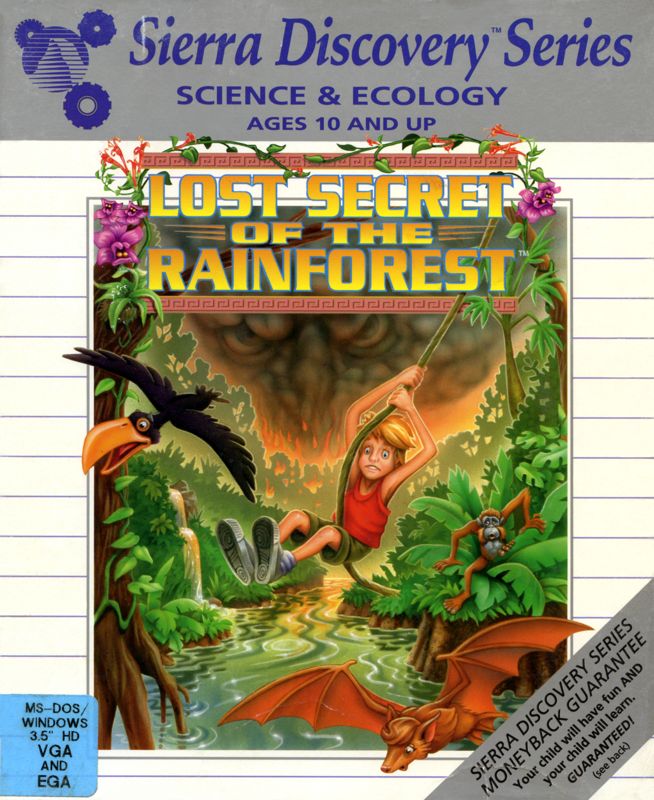
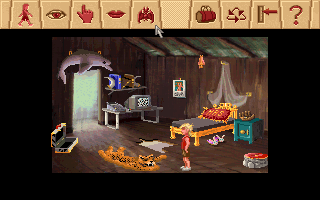
Lost Secret of the Rainforest builds on the icon-driven, point-and-click adventure mechanics established in its predecessor, EcoQuest: The Search for Cetus. Players guide Adam Greene through dense jungle environments, selecting icons to look, use, talk, or move. This intuitive interface ensures that even newcomers to adventure games can navigate puzzles and environments without fear of dead ends or untimely character deaths.
(HEY YOU!! We hope you enjoy! We try not to run ads. So basically, this is a very expensive hobby running this site. Please consider joining us for updates, forums, and more. Network w/ us to make some cash or friends while retro gaming, and you can win some free retro games for posting. Okay, carry on 👍)
A signature feature of this installment is the “Ecorder,” an in-game device that allows Adam to catalog and record detailed information on the flora and fauna he encounters. Not only does this add an educational layer—encouraging players to learn about real-world ecology—but it also serves as a practical tool for solving environmental puzzles and gaining the trust of the Grove People. Successfully using the Ecorder to identify medicinal plants or animal behaviors often unlocks new pathways or reveals hidden objects.
Puzzle design in Lost Secret of the Rainforest strikes a balance between logic-based problem solving and observational challenges. Whether deciphering a tribal riddle or piecing together a map fragment leading to the City of Gold, each task feels rooted in the game’s ecological theme. The lack of lethal consequences for mistakes means players can experiment freely, fostering a relaxed yet engaging pace as they progress through the jungle’s secrets.
Graphics
The visual presentation in Lost Secret of the Rainforest reflects early 1990s adventure game artistry, with richly painted backgrounds and hand-drawn character sprites. Jungle foliage, riverbanks, and tribal camp scenes all exhibit vibrant colors that bring the Amazon setting to life. Subtle animations—swaying vines, rippling water, darting wildlife—add depth to otherwise static screens, enhancing immersion without overwhelming the hardware of its time.
Character designs are expressive and charming, from Adam’s curious gaze to the weathered features of the Grove People. Cutscenes and dialogue portraits employ slightly higher detail, conveying narrative beats with emotion and clarity. While the resolution and palette may feel dated compared to modern titles, the artwork retains a nostalgic appeal that adventure aficionados will appreciate.
Environmental variety is another visual highlight: murky river deltas give way to sun-dappled clearings, misty waterfalls, and the imposing silhouette of the legendary City of Gold. Each locale feels distinct, encouraging players to pause and explore every corner for hidden clues or specimens to scan with the Ecorder. In short, the graphics serve both aesthetic and functional roles, guiding exploration while reinforcing the game’s ecological message.
Story
Lost Secret of the Rainforest centers on Adam Greene, a resourceful boy whose father, Dr. Noah Greene, aims to forge peaceful contact with the Grove People—a native tribe believed to hold the key to the rainforest’s decline. When Adam becomes separated from his father, he must navigate dangerous terrain and unravel the forest’s mysteries alone. This narrative premise immediately stakes the player’s emotional investment in Adam’s success and safety.
As Adam journeys deeper, he uncovers myths of the Forest Heart—a legendary source of life energy said to heal both people and land. The hunt for this mystical artifact dovetails with the search for the fabled City of Gold, merging environmental themes with classic adventure tropes. Dialogue with friendly tribesfolk, diary entries from Adam’s Ecorder logs, and atmospheric cutscenes work together to flesh out a compelling storyline that educates as much as it entertains.
Throughout the adventure, themes of conservation, respect for indigenous knowledge, and the impact of modern encroachment on fragile ecosystems resonate strongly. Unlike many contemporary titles that prioritize combat or spectacle, Lost Secret places the player in the role of mediator and learner, emphasizing empathy and stewardship. This narrative approach makes every discovery feel meaningful, as each new plant or artifact carries weight in Adam’s quest to heal the rainforest.
Overall Experience
Lost Secret of the Rainforest offers a refreshing blend of adventure gaming and environmental education. Its forgiving mechanics allow players of all ages and skill levels to enjoy the journey without fear of irreversible mistakes. The Ecorder device adds a tangible sense of scientific discovery, turning every jungle creature or rare flower into a potential puzzle solution.
While the game’s pace is deliberately measured, with exploration and reading often taking precedence over fast-paced action, this allows players to fully absorb the lush world and its ecological lessons. The balance of story, puzzles, and educational content feels thoughtfully calibrated, making it a particularly strong choice for families, schools, and anyone with an interest in conservation.
In the context of early 1990s adventure titles, Lost Secret of the Rainforest stands out for its earnest environmental message and polished presentation. Though it may lack the graphical fidelity of modern releases, its heart is in the right place. For those seeking a brain-teasing, heartwarming expedition into the Amazon—complete with an optimistic call to protect our planet—this game remains a hidden gem worth uncovering.

Reviews
There are no reviews yet.