 Retro Replay Retro Replay gaming reviews, news, emulation, geek stuff and more!


Retro Replay Review
Gameplay
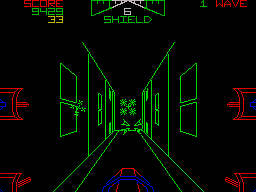
The core of Star Wars’ gameplay lies in its fast-paced, first-person shooter mechanics, which faithfully recreate the climactic trench run from the original 1977 film. Players pilot an X-Wing fighter, weaving in and out of oncoming TIE Fighters, all while managing shields and lining up precise proton torpedo shots. Each phase of the assault—ranging from dogfights to disabling surface turrets—requires quick reflexes and precise timing, making every run feel both urgent and rewarding.
(HEY YOU!! We hope you enjoy! We try not to run ads. So basically, this is a very expensive hobby running this site. Please consider joining us for updates, forums, and more. Network w/ us to make some cash or friends while retro gaming, and you can win some free retro games for posting. Okay, carry on 👍)
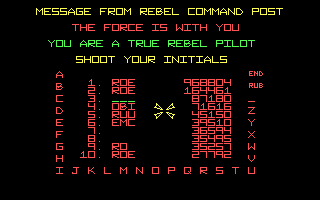
As you progress, the challenge ramps up: enemy formations grow more aggressive, laser towers become denser, and Vader’s TIE Fighter appears at unexpected moments. The shield system, starting you off with six units, encourages careful target prioritization—do you focus on downing a squadron of TIEs to earn extra shields, or rush straight for the exhaust port? This balance of risk versus reward remains engaging even after dozens of loops.
One of Star Wars’ greatest strengths is its looping structure. Once you complete the Death Star run, the game resets at a higher difficulty, ensuring that even veteran pilots face fresh challenges. While there’s no sprawling campaign or side quests, the perfect blend of simple objectives and escalating threats keeps players coming back to shave precious seconds off their best runs.
Controls are intuitive, whether you’re on original arcade hardware or a home console port. The player’s focus stays solidly on maneuvering through tight corridors and lining up shots, with no unnecessary menu navigation to interrupt the action. For fans of high-score battles and twitch shooting, the gameplay loop here remains both addictive and satisfying.
Graphics
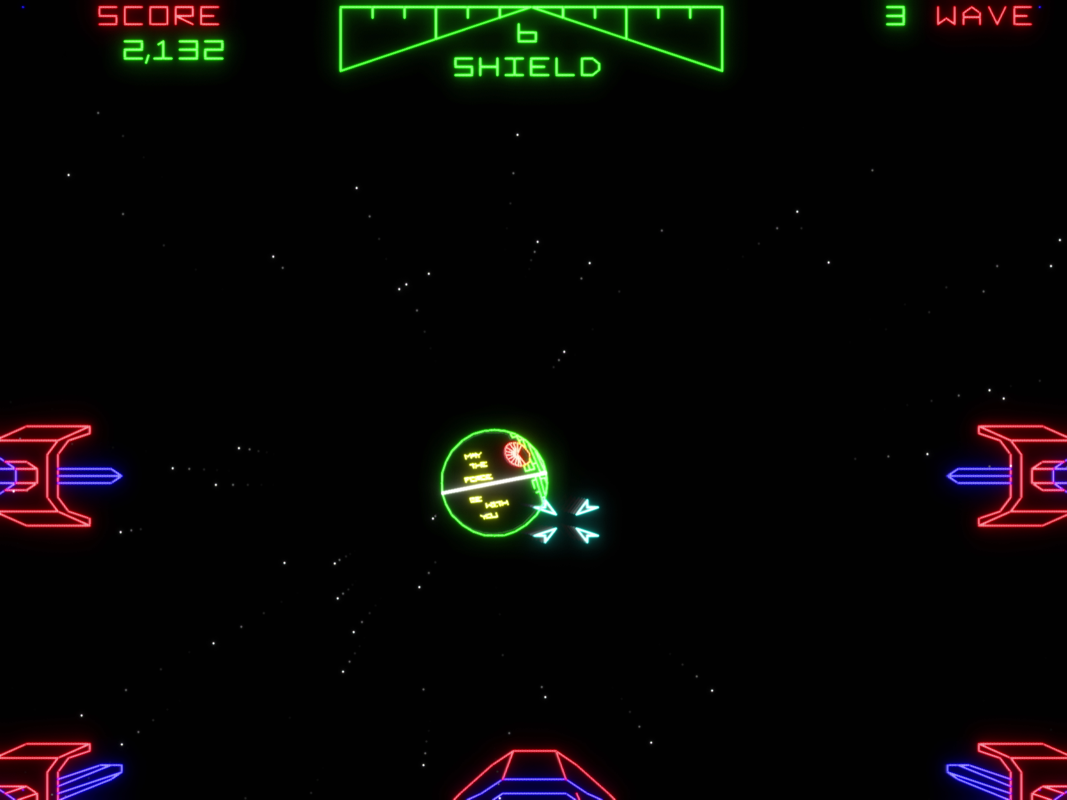
Star Wars employs vector graphics, a choice that was revolutionary for its time and remains visually distinctive today. Crisp lines and bright wireframe models allow the action to unfold at breakneck speed, even on the modest hardware of early 1980s arcades and home systems. The result is a clean, futuristic aesthetic that cuts through visual clutter and keeps your eyes locked on incoming threats.
On original arcade machines, the vectors shimmer with a pleasing glow, lending a sense of depth as TIE Fighters dart toward you. Home conversions—on platforms such as the Atari 2600 and Intellivision—reproduce this look with remarkable fidelity, though some lose a bit of the arcade’s brightness and feel. Still, each version preserves the essential charm of those neon wireframes streaking across the screen.
Because the course itself is rendered in simple lines, you never mistake a flange of Death Star surface for a stray enemy shot. This clarity is crucial when you’re threading a proton torpedo through a narrow exhaust trench. The minimalistic style also ensures consistent frame rates, even as dozens of vectors crisscross the screen at once.
Though modern gamers accustomed to polygonal 3D and high-definition textures may find the visuals rudimentary, there’s a timeless appeal to the vector art. It’s a graphic style that symbolizes the origins of arcade shooters, and it continues to resonate with collectors, retro enthusiasts, and anyone who appreciates unfiltered gameplay art.
Story
Star Wars distills the climactic finale of George Lucas’s original film into an arcade experience, putting you directly in Luke Skywalker’s cockpit as he delivers the decisive blow to the Death Star. While there’s no branching narrative or dialogue, the game’s premise is instantly recognizable and powerfully evocative for fans of the franchise.
By focusing solely on the trench run, the developers created a laser-focused storyline: dogfight TIE Fighters, evade laser turrets, and strike the exhaust port. This streamlined approach trades elaborate cutscenes for pure immersion, letting players feel the tension of that final, desperate assault. Every looping attempt becomes a personal saga of triumph or defeat.
The appearance of Darth Vader’s TIE Fighter in the opening phase adds dramatic tension, reinforcing the stakes and reminding you that this isn’t just any mission—it’s the redemption of the galaxy. Defeating him, even in the abstract vector realm, feels like a genuine narrative payoff.
Although there’s no branching dialogue or character development, Star Wars’ storyline succeeds through its iconic setting and clear, goal-oriented design. It leaves little to the imagination yet stokes the player’s sense of heroism, making each successful run feel like you’ve played your part in the saga.
Overall Experience
Star Wars remains a shining example of arcade simplicity done right. Its immediate pick-up-and-play appeal, combined with steadily increasing difficulty, offers hours of addictive action. Whether you’re a dedicated high-score chaser or a casual fan eager to experience a piece of gaming history, the core loop never grows stale.
The nostalgic charm of vector graphics, the tight controls, and the pure thrill of reenacting the Death Star trench run all contribute to a memorable package. Even on contemporary platforms or through emulation, the game preserves its pulse-pounding essence, proving that strong design can transcend technological advances.
While modern gamers might miss the RPG elements, unlockable content, or save systems common in today’s shooters, Star Wars doesn’t pretend to offer those. Instead, it excels at what it set out to do: deliver a lean, iconic arcade experience that challenges your reflexes and rewards your skill.
In summary, Star Wars is a must-play for collectors, arcade aficionados, and franchise fans alike. Its blend of straightforward objectives, escalating tension, and unmistakable aesthetic have cemented its status as a classic. Strap into your X-Wing, hone your aim, and prepare for a trench run that stands the test of time.

Reviews
There are no reviews yet.