 Retro Replay Retro Replay gaming reviews, news, emulation, geek stuff and more!




Retro Replay Review
Gameplay
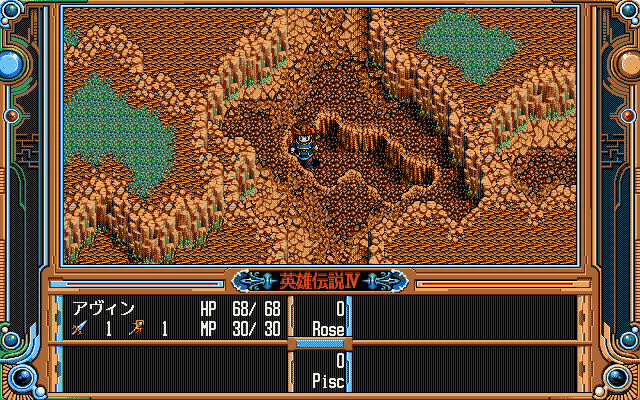
The Legend of Heroes IV: Akai Shizuku adheres closely to the classic Japanese RPG framework, delivering a straightforward yet satisfying progression through its linear storyline. Players guide Avin and Eimelle through a series of interconnected environments—forests, ruins, and villages—without ever consulting a world map. This continuous-world approach creates a seamless sense of exploration, though it occasionally pads travel time with largely empty corridors in service of pacing.
(HEY YOU!! We hope you enjoy! We try not to run ads. So basically, this is a very expensive hobby running this site. Please consider joining us for updates, forums, and more. Network w/ us to make some cash or friends while retro gaming, and you can win some free retro games for posting. Okay, carry on 👍)
Combat encounters are triggered by stepping on predetermined tiles, which gives the game a strategic feel: careful observation can let you avoid weaker monsters or seek out tougher foes for extra experience. The battle system itself expands on its predecessor’s “auto-battle” mechanic, allowing you to toggle between fully automated skirmishes or precise command of each party member’s movement. From directing Avin to flank an enemy to positioning a summoned creature for maximum effect, the added battlefield control makes fights more engaging than in many turn-based contemporaries.
Character growth is largely hands-off, with the game automatically awarding experience and enhancing stats upon victory. However, you still choose when to learn new spells, equip the latest gear, and assign summon points. This blend of automation and player agency keeps the focus firmly on tactics and story rather than menu-grinding. For RPG veterans seeking a narrative-driven adventure without micromanagement, Akai Shizuku strikes a comfortable balance.
Inventory management remains simple and logical: weapons, armor, accessories, and consumables are sorted in an easy-to-navigate menu. Magic and summon slots open up gradually, encouraging experimentation with different elemental spells and powerful creatures. While some players may miss deeper party customization, the streamlined systems allow newcomers to grasp core RPG mechanics quickly and veteran players to dive into strategy without tedium.
Difficulty is generally moderate. Early battles are forgiving, but boss fights demand smart spell usage and timely summons. The option to auto-battle means you can avoid repetitive fights when backtracking, though at the cost of losing tactical nuance. Overall, the gameplay loop—explore, battle, upgrade, and unlock the next chapter—remains compelling from start to finish.
Graphics
Akai Shizuku presents a colorful 2D aesthetic characteristic of late-’90s JRPGs. Character sprites are lovingly detailed, with fluid walking and battle animations that convey personality—Avin’s determined stance contrasts nicely with Eimelle’s graceful spellcasting gestures. Enemy designs range from whimsical forest critters to ominous guardians of the six divine fragments, each rendered with care to reinforce the game’s mythic tone.
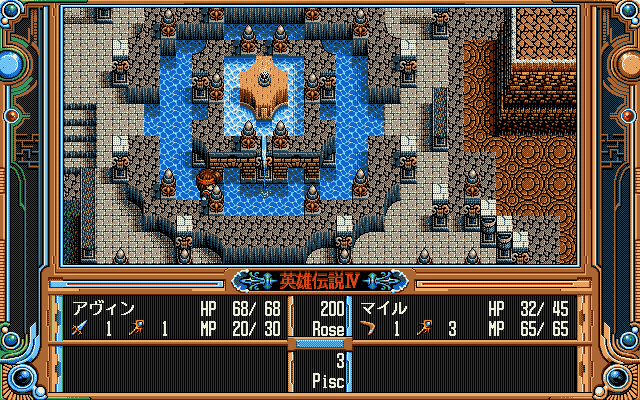
Environments unfold in vibrant tile-based maps: autumnal woods, crystalline caverns, and bustling towns anchored by hand-drawn backdrops. Though some “filler” corridors lack distinctive features, major locations boast striking architecture and decorative touches—a sunlit plaza, a moss-covered temple, a moonlit altar—that enhance immersion. Weather effects such as drifting snow or flickering torchlight add subtle atmosphere to key areas.
In-battle effects shine with colorful spell animations and dynamic summon sequences. Fireballs explode in brilliant oranges and reds, while healing spells swirl with soft blues and greens. Summoned creatures appear in full-screen portraits before joining the fray, lending cinematic flair to pivotal moments. Despite its sprite-based roots, Akai Shizuku feels lively and modern for its era.
The user interface is clean and readable, with menus framed by ornate borders that echo church iconography. Health bars, magic meters, and action options are displayed clearly, minimizing confusion during heated fights. Transition screens between exploration and combat are handled gracefully, maintaining the game’s steady pace without jarring interruptions.
Story
The narrative of Akai Shizuku unfolds against a backdrop of divine conflict and foretold destiny. Eons ago, the benevolent god Bardus vanquished the malevolent Octum but lost his essence, forced into six scattered fragments guarded by the goddess Durga. This mythic prologue sets the stage for a tale of hidden power, betrayal, and the weight of ancestral legacy.
Protagonists Avin and Eimelle are earnest young agents of the Church of Bardus, whose quiet routine is shattered when the enigmatic Belias slaughters their mentor. Their ensuing quest to track down the killer gradually reveals shocking ties between the siblings and the fate of the divine fragments. Twists abound as allies question their motives and long-buried secrets surface, lending emotional heft to each revelation.
Character development is a standout feature: Avin’s sense of duty clashes with his anger over his mentor’s death, while Eimelle balances loyalty with a deep curiosity about her own hidden talents. Supporting cast members—an exiled knight, a rogue summoner, a mischievous spirit—each bring unique backstories that intertwine with the central plot. Even secondary NPCs in towns and temples have small quests that enrich the world’s history.
The writing alternates between light-hearted banter during campfire conversations and solemn reflection as the duo unravels the truth about Bardus’s sacrifice. The pacing lets emotional beats breathe, inviting players to invest in the siblings’ journey. Occasional exposition dumps in the midgame may slow momentum, but well-timed flashbacks and heartfelt character speeches re-energize the narrative toward a climactic confrontation with Belias and the fate of the gods themselves.
Overall Experience
The Legend of Heroes IV: Akai Shizuku offers a polished JRPG experience for players who cherish story and character above all. Its seamless world design, enhanced battlefield control, and evocative art style combine to create a compelling adventure that doesn’t overwhelm newcomers with needless complexity. Fans of the series will appreciate the mechanical refinements and thematic continuities, while RPG novices can enjoy a clear, guided path through an epic saga.
While the game’s linearity and occasional backtracking may frustrate those craving open-world exploration, the rich narrative payoff and dynamic combat system keep momentum high. The balance between automated systems and hands-on tactics allows each player to tailor the challenge to their liking, whether by skipping trivial encounters or micromanaging every spell and summon.
Visually pleasing, emotionally resonant, and mechanically sound, Akai Shizuku stands as a solid entry in the Legend of Heroes franchise. It showcases the series’ strengths—deep worldbuilding, memorable characters, and strategic battles—while streamlining lesser elements to maintain narrative focus. For anyone seeking a classic JRPG that balances mythic storytelling with engaging gameplay, The Legend of Heroes IV: Akai Shizuku is a journey worth embarking on.
Prospective players should note that some stretches of “empty” areas and the fully fixed plot structure may not appeal to those looking for sprawling exploration or branching storylines. However, if your priority is a character-driven narrative set against a backdrop of divine intrigue and finely tuned turn-based combat, Akai Shizuku delivers a richly rewarding experience from start to finish.



Reviews
There are no reviews yet.