 Retro Replay Retro Replay gaming reviews, news, emulation, geek stuff and more!
Retro Replay Review
Gameplay
The Lost Files of Sherlock Holmes: Case of the Rose Tattoo stays true to the classic point-and-click adventure format, requiring players to meticulously explore every nook of Victorian London. You’ll guide Holmes through over 50 distinct locations—from the refined parlors of Mayfair to the grime-laden streets of the East End—interacting with 90 uniquely costumed characters. The game’s interface is intuitive: a context-sensitive cursor changes shape when you can examine, pick up, or converse, streamlining the investigative process.
(HEY YOU!! We hope you enjoy! We try not to run ads. So basically, this is a very expensive hobby running this site. Please consider joining us for updates, forums, and more. Network w/ us to make some cash or friends while retro gaming, and you can win some free retro games for posting. Okay, carry on 👍)
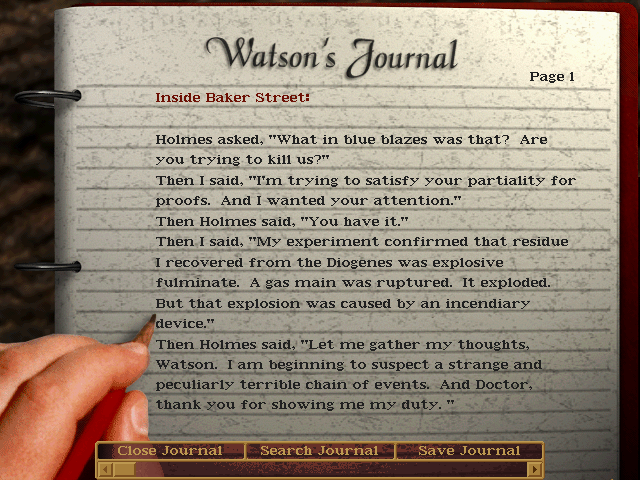
Puzzles form the backbone of the experience, and they range from deciphering cryptic notes to assembling makeshift explosives—a direct nod to the stolen explosive formula at the heart of the mystery. Some logic challenges demand keen observation and careful note-taking in Sherlock’s journal, while others require combining seemingly unrelated items in your inventory. While a handful of puzzles can feel obtuse by modern standards, most players will appreciate the sense of triumph when Holmes deduces an elusive clue.
Dialogue choices are limited but meaningful. You’ll seldom “fail” in conversation, but selecting the wrong line of questioning can close off a potential lead, forcing you to retrace your steps. Fortunately, Watson is always on hand with occasional hints (and witty commentary) to nudge Holmes in the right direction. The gameplay loop of exploration, interrogation, and deduction is satisfying, keeping you invested across multiple chapters without resorting to arbitrary dead ends.
Graphics
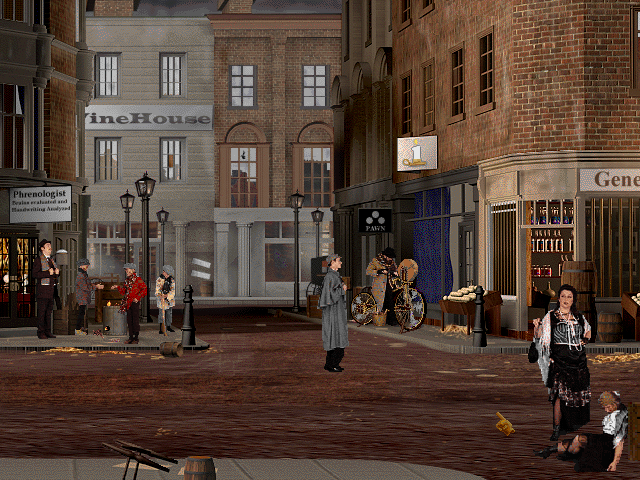
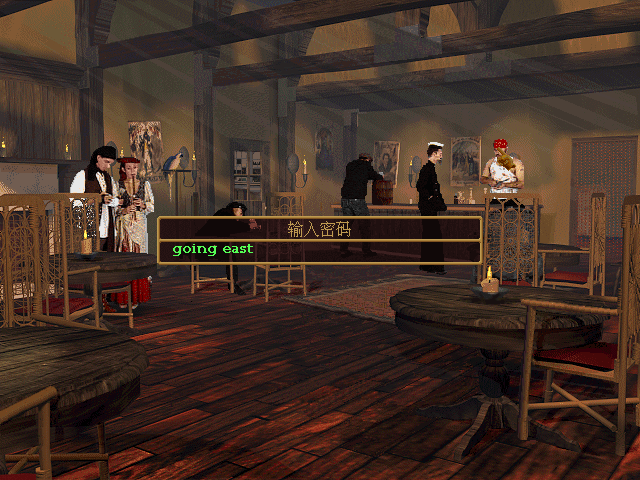
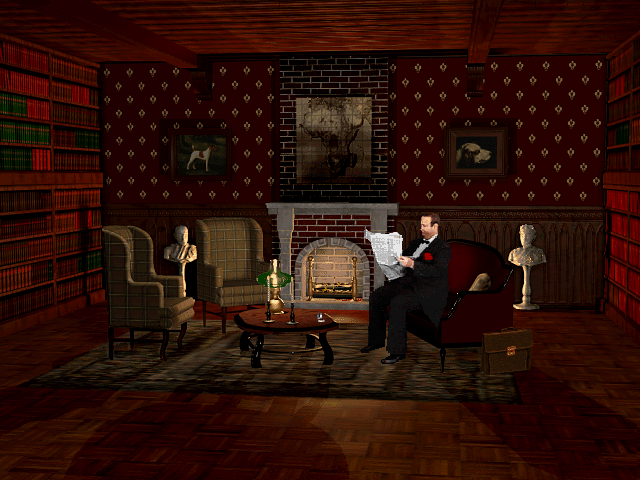
The game’s hand-painted 2D backdrops capture the atmosphere of 1889 London with remarkable detail. Whether you’re strolling through the misty embankment or investigating the smoldering ruins of the Diogenes Club, every scene brims with period authenticity. Victorian gas lamps cast dramatic shadows, while animated NPCs bustle through narrow alleys, lending a sense of living environment that few contemporaries matched.
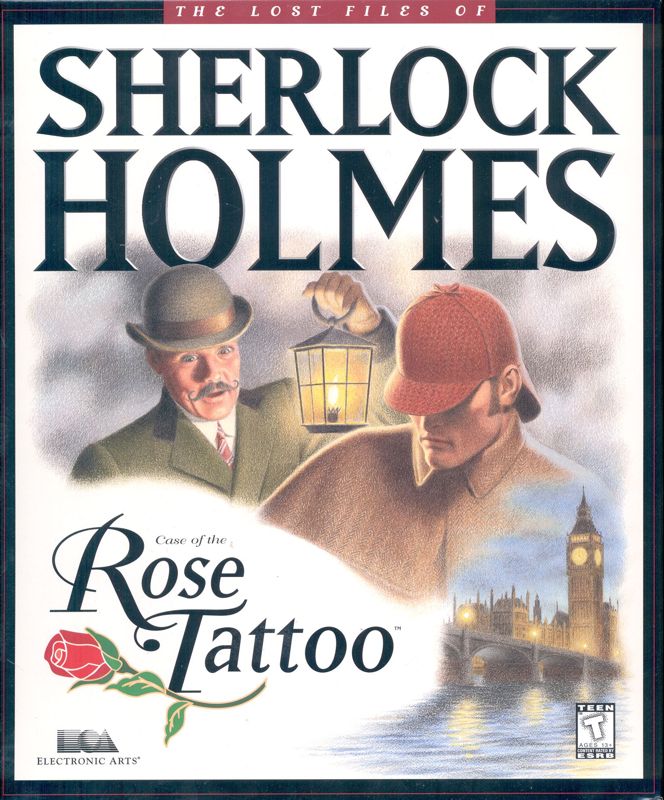
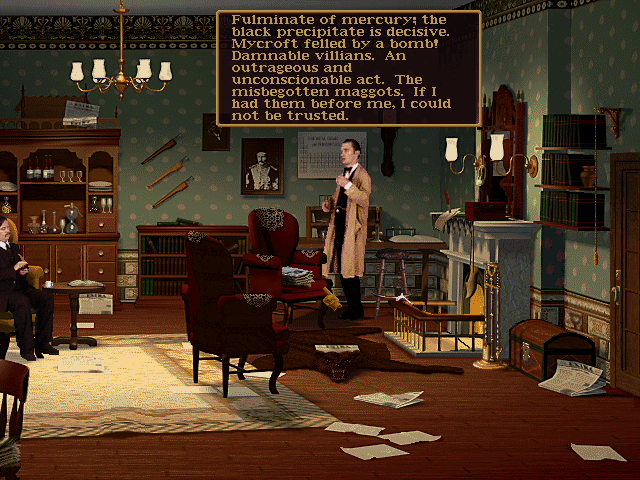
Character portraits and cutscenes are rendered with expressive line work and subdued color palettes, reflecting the game’s darker themes. Holmes himself is depicted with his trademark deerstalker and overcoat, while suspects and victims don meticulously designed costumes that signal their social station. Close-up animations during key revelations add cinematic flair, making Watson’s narration—and your discoveries—feel genuinely thrilling.
Though the resolution is 640×480 by today’s standards, the meticulous artistry shines through. Small details—a bloodstain on a letter, the intricate lace of a silk rose—reward players who pause to examine their surroundings. The sound design complements the visuals with creaking floorboards, distant church bells, and ambient chatter, reinforcing the immersive qualities of this Victorian mystery.
Story
At the heart of The Case of the Rose Tattoo lies a twisting conspiracy that begins with the disappearance of a new, devastatingly powerful explosive from the Ministry of Defense. When Mycroft Holmes is nearly killed in a catastrophic blast at the Diogenes Club, Sherlock is reluctantly drawn back into service. Watson poses the pivotal question—“What if the explosion was no accident?”—and thus launches one of Holmes’s most personal investigations.
From the polished drawing rooms of high society to the desperate slums of the East End, the narrative gradually unveils a masterful adversary orchestrating a criminal enterprise with potentially global repercussions. Holmes must solve multiple capital crimes—ranging from robbery to murder—to piece together the scope of the threat. Along the way, he defends national security, exonerates the innocent, and even safeguards royal honor, all while wrestling with his own motivations beyond pure justice.
The storytelling is bolstered by Watson’s evocative narration, which frames each chapter like a serialized journal entry. Minor characters are vividly realized through period-specific dialogue and mannerisms, and every twist feels earned through careful foreshadowing. The surprising resolution—a climatic revelation that forced Watson to seal his account for a century—underscores the high stakes and cements this chapter as a true “lost file.”
Overall Experience
The Lost Files of Sherlock Holmes: Case of the Rose Tattoo delivers an engrossing slice of detective fiction that stands the test of time. Its blend of thoughtful puzzles, richly drawn environments, and a meticulously plotted story creates an experience both challenging and rewarding. Players who appreciate deliberate, methodical gameplay will find themselves completely absorbed for hours on end.
While some modern players may bristle at longer dialogue sequences or puzzles that require extensive note-taking, the game’s strong writing and atmospheric presentation more than compensate. The companionship between Holmes and Watson adds warmth and occasional levity, balancing the darker threads of espionage and violence. For fans of classic adventure titles and Sherlock Holmes lore, this entry is nothing short of essential.
Ultimately, The Case of the Rose Tattoo feels like unearthing a genuine artifact of Victorian detective work. Its “lost file” premise resonates through every scene and puzzle, inviting you to exercise your own powers of deduction alongside the world’s greatest detective. If you’re seeking an immersive mystery that rewards patience and keen observation, this game is a captivating journey into the mind of Sherlock Holmes.



Reviews
There are no reviews yet.