 Retro Replay Retro Gaming History, Reviews & Emulation

Game Overview
Gameplay
Shenmue is an investigation first and an action game second. Ryo roams a freely explorable 3D town, asks friends and strangers about leads, and gradually turns scattered conversations into the next step of his search. Important details go into his notebook, which helps keep the case from becoming a total memory test. The strongest part of this structure is how it makes small questions feel meaningful. Finding one person who knows a name, address, or rumor can send Ryo down another street and make the town feel connected rather than built from isolated missions.
The slow pace will test anyone who wants constant action. Much of the game is spent talking, looking for the right person, and following hints that are sometimes less dramatic than the murder that starts the story. That patience is the price of Shenmue’s particular atmosphere. Ryo is not charging from fight to fight. He is working a lead, checking what people know, and trying to piece together a world that does not automatically revolve around him.
When trouble does arrive, Ryo’s martial-arts background matters. Combat takes its cue from Virtua Fighter, with hand-to-hand exchanges rather than a simple button-mashing brawl. Yu Suzuki’s development account traces the project’s origins to a Virtua Fighter-based RPG. Training moves repeatedly or sparring with Fuku-san gives the fighting a welcome sense of practice and improvement. Cutscenes can also suddenly demand quick button presses to pull Ryo out of danger, and failure is not always fatal. These moments add tension, though they can be frustrating when a dramatic scene asks for a reflex test without much warning.
There is plenty to do away from the investigation. Ryo can collect capsule toys, buy items, play darts or pool, and spend time in the arcade with Hang-On and Space Harrier. The arcade games are a real highlight because they are more than tiny distractions. On the other hand, many store purchases become collectibles without serving a larger purpose, so completion-minded shoppers may find the collecting less rewarding than the game’s more focused activities.
Graphics
The neighborhood is the visual star. Shenmue lets Ryo walk streets, visit shops, meet townspeople, and step into an arcade, so the setting has more personality than a string of anonymous backdrops. The ordinary streets and local businesses suit a story built around asking questions instead of saving the world every few minutes. The opening’s shift from snow to rain also gives its central tragedy a suitably somber setting.
Story
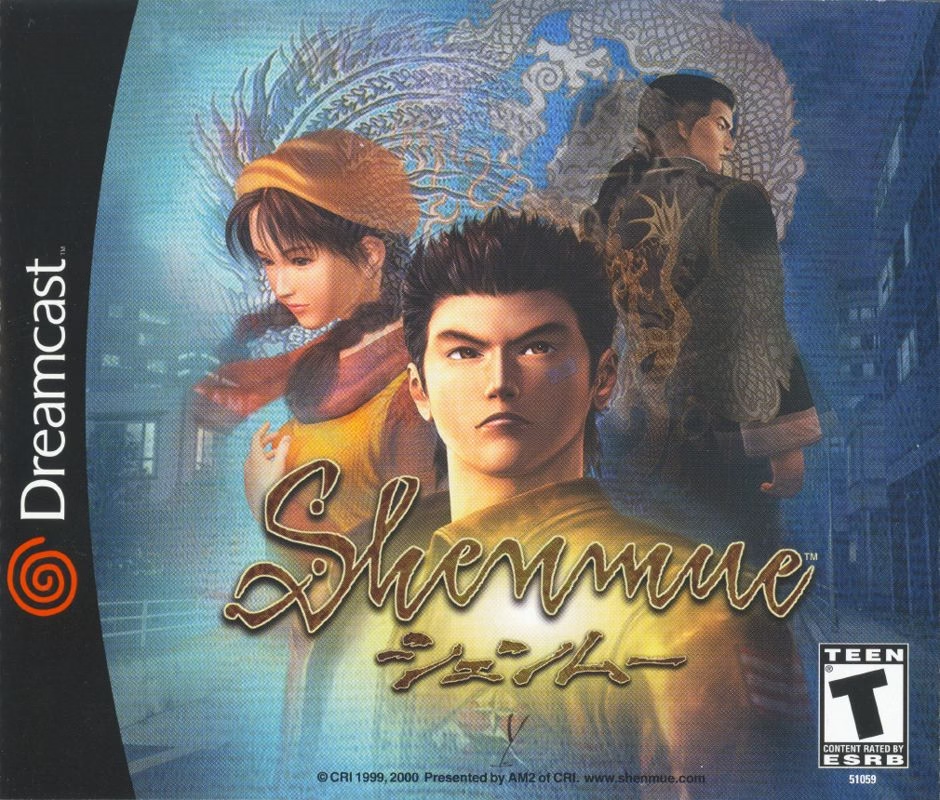
Ryo Hazuki comes home on a November day just in time to witness Lan Di kill his father. He tries to intervene and is badly beaten, leaving him with grief, anger, and very few answers. It is a strong opening because Ryo’s goal is immediately personal. Lan Di is not a distant villain or a vague threat. He is the man Ryo saw take his father away.
The search expands beyond revenge as Ryo learns that Lan Di and his father shared a history, and that the Phoenix and Dragon mirrors are central to the mystery. That gives the story a useful second layer. Ryo is pursuing a killer, but he is also uncovering secrets his own family kept from him. The questions surrounding the mirrors help the investigation feel larger without pushing aside the emotional reason for it.
Shenmue tells this story at the same measured pace as its exploration. Conversations and everyday routines carry much of the drama, so the game asks you to enjoy the process of gathering information rather than expect every scene to deliver a major revelation. Ryo’s determination holds it together, but the story’s unhurried buildup will feel more compelling to someone who likes a long-burn mystery than to someone looking for immediate answers. The journey continues in Shenmue II, making this first chapter especially important for players who want to follow Ryo’s pursuit from the beginning.
Overall Experience
Shenmue’s great trick is making an investigation feel physical. Instead of selecting clues from a list, you walk through town, speak to people, remember what they said, train, kill time in the arcade, and eventually find the next thread. That blend of mundane activity and high-stakes revenge gives the game an identity few adventures have matched.
It is also an uneven mix by design. The best diversions, particularly the arcade machines and martial-arts practice, strengthen the feeling that Ryo has a life beyond the central mystery. The less useful shopping and collectible items can feel like clutter, and the game’s reliance on patient clue-following can turn a stalled lead into a long detour. Combat and quick-time scenes add variety, but they do not replace the detective work at the center.
For gamers willing to settle into its deliberate rhythm, Shenmue is worth the time because its town, investigation, and personal stakes all support one another. It hooks you with a murder and mysterious mirrors, then asks you to care about the streets and people between the big moments. The payoff is not nonstop excitement. It is the rare feeling of inhabiting Ryo’s search closely enough that each new answer feels earned.


Reviews
There are no reviews yet.