 Retro Replay Retro Gaming History, Reviews & Emulation
Retro Replay Review
Gameplay
The basic routine is immediately clear: guide Yukawa around top-down screens, spend a limited number of shovel digs, and uncover the pieces needed to assemble a particular Dreamcast-themed picture. There is a pleasing bit of tension in every dig because wasted attempts matter. You are not simply sweeping the ground clean; you are trying to make the clues count.
What makes that routine more than blind guessing, at least in concept, is the connection to online hints through the Dreamcast’s Orange Dreamkey CD. The intended rhythm was to take a clue, return to the map, and make more informed choices about where to dig. When the logic lines up, finding the right piece should feel like a small win rather than a random handout.
The limitation is that the whole design is extremely narrow. You navigate, dig, collect pieces, and work toward the correct image; there is not much room for the activity to develop beyond that. The downloadable VMU mini-game, which could make treasure digging faster, is a charmingly Dreamcast-specific extra, but it does not change the fact that this is a brief promotional puzzle rather than a deep game.
Give it a chance if you enjoy peculiar hardware-era curiosities or want to see Sega turn a contest entry into a playable scavenger hunt. Go in expecting a compact puzzle exercise with strict stakes around each shovel use, not an expansive adventure.
Graphics
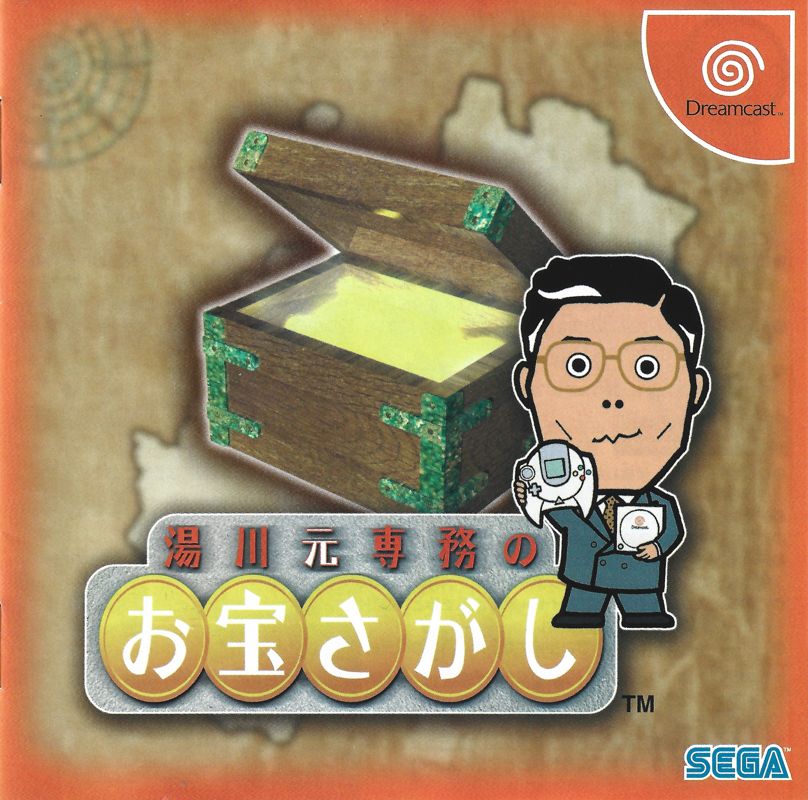
The game uses a top-down view, with former Sega Senior Managing Director Hidekazu Yukawa rendered as a cartoon character as you move between screens. The collectible puzzle fragments carry a Dreamcast theme, fitting the game’s role as a cheerful piece of late-1990s console promotion.
Story
There is barely a conventional story here, and that is part of the oddness. You play as a cartoon version of Yukawa, but his role is mainly a mascot for the treasure hunt rather than the lead in a plotted adventure.
The real premise is the prize chase: locate the proper puzzle pieces using online hints, complete the correct picture, and become eligible for the raffle. That gives the digging a clear purpose, even if it is a promotional purpose instead of a dramatic one.
In 1999, using a recognizable Sega executive as the face of the game likely made the whole thing feel like an in-joke for Dreamcast fans. Today, that same choice is the game’s most memorable storytelling detail. It captures a very specific moment when Sega was willing to make its own corporate personality part of the entertainment.
Overall Experience
Yukawa Moto Senmu no Otakara Sagashi is fascinating because it commits so thoroughly to being a contest game. The ¥980 purchase, online clue hunt, Dreamcast imagery, VMU tie-in, and ¥10,000 prize raffle all point toward one short-lived event. Few games make their promotional function this visible, and fewer do it with such an eccentric host.
As a pure puzzle game, it is too slight to recommend on the strength of its digging alone. Limited digs add pressure, but the loop does not have enough breadth to sustain a long session once the novelty of the format fades.
Still, if Dreamcast history is your thing, this is a rewarding oddity to know about. It is a snapshot of Sega’s playful, ambitious marketing culture: practical enough to get people online, goofy enough to cast an executive as a treasure hunter, and compact enough that the entire idea can be understood in a sitting.


Reviews
There are no reviews yet.