Retro Replay Retro Gaming History, Reviews & Emulation
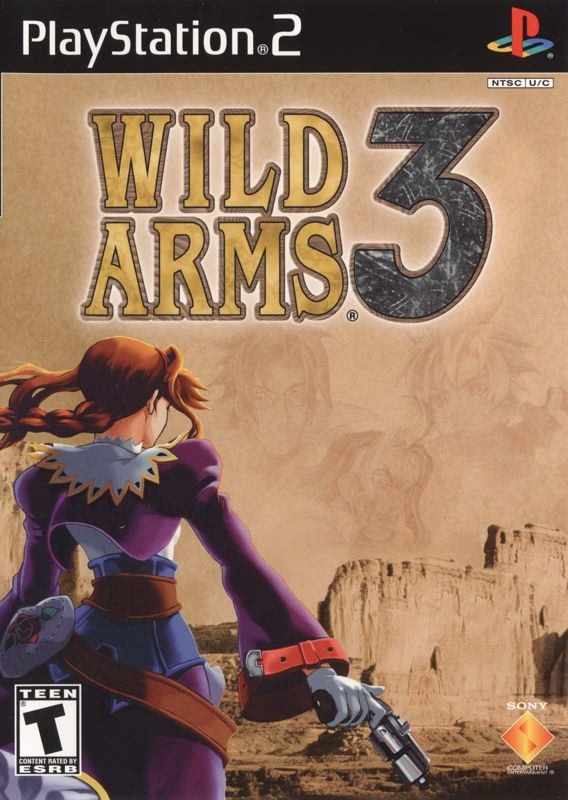
Wild Arms 3: Where the Wild West Meets the JRPG
I’ve been a fan of Westerns and cowboy culture since I was a kid, and I’ve loved Japanese RPGs since the NES days. So when somebody decided to smash those two things together, I took to the Wild Arms games on the original PlayStation like horseshoes to hooves!
On 15 October 2002, Wild Arms 3 rode into North America for the PlayStation 2, and by then I’d already spent plenty of time exploring the first two games. Naturally, I was ready to saddle up for another adventure.
And for the most part, the third installment delivered exactly what I wanted: turn-based combat, a sprawling Western-inspired world, memorable characters, an excellent soundtrack, and just enough new mechanics to keep things interesting.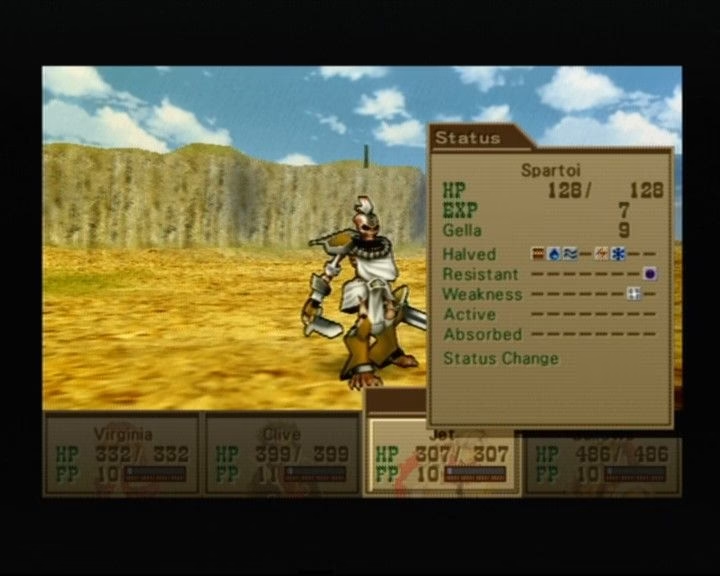
A Little History from the Frontier
The original Wild Arms debuted in Japan in 1996 before reaching North America in 1997. Developed by Media.Vision, it stood out among the fantasy RPGs of the era by mixing traditional swords-and-sorcery elements with six-shooters, dusty frontier towns, ancient technology, and a healthy dose of spaghetti Western atmosphere.
Wild Arms 2 followed in 1999 in Japan, reaching North America in 2000, expanding the formula with a larger cast and a more elaborate storyline.
Wild Arms 3 was the series’ first PlayStation 2 installment, and the technological upgrade was immediately apparent. Gone were the original PlayStation’s largely 2D exploration environments, replaced by a fully 3D world with a distinctive cel-shaded art style.
And thankfully, the Western atmosphere survived the transition.
Four Drifters and a Dying World
The adventure takes place on Filgaia, a harsh, desert-covered world where civilization clings to life among ancient ruins, forgotten technology, and dangerous wilderness.
At the center of the story is Virginia Maxwell, an idealistic young Drifter who dreams of following in her father’s footsteps and becoming a legendary adventurer.
She’s eventually joined by three rather different traveling companions: Jet Enduro, a mysterious and somewhat antisocial wanderer; Clive Winslett, an experienced and levelheaded bounty hunter; and Gallows Carradine, a reluctant priest who would rather be doing just about anything else.
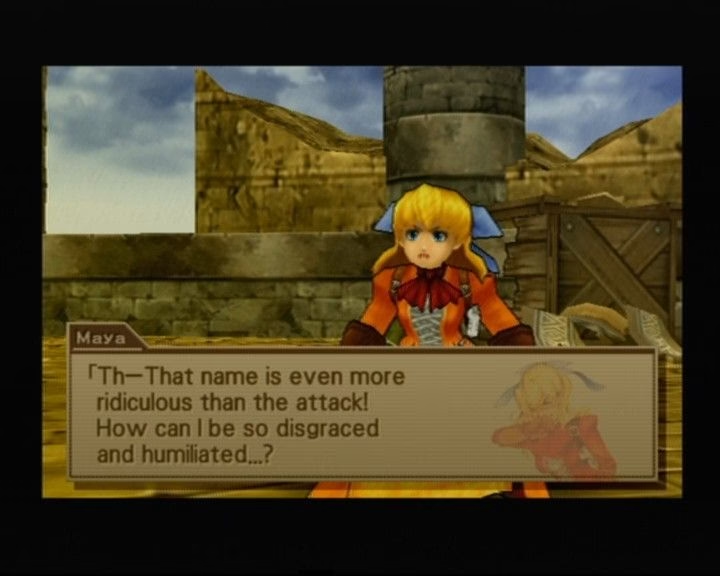 Each character has a distinct personality, background, and motivation, and their relationships develop as the adventure unfolds.
The story gradually expands from a relatively straightforward frontier adventure into something much larger, exploring the mysteries of Filgaia and the forces threatening its future.
No spoilers here, but there’s plenty more going on beneath all that sand.
Guns, Guardians, and the Force System
Wild Arms 3 retained the turn-based combat I enjoyed in the earlier games, but it also refined several of the series’ signature mechanics.
For starters, all four party members use ARMs, the series’ specialized firearms. Ammunition is limited, and weapons need to be reloaded during combat, introducing a little extra tactical consideration beyond simply selecting Attack every turn.
The Force system adds another layer of strategy. As characters fight, they accumulate Force Points, which can be used to activate special abilities.
Each character has a unique Force ability. Virginia’s Mystic can extend the effects of items to multiple targets, Jet’s Accelerator lets him act first, Clive’s Lock On improves his shooting accuracy and damage, and Gallows’ Extension allows his magic to affect multiple targets.
There are also shared abilities, including Gatling attacks and Guardian summons.
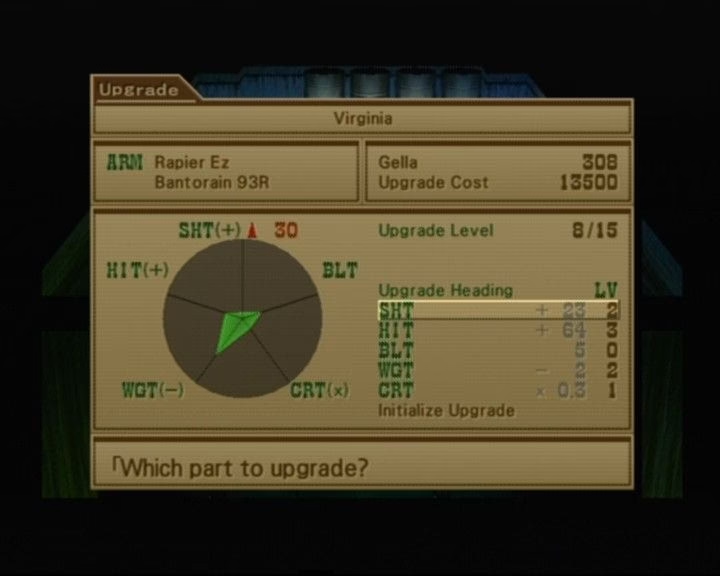 It’s a system that rewards a little planning without becoming unnecessarily complicated, and I always appreciated having those additional tactical options.
Outside combat, exploration remains a major part of the experience. Dungeons feature puzzles, hidden passages, and character-specific tools, while the world map encourages players to actively search for towns, ruins, and other locations rather than simply following a trail of obvious markers.
And, of course, there’s the music.
Composer Michiko Naruke returned with another terrific soundtrack, combining sweeping adventure themes with the whistles, guitars, and dramatic flourishes that made the series sound like a spaghetti Western crossed with a fantasy epic.
The Verdict
Wild Arms 3 didn’t reinvent the JRPG, and it didn’t need to. It took the elements that made the first two games enjoyable, dressed them up for the PlayStation 2, and added enough new ideas to make the experience feel fresh.
For someone who grew up loving both Westerns and role playing games, that combination was always going to be difficult to resist.
Twenty-four years later, I still think there’s something special about the Wild Arms formula. Fantasy adventures are plentiful, but how many let you ride across a dusty frontier, explore ancient ruins, summon supernatural guardians, and settle your differences with a six-shooter?
Did you play Wild Arms 3 on the PS2? And which of the original Wild Arms games was your favorite?