 Retro Replay Retro Gaming History, Reviews & Emulation



Retro Replay Review
Gameplay
The first hour has the straightforward pull of a fighter that does not waste time getting you into matches. Choose a girl, take in a short introduction, then start climbing through a fixed series of rivals. Punches, kicks, special attacks, and weapon-based moves all sit in familiar fighting-game territory, so the basic objective is immediately clear even before you settle on a favorite.
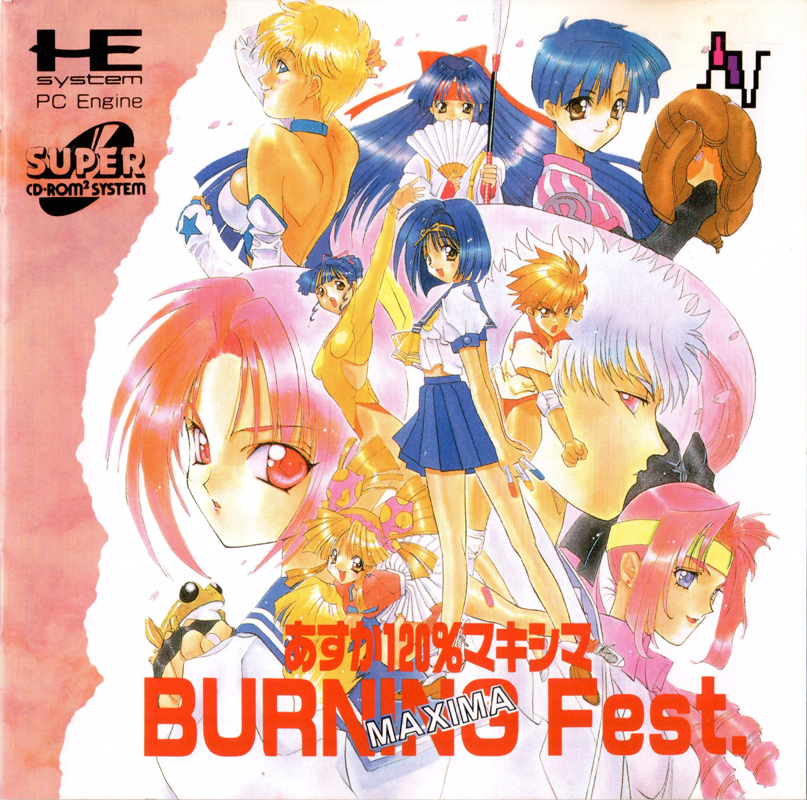
What gives Asuka 120% Maxima: BURNING Fest. some personality is the way its fighters are tied to school subjects and clubs. Rather than presenting ten interchangeable students, it lets their interests inform their techniques and weapons. The athletic tomboy throwing baseballs and sports accessories is the clearest example, and that kind of character-specific silliness helps the roster feel more playful than the bare tournament setup suggests.
There is a limit to how much the solo structure can carry you. Story mode is linear, its pre-fight dialogue comes in small portions, and each character’s introduction is short. If you need a fighter to keep unveiling big narrative rewards or branching paths, repetition can set in once you are simply facing more CPU rivals. This is better treated as a game to revisit with different fighters than a substantial single-player journey.
Versus mode is where the format makes the most sense. You can fight the computer, hand a controller to a friend for two-player matches, or use watch mode to let AI-controlled fighters settle a matchup. Watch mode is a modest extra, but it suits anyone who enjoys seeing how different character pairings play out without being in every round.

Graphics
The game uses anime-styled girls in side-view battles, with the academy tournament theme carried into their club-related attacks and weapons. Baseballs and sports accessories give the athletic fighter a concrete visual hook, while the character roster supplies the color and variety a one-on-one fighter needs.

Story
Ryoran Girls’ Private Academy is a school for arts, sciences, and martial arts, and its annual tournament puts its most successful students into the ring for club and personal glory. It is a clean excuse for a varied cast, not a dramatic premise asking you to invest in a long plot.
Each of the ten girls receives a short introduction and bits of dialogue before fights. That is enough to establish that every contender has her own angle on the competition, but the writing functions mainly as a quick palate cleanser between bouts.
The lightness is not necessarily a flaw. A fighting game can benefit from getting out of its own way, and Maxima does. Just do not go in hoping the tournament will build into a rich school story; its narrative payoff is the chance to see another fighter’s small slice of setup and then get back to the match.
Overall Experience
Asuka 120% Maxima: BURNING Fest. is a personable but lean 1995 fighter. Its familiar combat foundation and compact tournament structure make it easy to sample, while the school-club concept gives its cast more charm than a generic lineup of martial artists.
The best reason to give it a chance is the roster’s themed attacks and the prospect of local matches. Pick the character whose club theme catches your eye, spend a few rounds learning what her combinations can do, then see how she holds up against another human. That is a more rewarding plan than trying to force the thin story mode into being the main attraction.
Its payoff is modest but honest: ten distinct tournament contenders, direct side-view fighting, and a few modes that keep the matchups circulating. If you want a dense solo fighter or a story-led anime game, it will feel slight. If a brief, characterful bout with a friend sounds right, it has enough spirit to earn a look.


Reviews
There are no reviews yet.