 Retro Replay Retro Gaming History, Reviews & Emulation
Retro Replay Review
Gameplay
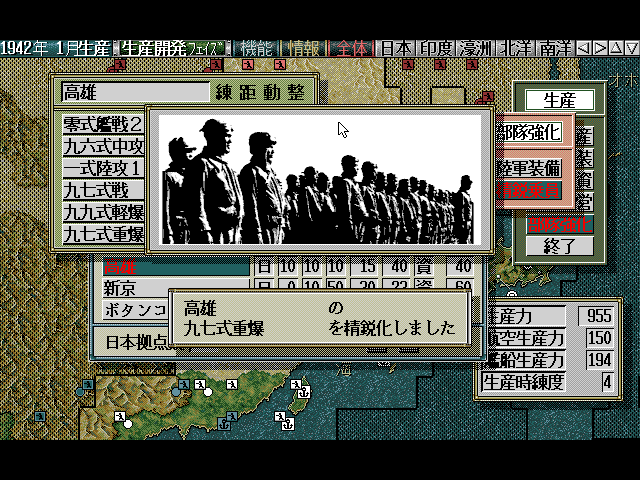
Goh II is at its most compelling before the fighting starts. You are not merely pushing an existing army across Asia; you are deciding what kind of war machine Japan will build. Assigning factories to planes, ships, and tanks turns production into the heart of the game, and it gives each choice a useful sense of weight. Spend heavily on one branch and you are making a commitment that will shape later operations.
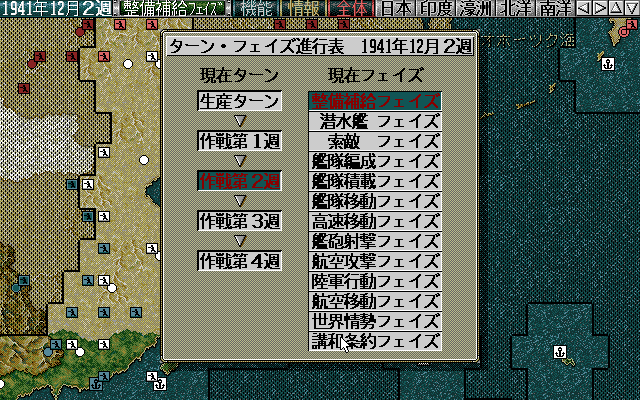
The large-scale map keeps your attention on fronts, distances, and broad military positioning rather than small-unit maneuvering. That makes Goh II feel appropriately strategic: you are directing a war across Asia, not fussing over a single skirmish. Turn-based movement also gives you room to consider where forces should go before committing, which suits the deliberate pace.
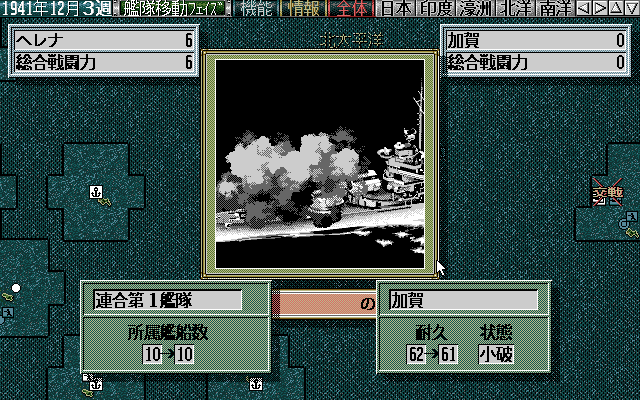
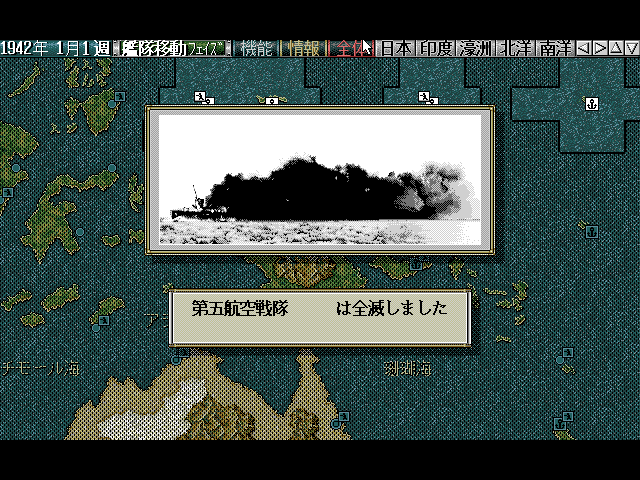
Automatic battle resolution is the crucial caveat. Outcomes draw on the parameters of individual units, vehicles, and equipment, so your influence lies in how well you prepared and positioned the army, not in direct control once the battle begins. That can be satisfying when a careful buildup pays off, but it also means a bad result may leave you wishing for more agency. Go in looking to manage risk rather than to command every engagement.
Diplomacy adds a small extra lever through agreements with other belligerents, though it never lets you rewrite the conflict wholesale. You cannot make another power switch sides or simply opt out of fighting. That limitation keeps the focus firmly on military and industrial planning, where Goh II has its strongest ideas.

Graphics
The game uses a top-down, large-scale map of Asia for moving military forces. That viewpoint fits its campaign-level scope, keeping attention on territory and the spread of the war rather than close-up battlefield detail.
Story
There is no separate character-led drama to carry Goh II. Its story is the alternate course of a World War II campaign in Asia, with Japan fighting the USA, United Kingdom, Soviet Union, and China. The historical framing gives the strategic decisions their stakes, even as the game remains focused on command rather than personal narrative.
That narrow viewpoint is both useful and severe. You are asked to think in factories, force deployments, and enemy powers, which creates a consistent wartime-command perspective. Anyone hoping for a broader human story will find little room for it; this is a campaign premise built to propel planning.
The diplomatic agreements offer a modest sense that political decisions can affect the campaign, but they do not turn Goh II into a negotiation game. War remains unavoidable, and the narrative momentum comes from whether your preparations can carry Japan through the conflict.
Overall Experience
Goh II is a specialized strategy game with a clear point of view: wars are won or lost in the decisions made before the shooting starts. Its production planning, continental map, and stat-driven combat all reinforce that idea. When you accept those terms, the game has a disciplined, absorbing rhythm.
The tradeoff is easy to state. You get campaign-level responsibility, but you surrender direct tactical control when battles begin. For some strategy fans, that is exactly the attraction: victory feels earned through foresight. For others, automated outcomes will make the most dramatic moments feel remote.
Give Goh II a chance if you enjoy old-school turn-based wargames that reward logistics, unit investment, and patient positioning. It is less suited to you if your favorite part of strategy games is commanding the battle itself. Its payoff is real, but it belongs to the planner who can live with the consequences of the plan.


Reviews
There are no reviews yet.