 Retro Replay Retro Gaming History, Reviews & Emulation


Retro Replay Review
Gameplay
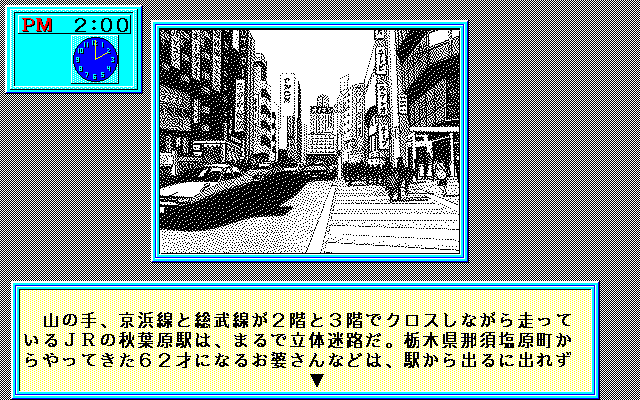
The first hour’s hook is the pressure placed on Hiroshi from every direction. He should be free to concentrate on college and dating, but his success running the company means the office has not really let him go. That tension gives your decisions some immediate weight: you are not simply picking dialogue for its own sake, but helping determine how he navigates competing personal and professional demands.
Compared with its predecessor, Soft de Hard na Monogatari 2 reduces the simulation side and puts most of its interaction into prompted decisions. That is a clear trade. If you came hoping to actively manage a software company, this sequel’s more guided format may feel like a step back. If the first game’s simulation material got in the way of the character scenes, though, the streamlined approach should feel more direct.
Its branching storyline is the reason to linger. Decisions can change later events, giving you a reason to think about Hiroshi’s answers instead of treating every prompt as a speed bump between scenes. The frustration is that this kind of structure lives or dies on your tolerance for reading and revisiting paths; there is less room for players who need frequent mechanical variety. Go in wanting to shape a protagonist’s choices, and the format makes sense.
Graphics
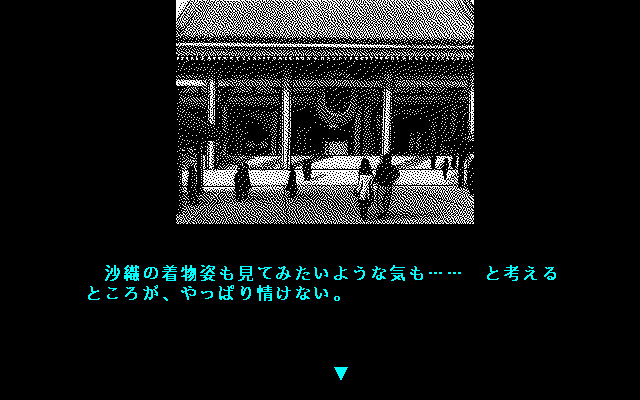
The first-person visual-novel framing keeps the focus on experiencing events from Hiroshi’s side as each decision arrives. It is a format built around scenes and conversations, fitting a story where relationships, work pressure, and personal plans pull him in different directions.
Story
Hiroshi’s situation is a stronger starting point than a standard campus romance. He has already handled adult responsibility successfully, yet he is now expected to return to being a student with ordinary dating plans. The fact that he remains needed at the office makes that supposed freedom feel unstable from the outset.
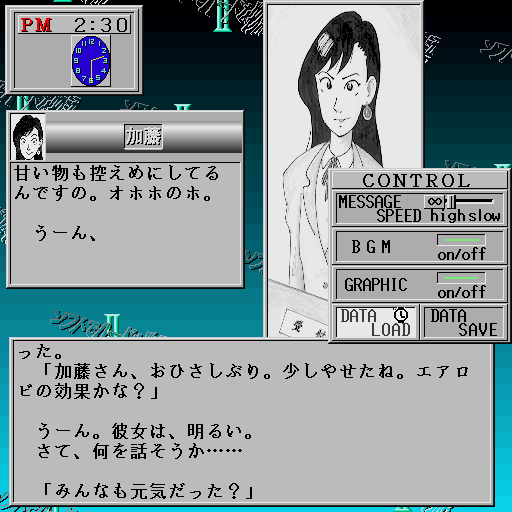
Rie Ishida’s arrival as the new receptionist is the complication that sharpens the setup. Rather than separating Hiroshi’s work life from his romantic prospects, the story brings them into the same workplace. That is fertile ground for a branching visual novel because even small choices can carry consequences across both sides of his life.
The story’s payoff depends on whether you enjoy interpersonal complications more than grand plotting. Soft de Hard na Monogatari 2 is interested in where Hiroshi’s choices lead, not in burying you under management systems. Its best audience is anyone who likes office-and-college drama with enough branching to make a second route feel worthwhile.
Overall Experience
Soft de Hard na Monogatari 2 makes a sensible editorial choice by committing to the visual-novel side of its premise. The reduced simulation elements will disappoint anyone attached to the predecessor’s management angle, but the more concentrated decision structure gives Hiroshi’s tangled routine room to breathe.
It is not a game for someone chasing constant action or deep business strategy. You need to enjoy reading scenes, weighing responses, and accepting that the central activity is guiding a young man through work obligations and dating complications. In return, you get a more focused branch-driven story than the premise initially suggests.
Give it a chance if the idea of choosing your way through a late-1980s software-office drama sounds more inviting than running the office itself. The payoff is in seeing how the choices reshape Hiroshi’s path, and that focus makes this sequel easier to recommend to visual-novel fans than to simulation diehards.



Reviews
There are no reviews yet.