 Retro Replay Retro Replay gaming reviews, news, emulation, geek stuff and more!
Retro Replay Review
Gameplay
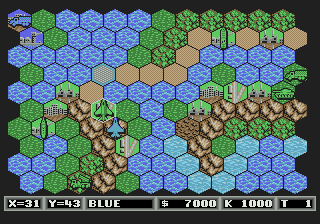
Super Daisenryaku offers a deep, turn-based strategy experience that will appeal to both series veterans and newcomers. At its core, each match unfolds on a hexagonal grid filled with varied terrain types—plains, forests, mountains, and cities—all of which play a crucial role in movement and combat. You begin by purchasing units with limited funds, balancing your roster between infantry, artillery, tanks, and air units. Each class brings unique strengths and vulnerabilities, demanding thoughtful deployment and adaptation as the battle evolves.
(HEY YOU!! We hope you enjoy! We try not to run ads. So basically, this is a very expensive hobby running this site. Please consider joining us for updates, forums, and more. Network w/ us to make some cash or friends while retro gaming, and you can win some free retro games for posting. Okay, carry on 👍)
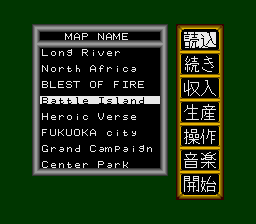
One of the game’s standout features is its flexible map selection. While it lacks a narrative campaign, you can choose from dozens of scenarios inspired by real-world conflicts and even fantasy realms courtesy of Sega’s console port. Whether you’re thrust into a Cold War standoff with NATO versus the Warsaw Pact or commanding futuristic forces on a Phantasy Star–themed battlefield, the objectives remain clear: capture your opponent’s capital while defending your own. The absence of a linear storyline means every playthrough feels fresh, encouraging experimentation and replayability.
Multiplayer modes further enrich the experience. You can challenge friends in head-to-head duels or engage four-player free-for-alls, mixing human and AI opponents as you see fit. On top of that, the built-in map editor lets creative commanders design custom battlefields, adjusting terrain, player factions, and starting resources. This feature extends the game’s lifespan considerably, offering near-endless strategic permutations long after you’ve mastered the stock scenarios.
Graphics
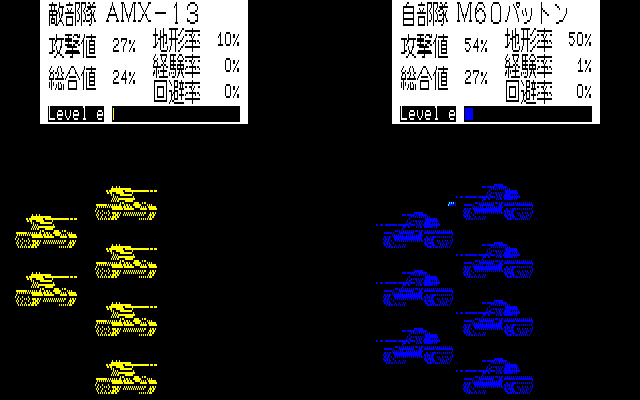
Super Daisenryaku’s visual presentation focuses on clarity and function over flashy effects. Each unit is represented by a small, clearly defined icon that conveys type, nationality, and health status at a glance. While the sprites may appear dated by modern standards, they are crisply rendered on the hex tiles, ensuring you can quickly assess the battlefield and make informed tactical decisions without confusion.
The terrain graphics also serve a practical purpose. Forests, hills, and cities are color-coded and shaded to indicate movement costs and defensive bonuses, integrating seamlessly with the UI. Weather conditions such as rain or snow occasionally appear on certain maps, subtly altering visibility and unit performance. Though these effects are modest, they enhance immersion by reinforcing the notion that real-world factors influence military operations.
Menus and interface elements maintain the series’ straightforward design philosophy. Icons for buying units, ending turns, and accessing the map editor are logically grouped, minimizing the learning curve for newcomers. While the presentation may not win awards for innovation, it consistently delivers the information you need to plan your strategy without unnecessary clutter or confusion.
Story
Super Daisenryaku does not feature a traditional campaign narrative. Instead, it relies on scenario briefs to set the stage for each battle, offering a glimpse into hypothetical conflicts drawn from history and science fiction alike. These concise introductions provide enough context to motivate your objectives and establish the stakes, whether you’re defending a national capital or spearheading an interstellar blockade.
By weaving in maps based on Sega’s Phantasy Star universe, the game injects a light veneer of fantasy that contrasts with its otherwise realistic military simulations. This blend of genres allows fans of both wargaming and classic Japanese RPGs to find familiar touchpoints. Although these scenarios lack character-driven arcs, they still capture the imagination by placing you at the helm of high-pressure situations that demand strategic prowess.
Ultimately, the absence of an overarching storyline encourages players to craft their own narratives. Every victory becomes a tale of tactical brilliance, and every defeat a lesson in battlefield management. This open-ended approach to storytelling reinforces the game’s core focus on strategy, letting you define your personal legacy on the hex grid.
Overall Experience
Super Daisenryaku stands out as a robust war strategy title that rewards patience, planning, and creative thinking. Its blend of historical and fantasy maps, coupled with a versatile multiplayer suite and map editor, offers exceptional value for aficionados of turn-based tactics. The streamlined interface and clear visual cues ensure that even complex operations remain accessible, reducing entry barriers for newcomers without sacrificing depth.
While the lack of a cohesive campaign might disappoint players seeking a character-driven journey, the game’s modular scenario structure makes up for it by delivering unmatched replayability. Each map presents unique geographical challenges and faction compositions, ensuring that no two battles unfold in the same way. For those who thrive on outmaneuvering opponents and optimizing unit compositions, Super Daisenryaku provides an engrossing sandbox of strategic possibilities.
In conclusion, Super Daisenryaku is a compelling purchase for strategy enthusiasts looking to master large-scale tactical warfare. Its combination of historical authenticity, imaginative settings, and robust customization tools creates a multifaceted experience that will keep you returning to the battlefield long after your first conquest. If you value depth and variety in your wargaming adventures, this title deserves a spot in your collection.


Reviews
There are no reviews yet.