 Retro Replay Retro Replay gaming reviews, news, emulation, geek stuff and more!



Retro Replay Review
Gameplay
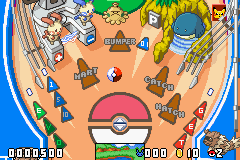
Pokémon Pinball: Ruby & Sapphire marries the satisfying physics of traditional pinball with the addictive appeal of Pokémon collection. Rather than one generic pinball table, players can choose between two distinct boards—one themed after Pokémon Ruby and the other after Pokémon Sapphire. Each board offers its own set of ramps, bumpers, spinners, and target lanes, ensuring that mastering one table doesn’t guarantee high scores on the other.
(HEY YOU!! We hope you enjoy! We try not to run ads. So basically, this is a very expensive hobby running this site. Please consider joining us for updates, forums, and more. Network w/ us to make some cash or friends while retro gaming, and you can win some free retro games for posting. Okay, carry on 👍)
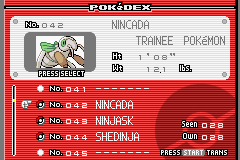
The central twist comes in the form of capture mechanics. As you launch and ricochet the Poké Ball around the table, you’ll light up specific lanes or targets to trigger mini-games that correspond to catching wild Pokémon. Successfully completing these challenges—from slot-machine style selections to rapid-hit sequences—means you add that creature to your Pokédex. There are 200 Pokémon in total to discover, blending the thrill of pinball scoring with the completionist drive of Pokémon fans.
Aside from chasing high scores, players must balance offence and defence: too much focus on rapid ball speed can cause frequent drains, but a sluggish ball seldom racks up enough points to unlock higher-tier challenges. Strategic use of flipper shots to hold the ball in designated catch zones becomes essential. This layered gameplay keeps each session feeling fresh, whether you’re a pinball novice or a seasoned veteran.
Although the game lacks a direct two-player battle mode, it compensates with link-cable support for trading captured Pokémon and comparing high scores. This social component extends the lifespan of the title, giving players incentive to revisit tables and seek rare or version-exclusive creatures. Overall, the fusion of classic pinball rules with Pokémon-specific mini-games feels both intuitive and surprisingly deep.
Graphics
Visually, Pokémon Pinball: Ruby & Sapphire stands out as one of the more colorful entries on the Game Boy Advance. The two tables are richly detailed, with each bumper and lane adorned by regional landmarks from the Hoenn region. Subtle animations—such as shimmering water effects on the Sapphire table or flickering lava flows on the Ruby table—add dynamism to what could otherwise be static backdrops.
Pokémon sprites appear crisp and faithful to their GBA counterparts. When you successfully capture a creature, its full-color portrait pops onto the screen, accompanied by a satisfying shimmer. Each Pokémon’s animation upon entry or exit is brief but charming, reinforcing the reward loop of capture and completion without slowing down the pinball action.
Although limited by the hardware’s palette, the designers cleverly use contrast and layering to ensure that key targets and ramps stand out. Important elements such as multipliers, catch zones, and bonus lights glow in bright hues, guiding players’ eyes even amid the frenzy of high-speed ball movement. In this way, the graphics balance aesthetic flair with functional clarity.
Menus and HUD elements are clean and well-organized, displaying your current score, ball count, active bonuses, and captured Pokémon tallies in an easy-to-read strip at the top. The interface never feels intrusive, allowing the table itself to remain the star of the show. Overall, the visual presentation is both polished and purpose-driven, enhancing immersion without distraction.
Story
Strictly speaking, Pokémon Pinball: Ruby & Sapphire doesn’t follow a traditional narrative arc. There’s no Gym challenge sequence or villainous team to thwart—your “story” is purely the journey of filling your Pokéball collection. This minimalist approach keeps the focus squarely on gameplay but may underwhelm players seeking a defined plot.
That said, there is an implicit framework: you’re a trainer exploring the Hoenn region, encountering wild Pokémon and striving to complete your Pokédex. Each successful capture feels like a story beat, rewarding your skill and persistence. The act of tracking which creatures you’ve collected, and seeing which remain elusive, gives a personal sense of progression akin to the mainline RPGs.
Between the Ruby and Sapphire boards, version-exclusive Pokémon inject a mild narrative choice: which table aligns with your preferred pocket monsters? This subtle branching offers replay incentive and a sense of identity—just as in the GBA titles, certain species only appear on one table. Exchanging Pokémon via link cable further builds on that communal storytelling, as friends share their unique catches.
Ultimately, while the game offers no cinematic cutscenes or character dialogue, its storytelling lives in the snapshot of each capture and the growing roster in your Pokédex. For fans of Pokémon, this streamlined “story” is enough—every new icon in your collection is its own triumph and tale.
Overall Experience
Pokémon Pinball: Ruby & Sapphire delivers a surprisingly robust package for both pinball aficionados and Pokémon enthusiasts. The core loop—launch, hit, capture—remains continually addictive, encouraging you to perfect shots, bankrupt your high scores, and uncover the rarest creatures. The dual-table setup ensures you won’t exhaust content too quickly, and the demand to fill all 200 Pokédex slots adds long-term replay value.
The game’s accessibility is a strong point. Controls are tight, the physics model feels fair, and the catch mini-games provide just enough variation to break up the pinball rhythm. Even newcomers to pinball will find themselves adjusting to flipper timing without feeling overwhelmed. Seasoned players can chase mastery on each board, unlocking advanced bonuses and high-score milestones.
Link-cable trading and score-sharing extend the experience beyond solo play. While it’s not a head-to-head battle, the friendly competition for who can snag the rarest or highest-scoring runs fosters a communal spirit. Trading version-exclusive Pokémon mirrors the social dynamics of the mainline games and gives you one more reason to revisit table layouts with friends.
In summary, Pokémon Pinball: Ruby & Sapphire strikes a delightful balance between accessible pinball fun and the completionist allure of Pokémon collection. Its vibrant graphics, intuitive capture mechanics, and endless chase for high scores combine to create an engaging handheld experience. Whether you’re after a quick play session or a marathon Pokédex hunt, this title remains a standout entry in both the pinball and Pokémon catalogs.


Reviews
There are no reviews yet.