 Retro Replay Retro Gaming History, Reviews & Emulation
Retro Replay Review
Gameplay
The first few minutes of Speedy Gonzales are about as direct as a Game Boy platformer gets: run right, grab coins, avoid whatever is trying to take a life from you, and find the exit. That simplicity works in its favor. Speedy feels like a character who ought to move fast, and the game is most satisfying when you stop treating every stage as a cautious obstacle course and start carrying momentum through it.
The Sonic borrowing is more than a passing resemblance. Bumpers can launch Speedy into enough speed to take on loops, and that speed can also let him smash through certain walls. These are the moments that give the game its spark. A route that initially looks like a basic run can reveal a faster or more playful way through once you understand that velocity matters.
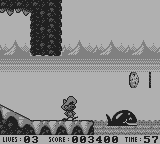
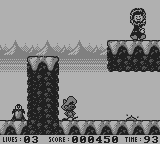
Jumping on penguins adds another useful wrinkle, since it gives Speedy extra height. You are not working with an enormous move set, but the small handful of interactions does encourage you to pay attention to what is ahead rather than merely holding right. The best stretches feel like a quick chain of decisions: build speed, hit the bumper cleanly, use the loop, then spot a wall or enemy placement that can help rather than hurt.
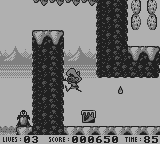
Frustration comes from the cost of mistakes. Enemies, pit traps, and sharp spikes all take lives, so a sloppy collision can abruptly halt the flow the game otherwise wants you to enjoy. If you are expecting the precision and depth of the platforming giants it echoes, this is a lighter, rougher outing. But if you meet it on its own brisk terms, its momentum tricks give it more personality than a standard licensed character run-and-jump game.

Graphics
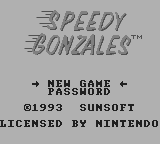
This is a side-view, 2D scrolling Game Boy platformer, with Speedy racing through screens built around enemies, pits, spikes, bumpers, and loops. The fast-running character and the looping sections are the images that stick: they make the Sonic influence immediately visible even on the smaller handheld scale.
Story
There is very little narrative weight here. You control the Looney Tunes mouse Speedy Gonzales and push through levels toward their exits; the game’s focus is firmly on surviving the route rather than telling a larger tale.
That is not a flaw in itself. The licensed character mainly gives the action a fitting lead: Speedy’s reputation for quick movement lines up neatly with a platformer built around gaining speed, hitting bumpers, and charging through walls.
Do not come in looking for a cartoon episode translated into a game. Come in for a straightforward character platformer where the story exists chiefly to put Speedy at the start of another hazardous course.
Overall Experience
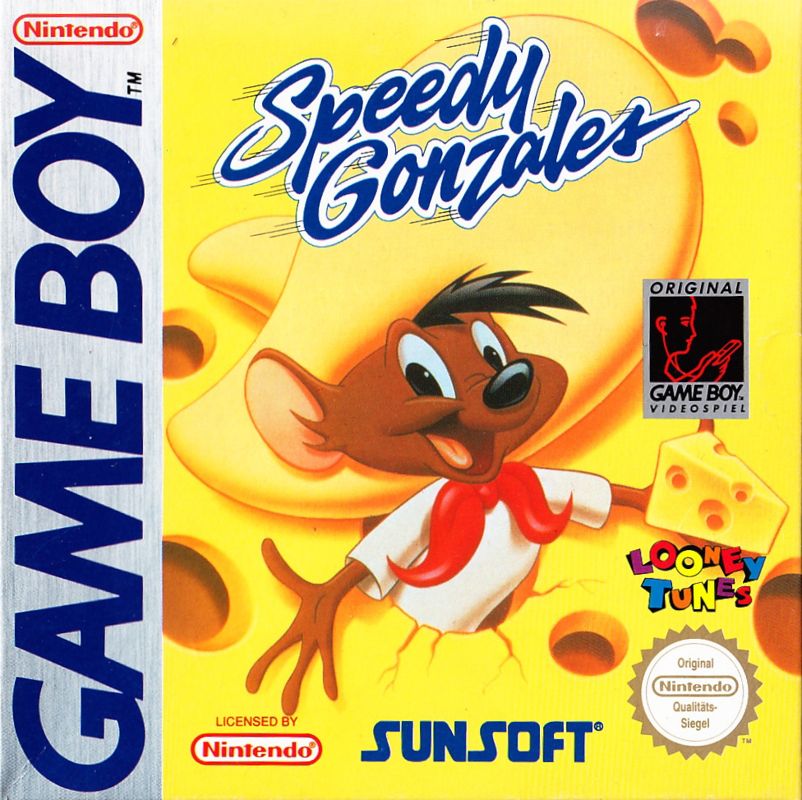
Speedy Gonzales is an enjoyable enough 1993 Game Boy curiosity because it understands one important thing: running quickly should feel rewarding. Its best ideas arrive when the stage lets you use momentum rather than merely avoid hazards, and the loops, bumpers, penguin bounces, and breakable walls add welcome texture to the basic exit-reaching goal.
It does not have much room for careless play. The life loss attached to enemies and traps means you may need to slow down just when the game is urging you to move, and that push-pull keeps it from feeling effortlessly smooth. Still, there is a modest pleasure in learning where a fast route is safe and where it will send you straight into trouble.
Give it a chance if you enjoy old handheld platformers, Looney Tunes games, or shorter action games that borrow a little momentum-based flair. It is not a replacement for the series it resembles, but Speedy’s speed-focused toolkit gives this licensed platformer a worthwhile identity of its own.

Reviews
There are no reviews yet.