 Retro Replay Retro Gaming History, Reviews & Emulation


Retro Replay Review
Gameplay
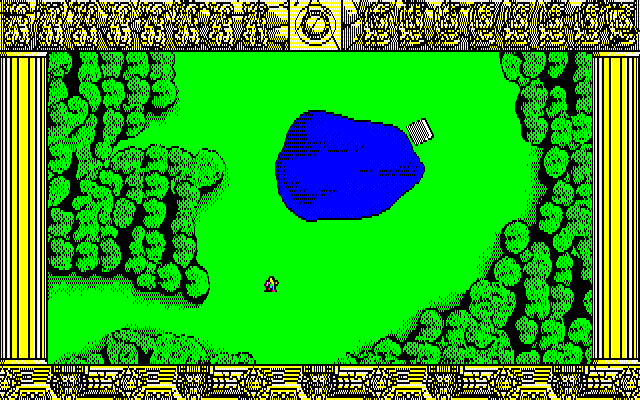
The opening hook is strong in a very specific old-school way: you are dropped into the ruins of Chichen Itza with a mysterious Sun Key to pursue, and progress begins by poking at a place that clearly has more to hide. Moving the adventurer around the top-down overworld gives the search some physical shape before you cross into temples and other locations. It feels less like selecting destinations from a list and more like going out to investigate them.
Once indoors, Taiyō no Shinden shifts into first person and asks you to work through icon-based commands such as Look, Take, and Use. That is the core of the game, and it is a better fit for you if you enjoy treating each room like a puzzle box. You inspect what is in front of you, take useful objects, and test them against the obstacles you find. The satisfaction comes from making a connection rather than from quick reflexes.
Its strongest idea is the blend of map travel and close-up investigation. The overworld keeps the setting from feeling like a chain of disconnected screens, while the first-person locations slow you down and make object interaction the priority. The trade-off is clear: this is a patient adventure. If you want constant action, the verb menu and inventory-driven puzzle solving will feel like a stop-start routine; if that classic rhythm is your comfort food, the structure is easy to appreciate.

Graphics
You see Chichen Itza from two useful angles: a top-down overworld for travelling between locations, then a first-person view inside temples and other sites. The switch is simple but effective, making the outdoor search and the close inspection of ruins feel like distinct parts of the expedition.

Story
The title points toward the Aztecs, but the game is concerned with the Maya people of southern Mexico and Central America. That correction matters, because its central mystery is tied to the secrets of Mayan civilization rather than to the culture suggested by the misspelled name.
You play a nameless adventurer seeking the Sun Key, an ancient artifact said to unlock those secrets. It is a clean adventure-game premise: an evocative object, an ancient site, and a reason to keep opening the next door or examining the next item. The story is built to propel exploration rather than to turn the hero into a heavily defined character.
Chichen Itza does much of the narrative work. Ruins, temples, and the promise of lost knowledge give the puzzles a coherent destination, so you are not merely combining inventory items in a vacuum. Anyone wanting a character-led drama may find the unnamed protagonist thin, but the archaeological mystery is an appropriate frame for this style of adventure.
Overall Experience
Taiyō no Shinden: Asteka II is a focused relic of a different adventure-game vocabulary: travel across a map, enter a location, study the scene, and solve your way forward with verbs and objects. It does not chase speed. Instead, it asks whether you enjoy the mental pause before trying another interaction.
The first stretch should tell you quickly whether its rhythm works for you. If navigating a ruin and investigating its details feels inviting, the two-perspective structure gives the search a nice sense of place. If you need immediate action or a protagonist with a more personal stake, its methodical object puzzles may feel remote.
For the right mood, there is real charm in its directness. The quest for the Sun Key, the Maya-focused setting, and the old-fashioned command interface all point toward one kind of experience: a quiet, exploratory puzzle adventure. It is worth your time when you want to slow down and meet an ancient mystery on its own deliberate terms.


Reviews
There are no reviews yet.