 Retro Replay Retro Gaming History, Reviews & Emulation
Retro Replay Review
Gameplay
The first hour has a strong pull because The 4th Unit puts you in Blon-Win’s uncertain position. You know there is a mystery around the abandoned craft and her unusual powers, but the game makes you work through scenes and conversations to uncover it. This is not an adventure built around dense inventory puzzles; the main challenge is advancing the next story beat by selecting the right command and target on screen.
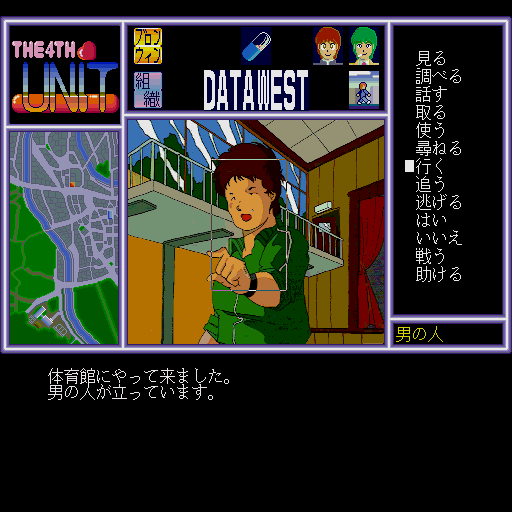
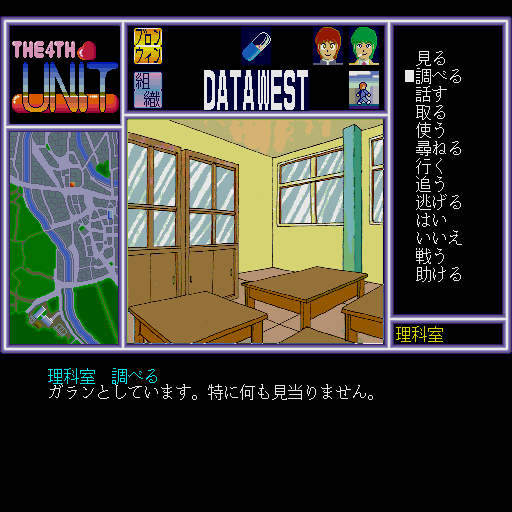
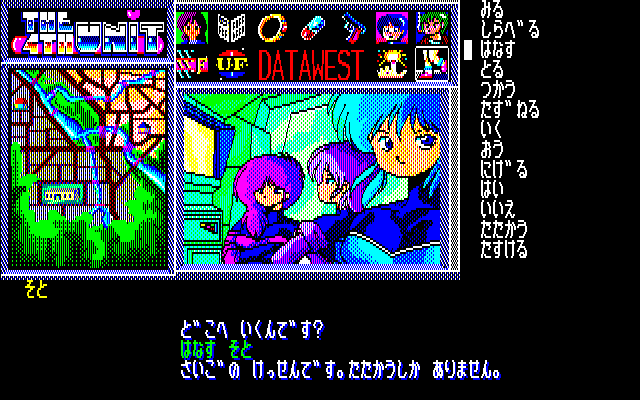
That approach can feel pleasantly direct when you are engaged with the plot. Examine, Talk, and Go form the expected backbone, but the extra verbs matter: taking objects, using items, giving yes-or-no answers, and choosing Fight or Rescue make interactions feel more specific to the situation. Highlighting a person or object and pairing it with a command is easy to understand in principle, though the size of the command list means you may spend time testing possibilities when the intended trigger is not obvious.
Combat arrives at key moments rather than taking over the adventure. Battles are turn-based and menu-driven, with straightforward choices such as punches and kicks. They sound simple because they are simple, and that is probably for the best: the fighting breaks up the investigation without turning this into a combat-heavy game. Go in for the sci-fi adventure first, not for strategic battles.
The Rescue command is a nice sign of the game’s broader ambitions. Blon-Win is not merely roaming from clue to clue; she has joined a bionic crime-fighting unit, and the available actions acknowledge that role. Still, the core rhythm remains conversational and event-focused. If you enjoy old adventures where careful attention to scenes matters more than solving a formal puzzle box, that rhythm can be satisfying.
Graphics
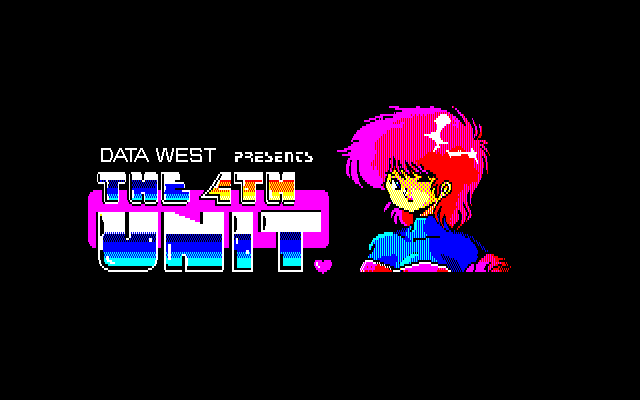
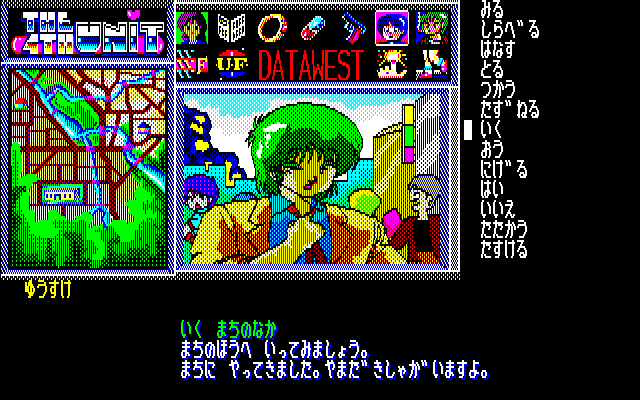
The game uses a first-person adventure format, with people and objects displayed on screen for you to highlight before choosing a command. Its anime and science-fiction framing fits the material: an unidentified spacecraft, Blon-Win, and a team of bionic soldiers give the game a distinctly Japanese late-1980s genre flavor.
Story
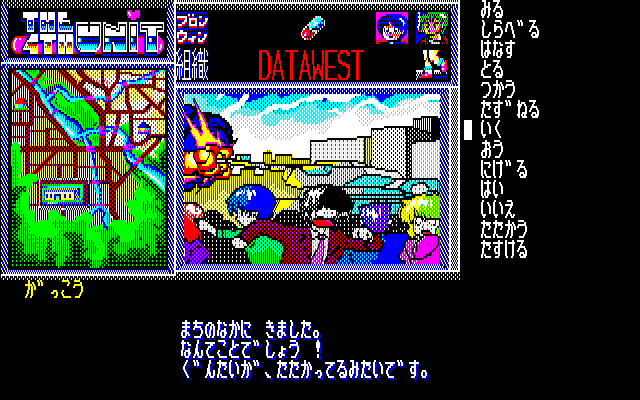
The 4th Unit earns attention with its opening question. Japan shoots down what looks like an invading alien craft, only to find an unmanned, abandoned vehicle and a teenage girl in the nearby forest. Blon-Win remembers only her name, and the obvious link between her and the spacecraft gives the early investigation a clear reason to keep pushing forward.
From there, the story shifts from mystery toward superheroic sci-fi. Blon-Win discovers unique powers and joins the 4th Unit, a group of bionic soldiers fighting crime. It is a big tonal leap, but a fun one if you like anime-flavored stories that move from strange arrival to larger-duty adventure.
Because progress centers on triggering events, the narrative is not just background between puzzles; it is the main reward for playing. That makes patience important. When you are unsure which command advances a scene, momentum can stall. When the next revelation lands, however, the game’s odd mix of amnesia, alien mystery, and bionic heroics is exactly what gives it personality.
Overall Experience
The 4th Unit is an appealingly unusual relic for anyone who likes story-first Japanese adventures. Its strongest quality is commitment to its premise: you begin with an abandoned spaceship and an amnesiac girl, then follow that thread into a crime-fighting bionic unit. There is enough action in the command set and battle interruptions to prevent it from feeling like a purely passive visual novel, even though the story is clearly the priority.
The rough edge is the old command-driven structure. A long list of verbs can make a scene feel interactive, but it can also turn a missed event trigger into an exercise in trying options. You should be ready to slow down, inspect the screen, revisit conversations, and accept that progress may be more about finding the correct interaction than making a clever deduction.
For the right gamer, that friction is worth accepting. The 4th Unit is not a recommendation based on deep tactical combat or elaborate puzzle design; it is one for the offbeat journey and its very specific 1980s Japanese sci-fi mood. If Blon-Win’s mystery grabs you, the game’s focused, event-led structure gives you a solid reason to see where her connection to that spacecraft leads.


Reviews
There are no reviews yet.