 Retro Replay Retro Gaming History, Reviews & Emulation


Retro Replay Review
Gameplay
The first stretch asks you to settle into Kono Hareta Sora no Shita de’s pace rather than chase a string of puzzles or action scenes. You are Reiichi Kuroha, an insurance investigator brought into the aftermath of an apparent Mimic suicide, and much of the game’s momentum comes from reading the case material, meeting the people involved, and deciding how much you trust the official line. That is a strong setup for a visual novel because the central question is immediately personal and procedural: was this really a suicide, and what does the answer mean for a society dependent on Mimics?
Interaction is light but meaningful in the way it is used. The game is primarily written text paired with still images, with occasional choices that branch the story. That means the choices arrive as moments to consider rather than a constant test of reflexes. If you enjoy pausing over dialogue and taking responsibility for a route, that structure can make an investigation feel more involving than a completely linear novel. If you want to actively search rooms, interrogate suspects through systems, or solve logic puzzles, you should know this is not that kind of investigation game.
Its biggest gameplay strength is that the format matches the premise. Reiichi is not a soldier or an adventurer; he is part of an inquiry into a heavily regulated technology. Reading, weighing information, and choosing a direction suit that job. The trade-off is obvious: long runs of text and static scenes demand patience. Give it a chance when you are in the mood to read attentively, not when you want a busy game to fill ten minutes.

Graphics
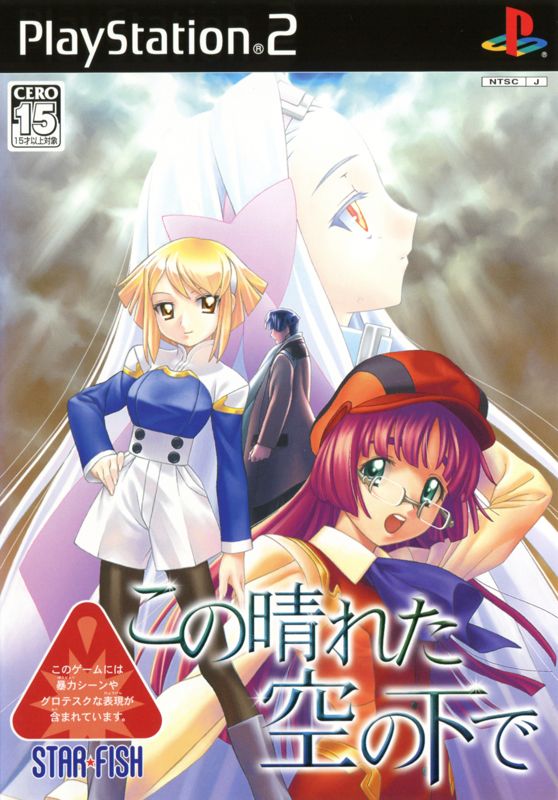
The visuals follow the classic visual-novel approach: still images accompany the text instead of frequent animation. That puts the focus on character scenes and the futuristic world around the investigation, while the branching choices and reading do most of the work. It is a restrained fit for a story built around conversation, suspicion, and gradually changing assumptions.

Story
The story has a smart hook because its damaged-Earth future is not just background dressing. Dangerous radiation and ultraviolet exposure have changed daily life so thoroughly that people go outside at night, while Mimics carry out daytime work. That arrangement gives the Mimic suicide weight before the investigation even begins. These are not distant machines in a lab; they are trusted, humanlike parts of ordinary society.
Reiichi’s role is a good lens for the mystery. He arrives with a partner and a Biowell representative, which immediately puts competing interests in the same room: an investigation needs answers, while the corporation behind the Mimics has every reason to protect its reputation. The question of whether something sinister sits inside Biowell—or within the Mimics themselves—has enough room for unease without requiring the game to abandon its investigative footing.
Branching choices are especially welcome in this kind of story because they let you engage with uncertainty rather than merely watch it unfold. The premise also carries a familiar but durable science-fiction tension: people insist an artificial lifeform is safe and reliable, then one event forces everyone to reconsider what those assurances mean. Come for a focused mystery about trust, responsibility, and artificial people, rather than expecting a sprawling science-fiction epic.
Overall Experience
Kono Hareta Sora no Shita de is likely to land best when you treat it like an evening of speculative fiction with a few decisions in your hands. Its first-hour pull is straightforward: a supposedly dependable Mimic has died under suspicious circumstances, and the world’s dependence on Mimics makes a simple explanation feel unlikely. Once you accept its reading-heavy rhythm, the corporate investigation becomes the reason to continue.
Frustration can set in if you come expecting traditional adventure-game activity. The still-image format and occasional branching choices leave little room for players who measure engagement by movement, puzzles, or rapid-fire interaction. But that limitation is also part of its clarity: it commits to being a visual novel and lets the case, its conversations, and its implications carry the experience.
For visual-novel fans, especially anyone drawn to near-future stories where a practical technology has quietly remade society, this is worth a look. The payoff is the chance to follow an intimate investigation through a premise with real thematic pressure. Bring curiosity, read carefully, and let the questions around Biowell and the Mimics do their work.


Reviews
There are no reviews yet.