 Retro Replay Retro Replay gaming reviews, news, emulation, geek stuff and more!
Retro Replay Review
Gameplay
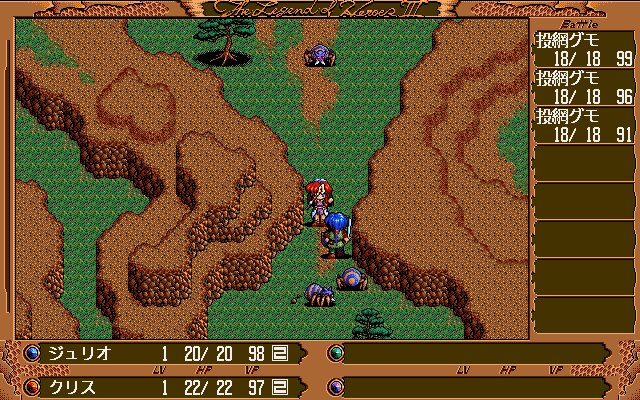
The Legend of Heroes III: Shiroki Majo puts a unique spin on classic JRPG mechanics by introducing a “programmed battle” system. Rather than issuing commands in real time, you set up to eight different action sequences—each containing up to five commands—before the fight begins. Once combat starts, your party executes these commands automatically, placing strategic foresight above reflexes. You can switch between programs on the fly, but the core challenge lies in anticipating enemy movements and planning the optimal sequence of attacks, spells, and healing actions in advance.
(HEY YOU!! We hope you enjoy! We try not to run ads. So basically, this is a very expensive hobby running this site. Please consider joining us for updates, forums, and more. Network w/ us to make some cash or friends while retro gaming, and you can win some free retro games for posting. Okay, carry on 👍)
Between shrine quests, exploration follows a largely linear path, guiding you through forests, dungeons, and ancient ruins that tie directly into the central prophecy. Traversal is straightforward, with an overworld map connecting each shrine location. Random encounters are infrequent, since major battles tend to happen in scripted arenas, reinforcing the sense that every fight matters to Jurio’s warrior initiation. This design helps maintain pacing, keeping players focused on uncovering story beats rather than grinding levels.
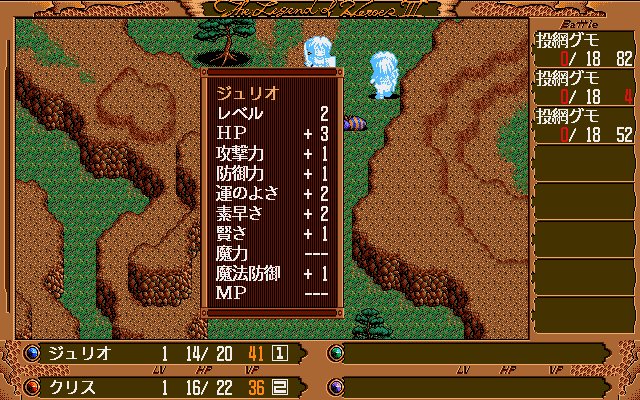
Progression relies on an automatic leveling system: experience points are tallied after each battle, and characters increase their stats accordingly. While this removes the tedium of micromanaging EXP distribution, it also means you’ll need to fine-tune your battle programs if you hope to overcome tougher foes. Juggling Jurio’s swordsmanship and Chris’s magical prowess becomes a satisfying puzzle of resource management—do you program Chris to spam offensive spells or reserve MP for emergencies? These decisions keep combat engaging, even if the underlying mechanics feel somewhat dated by modern standards.
Graphics
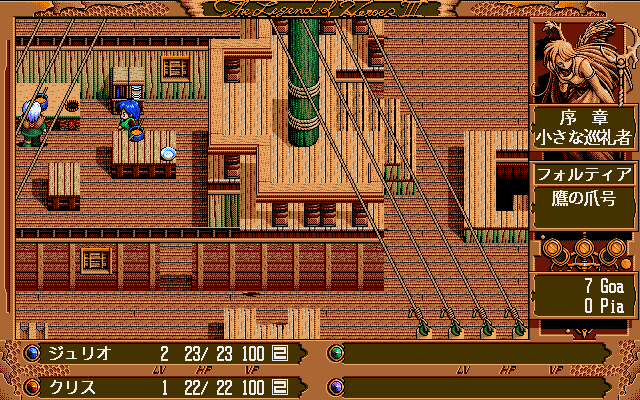
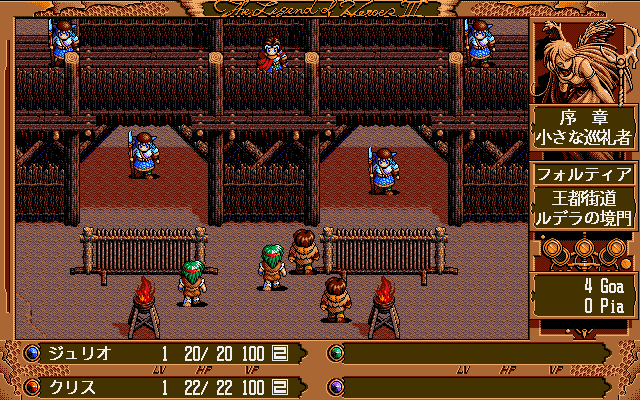
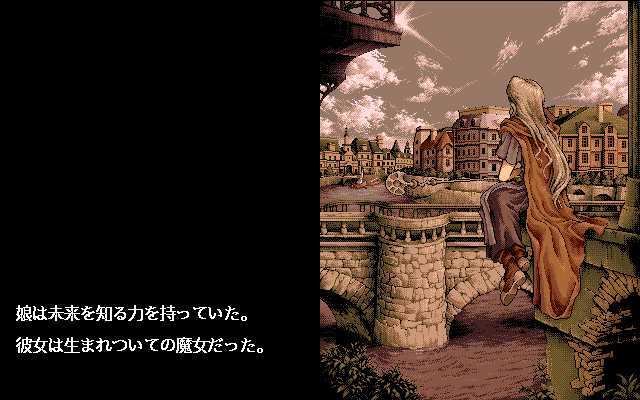
Visually, Shiroki Majo presents a charming blend of late-’90s sprite art and detailed 2D backgrounds. Character portraits during dialogue sequences are expressive, capturing Jurio’s earnest determination and Chris’s playful confidence. While the sprite animations for walking and spellcasting are relatively simple, they convey essential personality traits and integrate smoothly into the environments.
The shrine locations boast varied palettes that help differentiate each sacred site. From the verdant greens of the Forest Shrine to the stark whites and silvers of the White Witch’s domain, the game uses color contrast effectively to heighten mood. Though the resolution and color depth are limited compared to today’s titles, a nostalgic pixel-based aesthetic will appeal to fans of retro RPGs and evoke memories of early console classics.
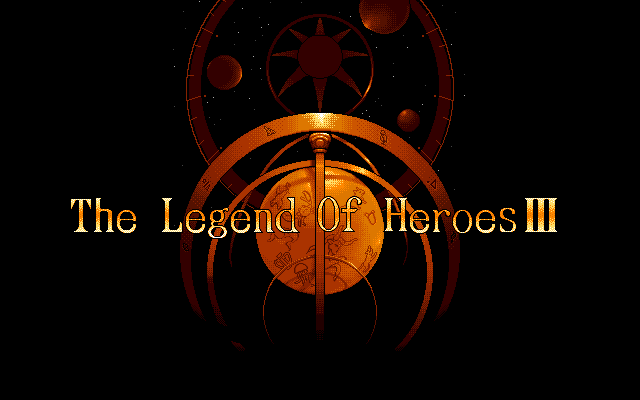
In-battle visuals focus on clarity—enemy sprites are distinct, and spell effects, such as healing or elemental bursts, feature bright flashes that make it easy to track the flow of combat. The pre-set arenas themselves are often framed by ornate borders, reinforcing the sense that you’re entering a ritualized duel rather than a random skirmish. Overall, the graphics strike a balance between readability and stylistic flair, even if they lack the polish of contemporary 3D-rendered worlds.
Story
The narrative centers on Jurio, a young initiate destined to prove himself by visiting five sacred shrines scattered across the world of Tirasweel. Each shrine offers trials that test his courage, strength, and resolve—and reveals fragments of an ominous prophecy. Accompanying him is Chris, a talented magician whose wit and compassion provide both comic relief and emotional grounding. Their dynamic partnership forms the heart of the tale.
As Jurio and Chris complete shrine rites, they begin to learn of the White Witch—a mysterious figure whose prophecy foretells a devastating wave that will engulf Tirasweel. The duo’s journey evolves from a coming-of-age ritual to a race against time as they confront not only monsters guarding the shrines, but also the man orchestrating the Witch’s dark design. The stakes escalate organically, with each revelation spurring them onward to the next ordeal.
Dialogue scenes strike a balance between lighthearted banter and weighty exposition. Key supporting characters appear at narrative junctions, offering crucial guidance or challenging the protagonists’ convictions. While the overall plot is linear—typical for a JRPG of this era—it delivers a steady stream of surprises and character moments that keep you invested. By the final shrine, the tale shifts into high drama, culminating in a showdown that ties back to every twist and prophecy hinted at along the way.
Overall Experience
The Legend of Heroes III: Shiroki Majo is a rewarding journey for players who appreciate thoughtful, strategy-driven combat and a rich, character-focused storyline. Programming battle routines in advance may feel unconventional at first, but it soon reveals layers of depth as you refine your tactics. Those seeking nonstop action might find the pacing deliberate, yet fans of strategic JRPGs will savor the planning and adaptability required to master each encounter.
Graphically, the game leans into retro charm rather than modern spectacle, making it ideal for enthusiasts of pixel art and classic RPG presentation. The story shines through in crisp dialogue portraits and varied shrine backdrops, even if it lacks cinematic cutscenes. The emotional bond between Jurio and Chris, coupled with high-stakes prophecy lore, ensures the narrative remains engaging throughout the roughly 30–40 hour campaign.
Ultimately, Shiroki Majo stands out as an innovative chapter in the Legend of Heroes saga, pioneering mechanics that would influence later entries. Its blend of shrine exploration, strategic programming, and heartfelt storytelling forms a cohesive package that still resonates more than two decades later. If you’re intrigued by prophecy-driven adventures or crave a JRPG that emphasizes planning over button-mashing, this title should be on your must-play list.



Reviews
There are no reviews yet.