 Retro Replay Retro Gaming History, Reviews & Emulation
Retro Replay Review
Gameplay
The first hour has an easy pull: pick the US Navy or Japanese Imperial Navy, head into a recognizable Pacific battle, and get airborne without signing up for an intimidatingly dense simulation. Pacific Carriers sits on the arcade side of flight combat, so its biggest strength is that it can get you into the action quickly while still giving the World War II setting some weight.
Its most interesting idea is squadron command. Rather than making every mission solely about a single plane, it lets you take control of an entire squadron. That added layer is what separates it from a simple string of aerial shootouts; you are considering a broader force, not merely your own immediate flight. If you enjoyed the series’ earlier Air Conflicts: Secret Wars, this is a meaningful change in emphasis.
There are five battles in each campaign, with different mission types and extra quests. That structure keeps the game moving, but it also makes this a focused rather than sprawling campaign package. Multiplayer gives you more ways to stay in the cockpit afterward, including deathmatch, team deathmatch, capture the flag, and survival modes. The payoff is strongest for someone who wants varied, accessible air-combat sessions rather than one enormous single-player war.
Graphics
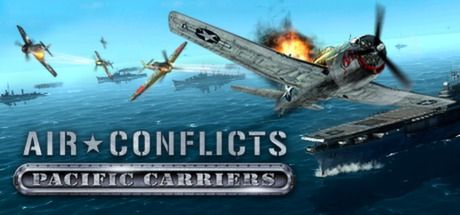
Naval hardware is a clear visual point of emphasis. The larger environments give the battles more room, while the more detailed ship models put carriers and other vessels front and center beneath the aircraft. That is exactly where a Pacific naval-air game ought to put its visual attention.
Story
Pacific Carriers draws its drama from two opposing military perspectives: the US Navy campaign and the Japanese Imperial Navy campaign. Choosing a side changes the historical frame of the battles, which is a stronger hook than treating the war as a one-sided tour.
The game visits major World War II Pacific engagements, including Pearl Harbor, the Wake Island raids, and Midway. These are immediately recognizable places for anyone with even a passing interest in the theater, and they give the mission list more context than anonymous maps would.
Do not come in expecting a long-form character drama. The story value here is the chance to fly through a set of famous military confrontations from both sides, with each campaign limited to five battles. For game-specific historical and release context, this Air Conflicts: Pacific Carriers overview is useful background.
Overall Experience
Air Conflicts: Pacific Carriers is at its best when you want a breezy World War II flight game that still asks you to think about a squadron. The shift from piloting one plane to commanding a group is enough to give the action its own character, and the dual-campaign setup makes the Pacific setting more than decoration.
The main frustration is scale: ten campaign battles total is not a huge runway, even with extra quests. Multiplayer modes add breadth, but the core recommendation rests on whether those historic operations and squadron command appeal to you. If they do, the concise structure can feel refreshingly direct rather than slight.
This is an easy recommendation for fans of arcade aviation and Pacific naval history who value variety over painstaking simulation. It does not need to be the deepest flight game to be enjoyable; it needs to make a carrier-era battle feel active, give you a squadron to manage, and avoid wasting your time. On that basis, it lands well.


Reviews
There are no reviews yet.