Retro Replay Retro Gaming History, Reviews & Emulation
There is no hurry at first. Ecco swims through clear water, noses toward the other dolphins, and throws himself into the air because it is a lovely day and the game lets him. Then he jumps high enough. The sea begins to turn, his family disappears into the sky, and the pleasant little dolphin game becomes something else entirely.
That opening has been catching people off guard since 1992. Ecco the Dolphin looks inviting on a store shelf and feels wonderful for the first few minutes. Before long, it is asking you to find your way through submerged caves with dwindling air. Eventually, it will ask considerably stranger things. The dolphin on the box has a very long trip ahead of him.
Sega had found a character unlike its other stars. Ecco did not need shoes, a weapon, or a wisecrack. He needed water. The people making his adventure had to get that part right before they could persuade anyone to follow him into lost civilizations, prehistoric oceans, and places a dolphin really ought not to have to visit.
Explore Ecco’s history
- Part I: Convincing Sega to let a dolphin swim (before 1992)
- Part II: Ecco the Dolphin, the beautiful sea with teeth (1992 to 1993)
- Part III: The Sega CD opens another ocean (1993 to 1995)
- Part IV: Ecco: The Tides of Time refuses to leave well enough alone (1994)
- Part V: Smaller screens and a much kinder dolphin (1993 to 1995)
- Part VI: Defender of the Future gives the ocean another dimension (2000 to 2002)
- Part VII: The sequels that did not surface (2001 to 2024)
- Part VIII: The original team heads back into the water (2025 to today)
Part I: Convincing Sega to let a dolphin swim (before 1992)
Ed Annunziata has a difficult animal to pitch
Ed Annunziata was working at Sega of America when he began pushing for Ecco. He was a designer and producer, someone who could carry an idea between the people funding a game and the people making it. He was not a Novotrade employee, a distinction he would later make explicitly when interviewers folded the two sides of the production together.

His interest in dolphins had grown through research into marine life and animal intelligence. In his account to SYFY WIRE, the intention was to make a story belonging to the animal, with humans kept out of the center. That left an awkward problem when he tried to explain it at Sega. A dolphin could not pick up a gun, walk into a shop, or perform many of the familiar actions around which a console adventure was usually built.
The pitch met resistance. A prototype helped more than another explanation. Its crude dolphin could already convey the pleasure of swimming, giving people something to feel under their thumbs. Once movement worked, the project had a much more persuasive argument than a list of things a dolphin could not do.
Annunziata later told Sega-16 that winning support had taken nearly two years of pleading. By the time a player first saw Ecco break the surface, somebody had already spent a great deal of time trying to get him into the water.
The people on the other side of the ocean
The development partner was Novotrade, a Hungarian software company whose name appeared on games well beyond the one that would make it famous. Annunziata brought the concept and production work from Sega. The Hungarian team had to turn that concept into a moving, explorable world.
That relationship is easy to flatten into a single creator’s biography. The names in the games’ credits tell a fuller story. László Szenttornyai and the Novotrade staff helped shape the adventure around Annunziata’s dolphin, while programmers, artists, and musicians gave the water its particular character. In a later Hungarian interview, Szenttornyai recalled the work from the development side, including the practical arrangements and royalties behind a game often remembered as one person’s strange inspiration.
There was plenty for the team to solve. Ecco had to turn through curves rather than walk across platforms. He needed to accelerate, coast, and emerge from a leap without suddenly feeling like a different object. A cave had to be readable while allowing movement in more directions than the usual left-to-right route.
It could have been made easier to describe by giving the dolphin arms or a tiny submarine. The finished game did neither. A directional pad steers a body that belongs in the water. Speed makes a leap possible, and the angle at which you leave the surface decides where you come down.
Even before the puzzles arrive, you can spend a surprising amount of time practicing that small movement. Dive, turn upward, leap, and try to land where you meant to. Occasionally, where you meant to land is water rather than an inconvenient rock. Ecco is generous enough to let you discover the distinction for yourself.
A different sort of Sega character
The Genesis was already home to plenty of confident little figures who ran toward trouble. Ecco moved through it. His slim shape could vanish against a dark passage or cut cleanly through a bright stretch of sea. The animation had to sell the creature without making him stop and perform for the camera.
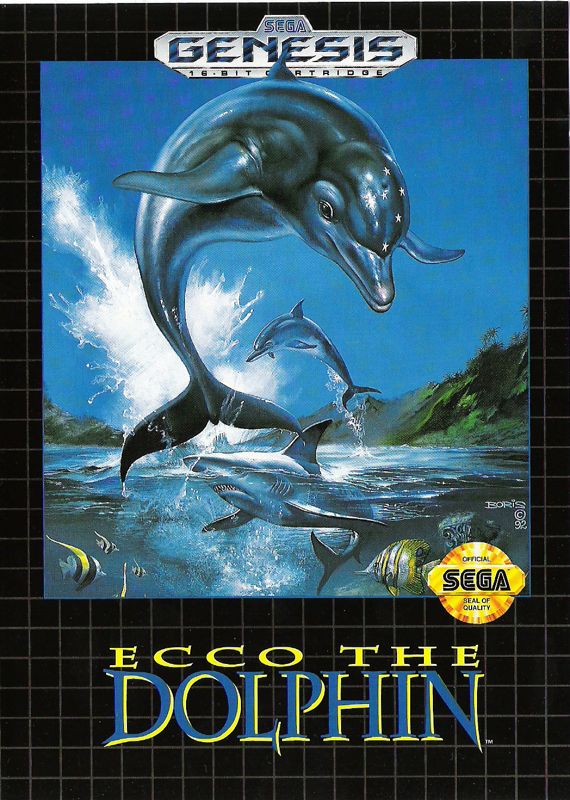
The Western packaging gave the ocean a dramatic, almost mythological scale. There was a dolphin, certainly, but the light and the surrounding sea suggested more than a wildlife outing. That was a fairly honest promise. The game would let you enjoy being a dolphin, then discover what being a dolphin left you vulnerable to.
When Ecco the Dolphin reached the Genesis and Mega Drive in 1992, its most persuasive demonstration was still the same one that had helped the prototype: hand someone the controller and let them swim. The story could wait until they jumped a little too high.
Part II: Ecco the Dolphin, the beautiful sea with teeth (1992 to 1993)
The jump that changes the game
The opening bay of Ecco the Dolphin behaves like a place you have arrived in rather than a level impatient to be completed. Other dolphins have things to say. The water gives you room to learn. Nothing in the first exchange suggests that you should be preparing for science-fiction horror.
Then comes the storm. The disappearance happens while Ecco is out of the water, leaving him to return to an emptied home. A trick you practiced for fun has become the event that separates him from everyone else.
There is no reassuring companion to explain the whole situation. You follow fragments of information through the sea, meeting creatures that may know something and crystals that seem to know rather too much. The loss gives the wandering a purpose without making the route obvious.
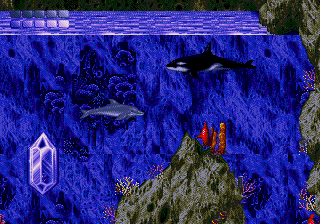
The screen’s air meter is a reliable source of less philosophical concern. Ecco is a mammal. However convincing his swimming may be, he cannot simply stay down there forever. A promising passage can become a poor choice when you reach the far end and discover that you still have to get back.
Fish can restore health, but they do not replace a breath. You learn to notice the surface, remember little pockets of air, and listen for the warning that turns curiosity into a fairly urgent navigation exercise. The game looks most peaceful at precisely the moment you are trying to remember which tunnel leads upward.
A song, a map, and a locked passage
Ecco’s song does several jobs. It lets him communicate with creatures and crystals, and holding it produces a sonar view of the surrounding area. You can inspect a place that would otherwise require several risky journeys to understand.
A crystal blocking the way is not necessarily an invitation to hit it harder. Another crystal may hold the song that opens it. You leave with something learned rather than something carried. The absence of pockets has been accommodated quite elegantly.
The official instructions introduce these actions, but combining them is the player’s work. A strong swim might be necessary to clear an obstacle. A puzzle might depend on persuading another creature to move. A route can loop around a wall you first assumed was the edge of the world.
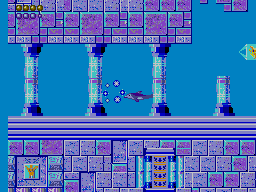
That freedom can be absorbing. It can also be exasperating. Ecco sometimes tells you just enough to understand that a solution exists, then leaves you to discover which part of the environment is supposed to supply it. An unhelpful collision on the way back makes the lesson rather expensive.
The difficulty is not merely a matter of fast reactions. It asks for a memory of the landscape, patience with repeated attempts, and an ability to keep thinking while the air meter insists that thinking should already be finished. Plenty of people who loved the look of Ecco never saw all of his journey.
Past the whale, past Atlantis, and much farther out
The farther Ecco travels, the less the ocean resembles an ordinary stretch of Earth. Big Blue, an enormous whale, offers a lead. The Asterite brings another kind of intelligence into the story. Atlantis and time travel move the search beyond recovering a family after a storm.
The game is happy to place an astonishing discovery inside a passage that still requires you to watch your air. You may be contemplating a lost civilization, but Ecco has not stopped needing to breathe just because the plot has become interesting.
Eventually, the Vortex explain why the disappearance felt so wrong. The missing creatures have been taken by an alien force, and the journey ends amid machinery and organic horrors far removed from the first bay. The opening’s empty water was the beginning of an invasion story.
Welcome to the Machine is a particularly severe introduction to that last stretch. Its scrolling hazards demand a route learned through practice and, often, failure. A game that spent its first minutes encouraging you to explore now gives you very little time to hesitate.
The final confrontation is memorable partly because Ecco remains Ecco. You have not acquired a suit of armor to make the situation feel sensible. A dolphin has arrived somewhere dreadful and is expected to solve it with the abilities he brought from home.
It is an extraordinary change of scenery. It also accounts for some of the affection and resentment that follow the original game around. Reaching the end can feel like surviving an ordeal that began with a rather misleading invitation to go swimming.
The reviews notice something different
The unusual hero did not prevent an enthusiastic reception. GamePro’s February 1993 review gave Ecco five out of five and welcomed a challenging adventure that did not revolve around the usual punching and shooting. The period review preserved by Defunct Games catches the novelty before years of stories about its difficulty became part of every introduction.
A reviewer could be delighted by the ambition while a player remained trapped halfway through it. Ecco’s reputation has always contained both experiences. You can admire the room, the music, and the movement while wishing the creature you are speaking to would offer one more useful sentence.
Japan gets a different conversation
At Sega in Japan, localization producer Ryoichi Hasegawa admired the movement and the graphics, but he also had to make the adventure understandable to another audience. His 2004 interview, translated by shmuplations, describes expanding the English version’s limited text space so the Japanese dialogue could offer more explanation and personality.

The changes went beyond wording. Hasegawa recalls adjustments to damage, air-refill opportunities, and enemy numbers. The whale could sound more like an elder, and the player could receive a little more help before heading into the next dangerous section.
His account also contains a lovely production exchange: impressed by the octopus artwork, he faxed Novotrade to praise how delicious it looked. The developers took the compliment in good humor. Somewhere between the threats to Ecco’s family and the arguments about difficulty, one of the game’s creatures had inspired a conversation about lunch.


Those regional differences would become important again when later editions gave players a choice of versions. There was never quite one universal level of punishment attached to the name Ecco the Dolphin.
Part III: The Sega CD opens another ocean (1993 to 1995)
The cartridge already had a voice
Long before a CD entered the drive, Ecco had acquired a remarkable musical atmosphere. The Genesis score uses the machine’s electronic sound to make the sea feel unfamiliar. A phrase can hang over a passage without hurrying you through it. Another can make an apparently ordinary cave feel as though something is listening from farther inside.
The original game’s musical credits include András Magyari, Brian Coburn, and Spencer Nilsen. Its cartridge music belongs to the game people first encountered, and it should not be treated as a placeholder waiting for better equipment. The slightly hard edges of those sounds can suit Ecco’s uneasy water beautifully.
On Sega CD, the same adventure could be accompanied by recorded music with a much larger palette. That offered an opportunity to change the experience quite dramatically. It also presented a trap: a handsome orchestral nature documentary would have supplied the ocean with a very human narrator.
Building instruments for a place without people
Nilsen had come to Sega from professional music and recording. For Ecco’s CD score, he and his collaborators could use studio production, live performance, and samples rather than asking the Genesis sound hardware to reproduce everything. Annunziata’s world called for sounds that did not immediately point back to a familiar band or orchestra.

In our interview with Spencer Nilsen, he describes beginning with the instruments themselves:
“One of the first challenges for the music team was building a deep palette of unique “instruments” that I could then use to create the music, trying to stay away from anything that remotely sounded like traditional western instruments.”
Spencer Nilsen, speaking to Retro Replay
David Young and Jennifer Hruska spent weeks creating samples and organizing them into banks for the Kurzweil system. Mitch Manker performed through an electronic wind controller, triggering those sounds with the phrasing of a player rather than leaving everything to a keyboard sequence. Brad Kaiser’s percussion supplied a physical pulse beneath textures that could otherwise seem to drift free of the room.
It is a lovely reversal of the usual description of sampled music. The recordings did not exist merely to imitate a trumpet or a familiar string section. The team made unusual instruments, then asked musicians to give them breath and movement.
Listen while Ecco crosses a dark stretch of water and the effect can be difficult to separate from the picture. A sound rises without announcing exactly what made it. A rhythmic figure keeps the journey moving without turning every swim into an action sequence. There is room for the music to be beautiful and still leave you slightly uncomfortable.
The CD edition also expanded the journey with additional stages. It was another version of the adventure, rather than a soundtrack album with a controller attached. Yet the music is often what makes someone who knows the cartridge feel that they have entered a different sea.
A disc worth leaving in the player
Sega CD had no shortage of games keen to demonstrate that a disc could hold a lot of video. Ecco made a quieter argument. Its scenery still belonged to a side-view adventure, while the recorded sound gave the empty spaces a new scale.
The benefit is especially clear when progress stops. You can be circling the same room, trying another approach to a puzzle, while the score remains pleasant company. It does not need to deliver the feeling of arrival every thirty seconds. Some of its best work happens while you are wondering where on Earth to go.
That distinction gives the cartridge and CD releases lasting reasons to exist beside each other. One uses a console’s sound hardware to make a strange, concentrated world. The other brings a group of musicians into that world without filling it with the usual instrumental signposts. Neither needs to be dismissed before the other can be enjoyed.
The first CD release followed in 1993. A Windows version would later carry the CD-era presentation onto computers. By then, the original adventure was already spreading across enough hardware that two players discussing Ecco could have heard different music, read different hints, and endured different levels of frustration.
The next full adventure would make that conversation stranger still. Having brought his family home, Ecco was about to discover that defeating an alien queen was not quite the same thing as finishing his business with her.
Part IV: Ecco: The Tides of Time refuses to leave well enough alone (1994)
Novotrade returns to an unsettled sea
For Ecco: The Tides of Time, Annunziata and the Novotrade team returned to a hero who had already accomplished something rather unreasonable. The sequel, released in 1994, begins from the consequences of the first game’s victory. The Vortex Queen has survived. Ecco’s connection to the Asterite is threatened. The future has become something he can visit and must try to change.
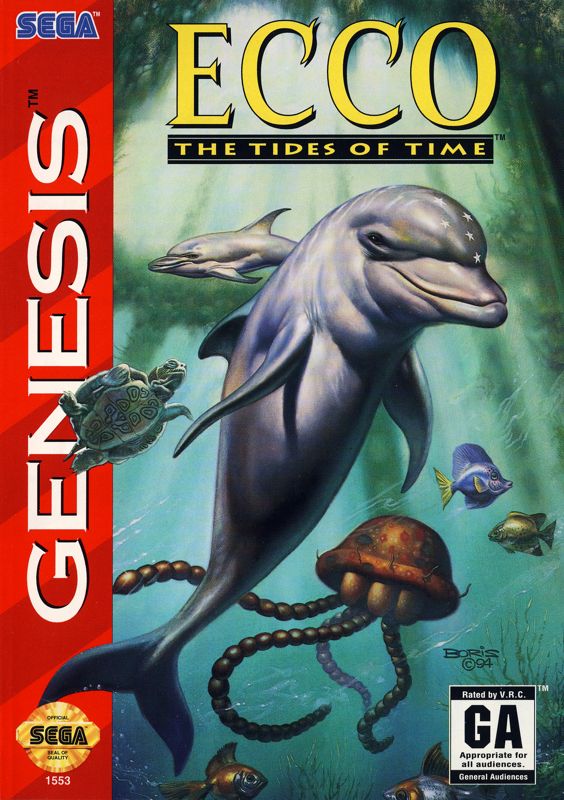
The sequel could assume that some players already knew how to swim. That gave it room to stretch the journey, though it also meant that newcomers could encounter a great deal of confidence from a game that had not yet earned theirs.
Ecco still needs to move well through the water. The pleasure of a clean turn, a leap, or a glide through a tight passage remains the thread holding the changing scenery together. When the game becomes extravagant, the familiar dolphin is the thing you can still recognize.
A future dolphin brings unsettling news
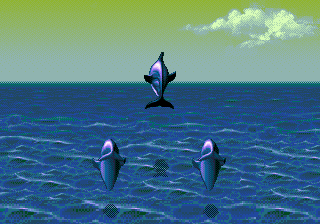
Trellia, a dolphin from the future, helps carry the story beyond the period Ecco knows. Her appearance makes an idea visible that the original had only begun to explore: life in the sea can change, and the creatures Ecco is trying to protect have futures of their own.
The Tides of Time is happy to send you between wonders and catastrophes. A beautiful place can be followed by a future in which the world has gone badly wrong. Traveling through time becomes a way to compare them, although the actual business of reaching the next passage can still require several attempts and an undignified collision.
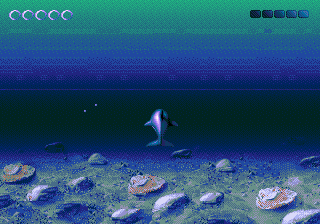
The colors and backgrounds are often magnificent. The Genesis can fill a view with depth even when your path still lies across a flat plane. Plants, rock, darkness, and distant light suggest room beyond the route you can actually swim.
That can make a successful journey feel like exploring something much larger than a cartridge level. It can also make being stuck unusually annoying. The game keeps showing you fascinating places while declining to explain how to leave the one you are in.
Sometimes being a dolphin is not enough
The sequel gives Ecco more ways to get around its obstacles. Its transformations can turn him into other creatures, changing his relationship with the environment. A shark, a jellyfish, and a seagull do not face the same problems as a dolphin.
For a series so devoted to the feel of moving one particular animal, that is a bold interruption. It works best when the change feels like another way to investigate the world. A stretch that was impossible becomes manageable because you are approaching it with a different body.
Then there are the forward-moving sequences, which turn the ocean into a course coming toward the screen. They interrupt the side-view exploration with something closer to steering through a spectacle. The novelty is easy to appreciate, even when it makes you rather grateful to return to a view in which you can see where the dolphin’s nose is pointing.
The Sega CD manual lays out a game full of new actions and creatures. Playing it brings the less orderly version: an impressive new idea, a puzzle that makes you stop, then a route that demands more precision than you had intended to supply this evening.
Two soundtracks for a changing world
As with the original, the Genesis and CD editions have separate musical identities. The cartridge’s electronic score accompanies some of the series’ most remarkable scenery. The CD version returns to the studio-produced approach, allowing the sequel’s long swims to unfold around another set of spacious recordings.
In our conversation with Nilsen, the difference between merely adding more tracks and giving a player somewhere to stay comes through clearly:
“Because the palette of sound is nearly infinite, it becomes more about crafting pieces that are easy to “live in” for extended periods of time and creating textures that change and morph”
Spencer Nilsen, speaking to Retro Replay about The Tides of Time
He also recalls better equipment for mixing and mastering the sequel. The work had moved forward in the studio as well as on screen. For the player searching another cave, the benefit was not a specification to admire. It was music that could remain interesting on the fifth circuit as well as the first.
A trilogy without its last cartridge
The Tides of Time leaves Ecco’s story open. Its conclusion does not simply put every creature back where it began and dismiss the player. There is more history to change and more of the dolphin’s journey left unresolved.
A third adventure following that line did not reach the Genesis. When the next major Ecco arrived, the series would have a different premise and a different generation of hardware beneath it. For players following the original plot, the wait became much longer than the space between the first two games had suggested.
In the meantime, Sega tried a very different answer to one of Ecco’s persistent problems. Perhaps a dolphin game could let a younger player enjoy the sea without asking them to survive the end of the world.
Part V: Smaller screens and a much kinder dolphin (1993 to 1995)
Ecco travels light
The name Ecco did not refer only to the games beside a Genesis or Sega CD. Versions of the adventures reached Sega’s 8-bit machines too, bringing the dolphin to the Game Gear and Master System. These were adaptations built around different screens and hardware, rather than a Genesis cartridge somehow squeezed into a smaller slot.

On Game Gear, Ecco occupies a much more compact view. The bright water and recognizable outline do a good deal of the work of introducing him again. A creature that looked small against a television ocean now has to remain readable on a handheld display.
The smaller field changes how you approach a passage. You can see less of the route before swimming into it, making a turn or obstacle a more immediate encounter. It is still recognizably Ecco, with conversations and underwater puzzles, but the journey has its own pacing.
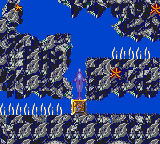
The Tides of Time made the same trip. Seeing the different versions side by side is a useful antidote to the assumption that a game name always describes a single set of levels, pictures, and sounds. Someone who knew Ecco through a Game Gear was meeting the same character through another team’s practical decisions.
Ecco Jr. (1995): no alien nightmare required
Ecco Jr. approached the series from the other direction. Rather than finding out how much more alarming the ocean could become, the 1995 Genesis game made it a place for younger players to investigate.
Novotrade kept the animals and the pleasure of swimming, then changed the demands around them. Junior adventures let the player search, carry out tasks, and interact with creatures without the original’s punishing struggle for survival. Ecco has company too, including an orca and a sea lion.
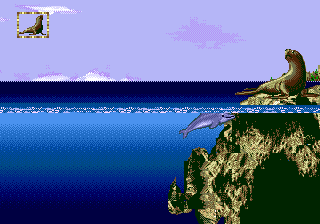
A task can be as modest as finding something another creature wants or guiding your animal toward the next little encounter. There is no need to sell every achievement as another step toward saving the planet. Finding the right fish can be quite enough to occupy a small person with a controller.
The manual provides guidance for adults and explains the game’s gentler arrangement. It is a branch of the series that makes more sense when considered beside the intended player, rather than judged as an inadequate Ecco 3.

Some of its educational material is presented directly. The facts about marine animals sit beside an experience in which those animals are worth looking at and moving around. There is considerably less chance of a lesson being interrupted by an alien queen.
The quieter game also reveals something the difficult adventures can obscure. Ecco’s movement is enjoyable even when nobody is threatening him. Give a player a creature, some room, and a small reason to look around, and the series can function without its most notorious obstacles.
The Pico takes another route
Ecco Jr. and the Great Ocean Treasure Hunt! took that younger audience to Sega’s Pico, the educational hardware built around illustrated book pages and a pen. Its treasure-hunting activities belonged to a different kind of play session from the Genesis adventures.
The dolphin could now be introduced through a picture-book interface rather than an air meter. It is a small entry in the larger history, but it shows how far Sega could stretch the character once he had become recognizable. A child could meet Ecco there without knowing that another version of him was traveling through time.
These releases did not resolve the story left by The Tides of Time. They kept Ecco visible while Sega’s hardware plans moved on. The Genesis years were ending, the Saturn had arrived, and the next major dolphin adventure would eventually require the player to learn to swim all over again.
Part VI: Defender of the Future gives the ocean another dimension (2000 to 2002)
Appaloosa builds a sea you can turn around in
On Dreamcast, Ecco could finally swim away from the camera. Ecco the Dolphin: Defender of the Future arrived in 2000, developed by Appaloosa Interactive, the company formerly known as Novotrade. The name connected it to the older games, but the adventure began again with a different story.
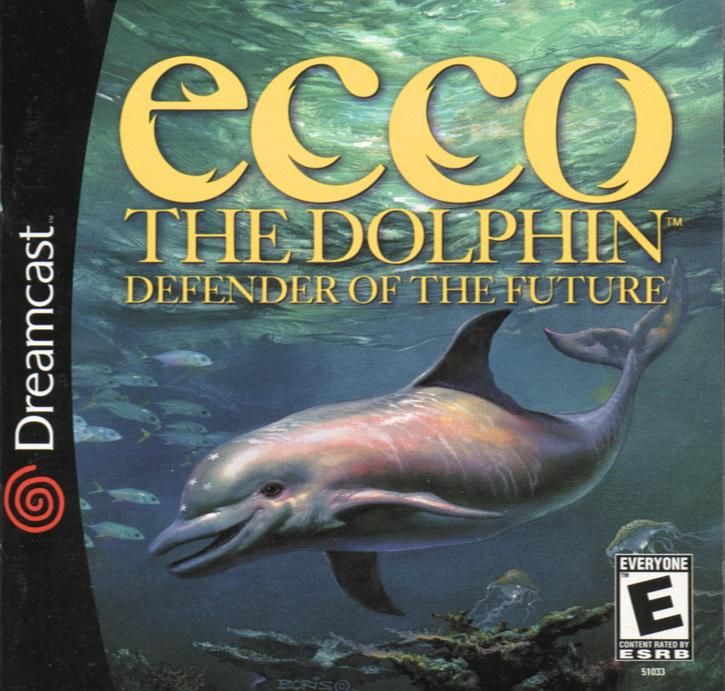
Annunziata was not directing another chapter of his original plot. Producer Gergely Csaszar and Appaloosa’s development staff were taking Ecco into a world that had to be built, lit, and navigated in three dimensions. The game’s original credits name a substantial group of designers, programmers, and artists behind that transformation.
In the first bay, the visual promise is easy to understand. Rock formations rise from the sea. Light plays across the water. Ecco can move through a place that seems to continue around the screen rather than stop at its edges.
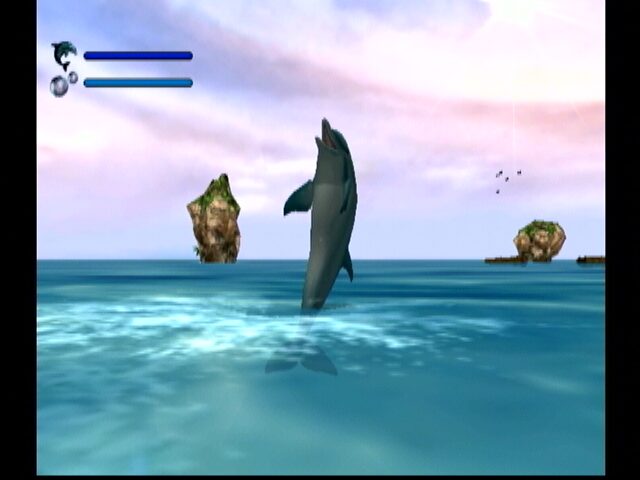
Leap from that water and, for a moment, the years between the Genesis and Dreamcast become a very satisfying distance. The old pleasure of launching a dolphin into the air survives, now with a horizon to look toward and a landing you must judge in depth.
Getting everything under control takes longer. On Genesis, a cave entrance and Ecco usually occupied the same visible plane. Here, he can be above it, below it, facing slightly away from it, or approaching from a direction the camera has not made especially helpful.
The camera becomes another creature to manage
The Dreamcast controller’s analog stick gives Ecco a flowing range of movement, but a smooth swim and a precise adjustment are different requests. His momentum makes open water enjoyable. A cramped passage can expose every small uncertainty in the steering.
The camera adds its own opinion. You can look at a beautiful formation, turn to line up a route, and discover that you have lost the angle that made it seem obvious. Ecco does not become difficult only when an enemy appears. Sometimes the challenge is getting him to enter an opening you can plainly see.
This can be maddening without making the whole world unworthy of the effort. There are views that reward stopping, routes that become satisfying once understood, and stretches in which the dolphin and camera finally cooperate. Then a tight turn reminds you that they have not signed a permanent agreement.
New songs let Ecco influence other creatures. A school of fish can follow him, while other songs change the behavior of sharks, turtles, or rays. The sea contains helpers and mechanisms as well as hazards. Figuring out what an animal can do for a puzzle remains part of the adventure.
Compared with the cartridge games, the world has acquired a great deal more space to misunderstand. The first task is often to learn the landmarks well enough that you can return to a place without having to rediscover it from every possible direction.
David Brin finds a story among the pictures
Science-fiction author David Brin supplied the story. His novels had already explored intelligent dolphins and the possibilities of other minds, making him an appealing collaborator for a series that had never been content to keep its marine life ordinary.
In a later interview with Gameranx, Brin recalled being approached after the team already had gameplay and images in hand. His job included giving that existing material a story that made sense. He was not describing a novel being handed over for a team to illustrate in order.
Defender imagines a future shared by dolphins and humans, threatened by an alien enemy known as the Foe. Changes to history damage that future, and Ecco has to travel through the consequences. The partnership between species can be lost, and the worlds he visits become less welcoming when it is.
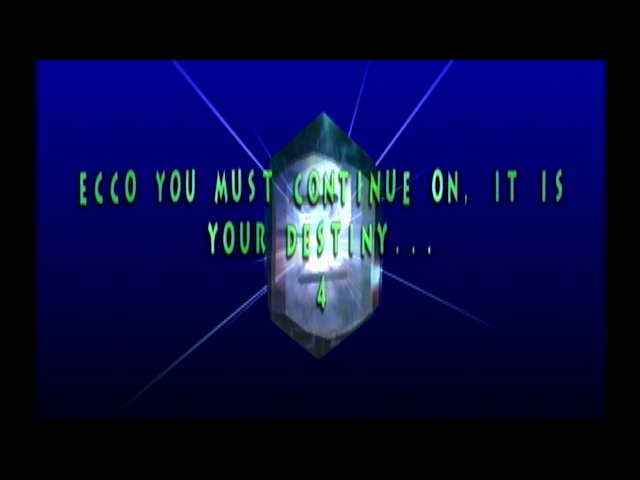
The changing futures give Appaloosa room to move beyond the first bay’s reassuring beauty. Ecco has once again started in attractive water and found a much less pleasant arrangement waiting farther along. The connection to the old games is strongest in that uneasy journey, even when the continuity has changed.
It is an ambitious story to follow while also trying to keep track of the next opening in a rock wall. Defender can be generous with atmosphere and rather less generous with clarity. Its best discoveries can make the difficult route feel worthwhile, but it does require the player to forgive a great deal on the way.
Another composer, another enormous room
Tim Follin composed Defender’s score, with the credits also identifying Attila Héger and the sound-effects staff. Follin brought a different musical voice to a game whose spaces were now large enough for the player to turn around inside them.
The recordings can give an open stretch of sea a grandeur that the controller alone cannot provide. There is room for a phrase to unfold while Ecco moves through the landscape, and for an unfamiliar place to announce itself without another speech explaining why you should be impressed.
Dreamcast ends, but this Ecco reaches another console
Defender arrived while Dreamcast was still Sega’s route into the next generation. Soon afterward, the company’s plans changed. Sega withdrew from console manufacturing, and games built around its hardware had to find other routes to players.
A PlayStation 2 version of Defender followed in 2002. It brought the completed adventure to a much larger console audience, though the move did not make its old control and navigation frustrations disappear. Ecco had changed platforms again without becoming an entirely different game.
The more painful loss was the next adventure. Appaloosa had begun a follow-up, Ecco II: Sentinels of the Universe. Work existed, but no finished sequel reached the store shelf. For the second time, an ambitious Ecco adventure had been followed by a future the player could not buy.
Part VII: The sequels that did not surface (2001 to 2024)
Sentinels of the Universe survives in pieces
A canceled game can spend years sounding more complete than it ever was. Sentinels of the Universe acquired that problem simply by being the next Ecco. A title, some pictures, and the desire to keep swimming were enough to make it tempting to imagine a finished adventure waiting in a drawer.
In 2016, preservation group Hidden Palace released a surviving Dreamcast prototype and explained where it had come from. The material included an early build with several playable areas and debugging functions, rather than a completed campaign. The released build lacked working music and sound.
Its survival followed a very physical chain of events. Hidden Palace’s drx had acquired development material, including a Dreamcast kit and a recordable disc containing the sequel. What could be examined years later depended on somebody having kept those things and another person recognizing what they contained.
The build lets a player see development rather than the polished sequel they might have imagined. Areas exist to be inspected, and the debug tools reveal the work around them. The silence is especially striking for a series in which music had done so much to make unfinished-looking space feel alive.
Hidden Palace places the cancellation around Sega’s withdrawal from Dreamcast manufacturing, while noting that the sequel could conceivably have followed Defender onto another platform. The first game crossed to PlayStation 2. This one remained on its development disc.
Annunziata keeps asking
By 2012, Annunziata was still trying to arrange another Ecco. In his Sega-16 interview, he described years of approaches to Sega, including an offer to find development funding himself if the company would license the character. No finished new game had come from those discussions.
He could joke about making another dolphin, but he remained attached to this one. The gap between a creator wanting to return and a publisher committing to a project was not being closed by the continued affection of people who remembered the Genesis.
In 2013, he tried a different route with The Big Blue. The proposed game brought his interest in marine life and science into a new underwater project without the Ecco license. Discussing it with SEGA Nerds, he spoke about a world shaped by biological interactions rather than simply using pollution as an excuse for another familiar disaster story.
The crowdfunding campaign did not reach its target. Another attempt to move past the old games ended without supplying their successor.
Annunziata kept looking for a way back. Meetings and proposals had taken years without producing another adventure. Meanwhile, people who wanted to revisit his original games were getting some help from Sega and another development team.
M2 makes a return trip less punishing
While a new adventure remained difficult to arrange, the old one kept reaching new hardware. Collections and downloadable releases introduced Ecco to players who had never seen a Genesis cartridge in a shop.
One of the most thoughtful was 3D Ecco the Dolphin for Nintendo 3DS in 2013. Sega and M2 used the handheld’s stereoscopic display to give the side-view world an additional sense of depth. This was still the original adventure, with its familiar passages, rather than a new game borrowing the title.
The team also supplied Super Dolphin mode. As described on Sega’s official page, it removes damage and the need to breathe. The puzzles remain, but a player can take time to inspect them without the air meter turning every wrong guess into another death.
It is a generous way to revisit the original. You can finally stop in a beautiful room because you want to look at it. Nothing prevents a player from returning to the harder version afterward, once they have actually learned where the passages go.
The release also includes Japanese and overseas versions, making those earlier localization decisions something players can compare. Sega’s translated developer conversation with M2 discusses that work and the pleasure of seeing Ecco’s water in depth.
Later services continued the journey. Nintendo’s Genesis and Mega Drive library for Switch Online included the original game. Ecco could still find a new player and spring the same surprise, even while his next full adventure remained a question.
Part VIII: The original team heads back into the water (2025 to today)
A promise becomes a named project
In May 2025, Annunziata finally had a different answer. Speaking through Xbox Wire, he announced plans to remaster Ecco the Dolphin and The Tides of Time with the original team, followed by a new game. After years of pitches and unsuccessful arrangements, the return was being discussed as work the team intended to make.
In January 2026, A&R Atelier publicly confirmed that multiple Ecco projects were in development. The studio’s announcement connected the effort to original creators and invited players into an official community. The people who had made the older games were now part of the company trying to bring them forward.
On April 22, Earth Day, the project gained a name: Ecco the Dolphin: Complete. A&R Atelier described a package gathering versions of the first two adventures alongside a new contemporary game, with original development staff returning across composition, art, and programming.
The announced features include speedrunning support, achievements, leaderboards, and custom courses. For players who have spent years learning difficult routes, there is an obvious appeal in having those journeys recognized and shared. For someone arriving for the first time, the more immediate attraction is having the old adventures brought together with care.
These are announced plans, not a review of a finished release. As of October 2026, the material cited here does not establish a firm launch date for the complete package. The official Ecco site remains the place to follow the team’s own updates.
An old keyboard comes home
Our interview supplies a particularly tangible part of that return. Nilsen is working with Annunziata and Brian Coburn again, remixing Ecco material while looking toward new music. When he visited David Young’s son, David Young Jr., he received the original Kurzweil sampler keyboard used on Ecco, along with restored samples.
For a series whose music could make a familiar room feel like another world, that is quite a useful object to find again. It brings particular sounds back within reach of the person who once wrote around them. In his follow-up answer to Retro Replay, he describes the plan:
“There is a bunch of new musical territory I’m excited to explore, but I will definitely maintain the overall essence of the original games’ sonic experience.”
Spencer Nilsen, speaking to Retro Replay about returning to Ecco
He hopes to give those restored textures a cameo in the new soundtrack. His interview also offers a tentative personal outlook on timing, while acknowledging that the new game could be farther away. It should not be mistaken for the studio announcing a release date.
Where to begin while the sea is still waiting
For a first visit, begin with the original adventure. The cartridge version gives you the sound and structure that first established the series. The Sega CD version is worth a separate listen and play, especially if the recorded music is what has drawn you toward Ecco in the first place.
For original game files, Genesis Plus GX supports the Genesis, Sega CD, Master System, and Game Gear hardware represented in Ecco’s early history.
And if the original is already running, spend a moment in the first bay before setting everything in motion. Turn beneath the surface, build a little speed, and clear the water. For a few seconds, Ecco has no idea what is about to happen. There is still time to enjoy the jump.
More from Retro Replay
- Spencer Nilsen on Sega CD, Sonic CD, and Ecco the Dolphin
- The complete history of the Sega CD
- The complete history of Sega’s arcade empire
Sources and further reading
- GamePro’s February 1993 review, preserved by Defunct Games. Contemporary reception, including the magazine’s five-out-of-five assessment.
- Spencer Nilsen interview, Retro Replay. Supplied firsthand answers about Ecco’s CD recordings, collaborators, sequel score, and return to the series.
- Ed Annunziata interview, Sega-16, 2012. The original pitch, his role at Sega, and efforts to arrange another Ecco. Also the source of the archival portrait.
- Ed Annunziata interview, SYFY WIRE. The dolphin-centered concept, swimming prototype, and alien story.
- László Szenttornyai, Checkpoint interview transcript. Hungarian-language firsthand recollections of Novotrade and Ecco development.
- Ecco instructions, Sega. Official instructions supplied with Sega’s later Genesis release.
- Ryoichi Hasegawa, Sega’s 2004 interview, translated by shmuplations. Japanese localization, dialogue space, difficulty adjustments, and the production anecdotes.
- Ryoichi Hasegawa, original Sega interview. Japanese-language original of the localization discussion.
- The Tides of Time, original Sega CD manual. Original story, instructions, transformations, and credits, hosted by Sega.
- Ecco Jr., original Genesis manual. The younger audience, activities, and adult guidance.
- Defender of the Future, Dreamcast manual. Appaloosa’s credits, story, controls, songs, and opening-area walkthrough.
- David Brin interview, Gameranx. The author recalls supplying a story around existing Appaloosa gameplay and imagery.
- Sentinels of the Universe, Hidden Palace release account. The preservation group’s firsthand account of the early prototype and its acquisition.
- Ed Annunziata interview, SEGA Nerds, 2013. The Big Blue’s intended science and ocean interactions.
- The Big Blue crowdfunding outcome, Engadget, April 2013. Contemporary reporting that the campaign missed its funding target.
- Ed Annunziata video interview, Electric Playground. The original channel’s interview about Ecco and Sega, embedded in this history.
- 3D Ecco the Dolphin, official Sega page. The 2013 3DS release, regional options, and Super Dolphin mode.
- M2 and Sega developer interview, translated by Sega. The 3DS conversion, stereoscopic depth, and difficulty choices.
- Sega Genesis and Mega Drive, Nintendo Switch Online. Nintendo’s official game listing, including Ecco.
- Ed Annunziata, Xbox Wire, May 2025. The announced remasters and plans for a new game.
- A&R Atelier, January 2026 announcement. The studio confirms multiple projects in development.
- Ecco the Dolphin: Complete, A&R Atelier, April 2026. The studio’s announcement of the collection, new adventure, and proposed features.
- Ecco the Dolphin, official project website. Official updates from the returning development team.
- Genesis Plus GX, official project. Supported Sega hardware and emulator documentation.