 Retro Replay Retro Gaming History, Reviews & Emulation
Retro Replay Review
Gameplay
The first few minutes of Dead Block make its priorities clear. You are not simply mowing down zombies; you are tearing apart furniture for wood, searching small objects for components, and trying to make a shelter hold long enough to survive the pressure outside. That scavenging-to-defense loop is immediate and easy to understand. A window that needs boards, a door that looks exposed, and a growing horde give every bit of collected material a purpose.
It lands somewhere between third-person zombie action and a compact tower-defense game. Wood becomes barricades for windows and doors, while gathered parts go into traps. The interesting part is deciding where your limited attention belongs: reinforce the obvious breach, set up a trap, or get stuck into close combat before the situation gets worse. The upgradable melee weapon and smart bomb give you ways to recover when a plan starts collapsing, rather than leaving every mistake fatal.
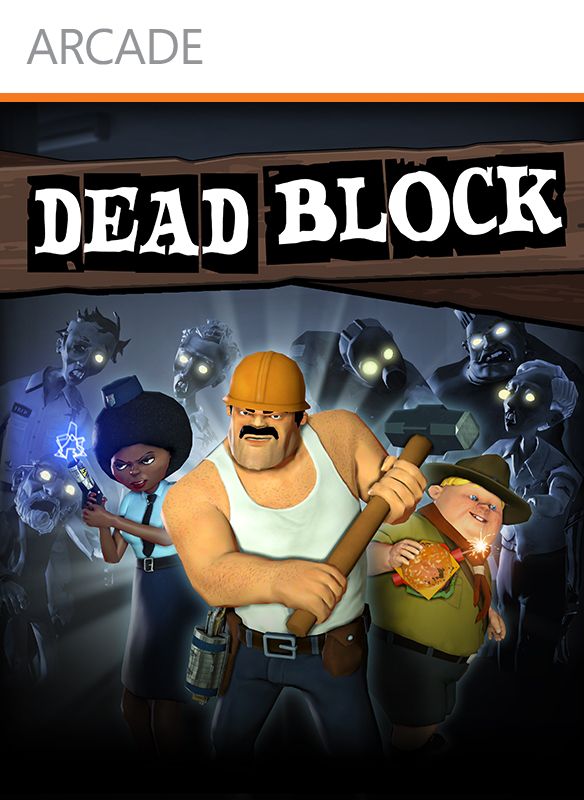
Three survivors bring some needed contrast. Each can carry up to three unique traps, and levels that let you control more than one survivor add another layer to the routine. Switching between them is a sensible way to make placement and combat decisions feel less automatic. Even so, the core cycle does not radically change across the ten single-player levels. If you enjoy the satisfaction of methodically fortifying a space and dealing with the consequences, it holds up; if repeated scavenging and rebuilding wears on you quickly, fatigue will set in.
Offline split-screen co-op is where the game has the clearest advantage. Across its eight co-op levels, up to four people can pick survivors and fight together. One person can hunt materials while another shores up an entrance and somebody else handles the immediate zombie problem. That division of labor fits the design naturally, and shared panic makes the defensive scramble more entertaining than it is alone.
Graphics
Dead Block frames its zombie outbreak in 1950s United States, with a third-person view built around survivors defending enclosed shelters from incoming hordes. The important visual information is practical: you need to spot windows, doors, furniture worth breaking down, and the places where zombies are pressing their attack.
Story
This is a zombie-apocalypse setup first and a narrative showcase second. You play as one of three survivors in a fifties-era United States overrun by the dead, and the campaign’s main storytelling function is to put those survivors in a series of places worth securing.
That stripped-down approach suits the game’s focus. The drama comes less from plot turns than from watching a safe room become increasingly difficult to hold: every searched object is potential help, every unprotected opening is an invitation for trouble, and every trap is a small vote of confidence in your plan.
Do not come to Dead Block expecting a heavily authored survival story. Come for the themed framework around its defense missions. For game-specific background and release history, the Dead Block overview is a useful companion, but the game itself lives or dies on whether its barricade-and-trap routine grabs you.
Overall Experience
Dead Block has a good low-budget genre mash-up at its center. Breaking down a room, turning the wreckage into defenses, and scrambling to stop zombies from pouring through feels more purposeful than straightforward horde fighting. When a trap placement works and your barricades buy enough time to regroup, the game delivers the tidy little payoff its structure promises.
Its limitation is equally clear: the solo campaign asks you to repeat that same basic work over ten levels. The survivors and their distinct trap sets help, and the occasional survivor switching adds texture, but this is not a game that constantly reinvents itself. Your tolerance for that loop is the deciding factor.
At a 6.4 level, Dead Block is an easy conditional recommendation rather than a must-play. Give it a shot if you want a zombie game where gathering junk and defending a room matter as much as fighting, especially if you can fill a couch for split-screen co-op. Skip it if you need a campaign with major mechanical change from level to level or a story that carries the experience.


Reviews
There are no reviews yet.