 Retro Replay Retro Gaming History, Reviews & Emulation



Retro Replay Review
Gameplay
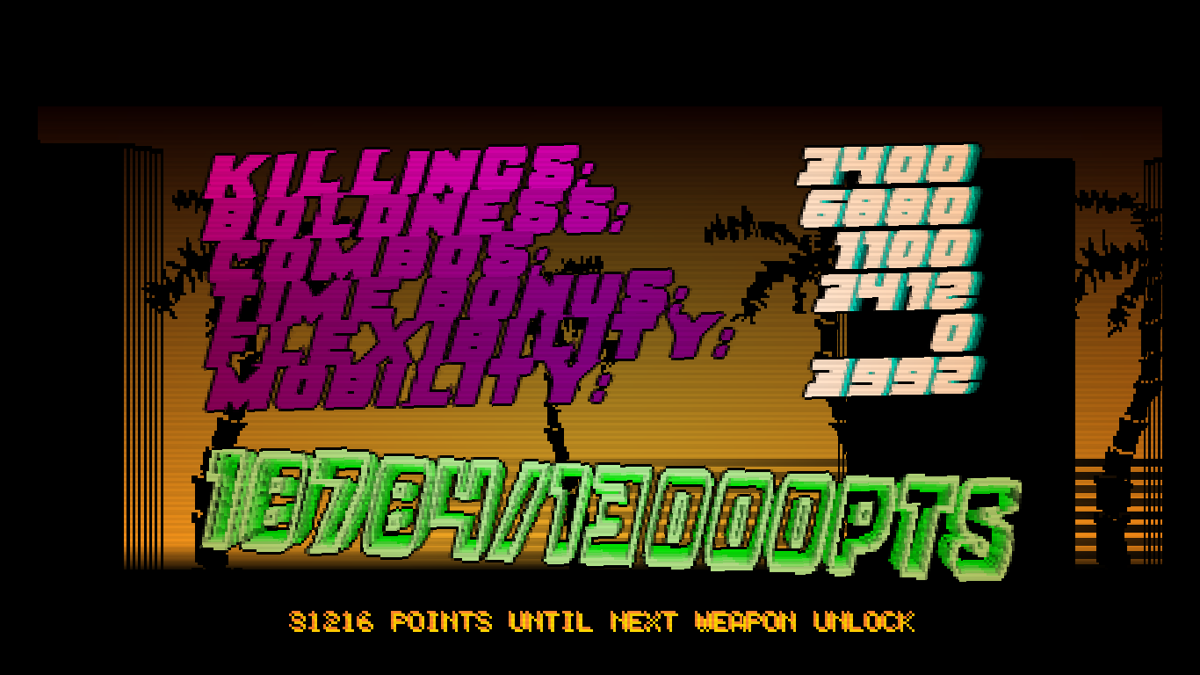
The first few missions teach Hotline Miami’s central lesson with a slap: you are deadly, but so is everyone else. One hit can end a run, so each room becomes a small tactical problem. You might creep in with a knife, draw guards into a doorway, throw a bat to stun someone, or rush the floor in a loud burst of gunfire. The freedom is real, but the margin for error is tiny.
That fragility is where the game finds its rhythm. Failure comes quickly, and restarting lets you immediately test the better idea you formed while dying. At first, that can feel punishing, especially when an alarm pulls a whole floor toward you. Stick with it long enough to learn sightlines, sounds, and the danger of glass, though, and the quick retries turn from aggravation into a satisfying cycle of rehearsal and release.
Weapons encourage you to improvise rather than settle into one safe routine. Guns are powerful but have limited ammunition; melee tools are quieter; fists and door slams can leave enemies stunned long enough for a finisher or a human shield. You can only carry one weapon, so decisions stay immediate. The occasional stage-specific tool, such as a kitchen’s boiling pot, gives individual spaces a little extra character without diluting the clean, lethal rules.
Masks add welcome variation before a mission, offering perks such as a starting weapon, faster movement, lethal doors, or friendly dogs. They are a smart incentive to revisit cleared stages and chase stronger ratings, alongside weapon unlocks and hidden letters. Multi-storey missions soften the harshness with floor checkpoints, while boss fights break up the usual room-clearing pattern. Mouse-and-keyboard aiming or gamepad controls both suit a game built around rapid direction changes, shots, throws, and split-second commitments.
Graphics
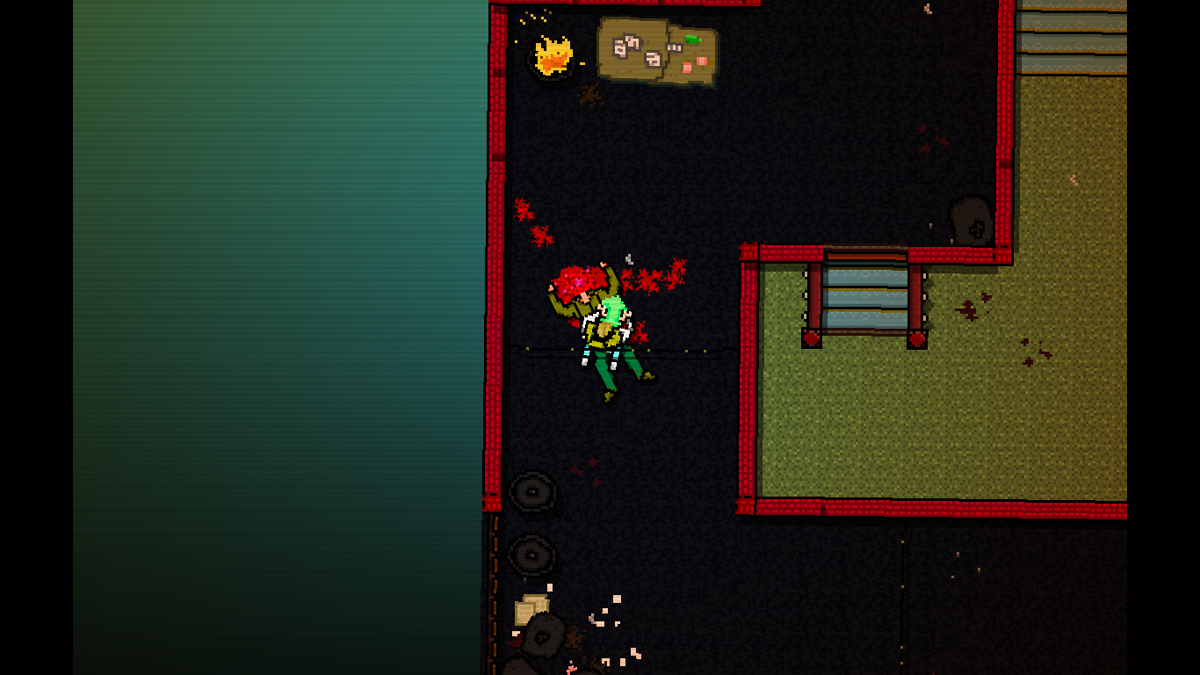
The top-down view keeps the action legible even when rooms fill with bodies, dropped weapons, and blood. Buildings stretch across one or more floors, and details such as doors, windows, transparent surfaces, and exterior ledges matter because they directly shape the danger you can see and the routes you can take.
It is a deliberately graphic game: brutal finishers and heavy gore make every successful clear look ugly rather than heroic. The visual clarity matters because you need to read enemy positions quickly before a single bullet or blow ends the attempt.
Story
Between missions, the routine is deliberately strange. Jacket begins at his apartment, receives instructions through his answering machine and phone, then drives his DeLorean to another job for mysterious employers. The bare, repeated structure gives every assignment an uneasy sense of being directed by someone you cannot see.
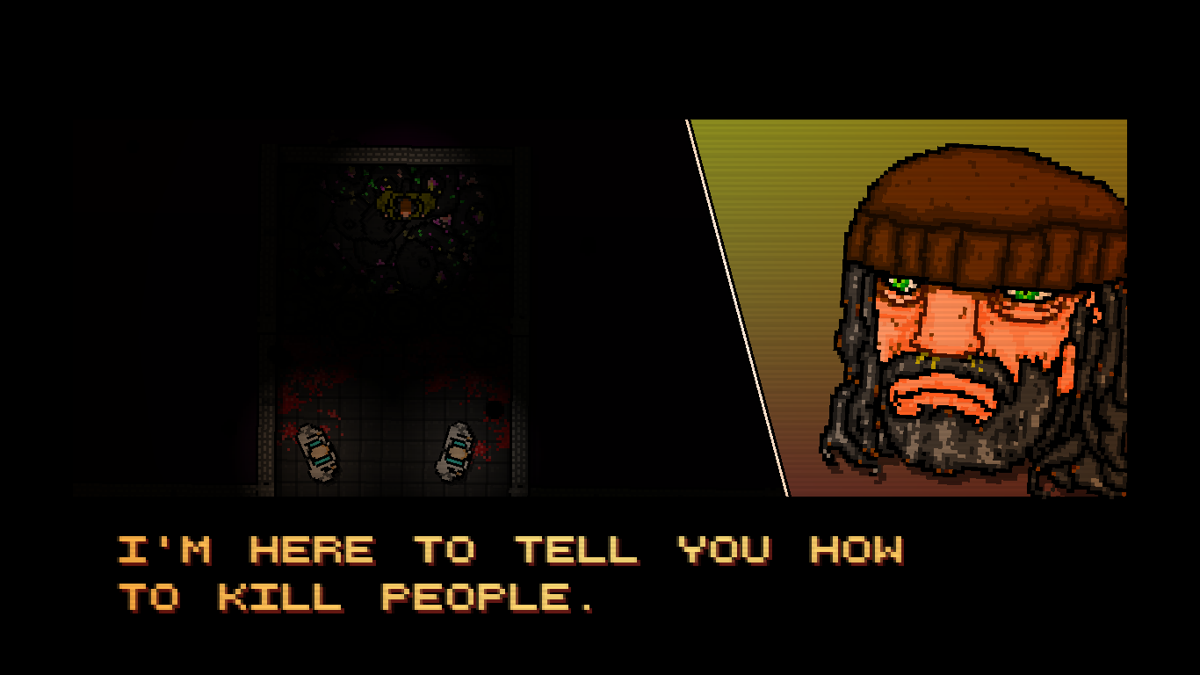
Short stops at shops and the changing details in the apartment provide a quiet counterpoint to the killing. Longer cutscenes occasionally widen the story, but the game’s strongest narrative tool is the uneasy gap between what you are told to do and how little you understand about why you are doing it.
Hidden letters give the mystery a concrete extra thread. Collect enough to fill out a phrase in the Puzzle menu, and that phrase can be used later for a different ending. It is a worthwhile goal if the game’s cryptic atmosphere hooks you, though the immediate story works best as an unsettling frame around the missions rather than a straightforward crime tale.
Overall Experience
Hotline Miami is at its best when you stop treating a death as a setback and start treating it as information. A failed charge tells you which enemy heard the gunshot; a bad doorway entry reveals where the ambush sits; the next attempt becomes cleaner, faster, and more confident. Few action games make that learning curve feel so immediate.
Its electro and synthesizer soundtrack is an enormous part of the momentum, shifting from eerie soundscapes to booming rhythms as the pace changes. Combined with the stop-start violence, it gives successful runs an exhilarating, almost feverish momentum. That same intensity can wear you down, so this is better played in focused bursts than as a relaxed evening game.
If you enjoy demanding action games built around repeated attempts, experimentation, and high-score improvement, this is easy to recommend. If instant deaths and graphic violence put you off, it will not win you over through patience. For everyone else, the payoff is substantial: Hotline Miami turns a simple command—clear the building—into a tense, stylish series of violent little puzzles. For more background from the creators’ original site, see the official Hotline Miami page.


Reviews
There are no reviews yet.