 Retro Replay Retro Gaming History, Reviews & Emulation
Retro Replay Review
Gameplay
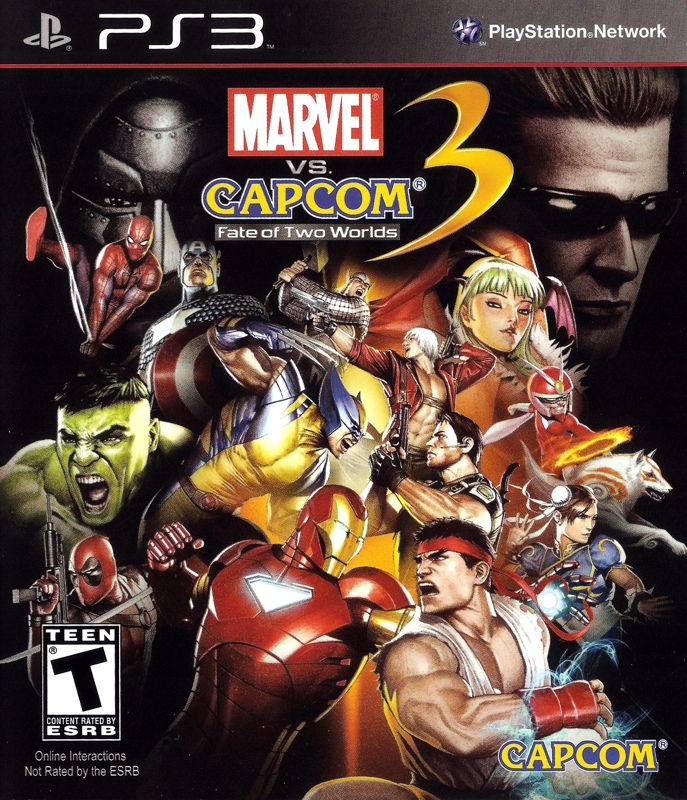
The first hour is mostly about indulging your instincts. You pick three characters, throw them into side-view battles, and discover whether the team you chose because it looked cool is also one you want to keep using. Marvel vs. Capcom 3 has a roster designed around recognition as much as competition, and that matters: choosing Captain America, Dante, Deadpool, Phoenix, or Doctor Doom immediately gives each run a different flavor.
Arcade mode gives that experimentation a clear loop. You take your chosen trio through six battles before the final fight with Galactus, so a run does not overstay its welcome. More importantly, the finishing character determines which ending you receive. That small incentive makes repeat attempts feel purposeful: if you want to see a particular character’s conclusion, you have a reason to bring them along and make sure they land the decisive hit.
When the initial crossover novelty starts to wear off, the missions are where you should spend time. They are specifically built to teach each character’s move set, making them more useful than blindly rotating through the roster and hoping something clicks. Offline Arcade and Versus let you test teams against the computer or a friend on the couch, while online matches against friends and strangers offer the competitive next step. The game is most rewarding when you resist the urge to treat every character as a quick novelty and give a few favorites enough time to learn.
Graphics
The action stays in a 2D side view, putting the characters front and center rather than burying them in a complicated camera angle. Its biggest visual strength is simple but effective: Marvel and Capcom faces share the same battle screen, so a team built around Captain America and Dante or Deadpool and Phoenix is immediately fun to look at.
Story
This is crossover comic-book escalation in the broadest, most entertaining sense. Doctor Doom and Dormammu begin by working toward an invasion of the Capcom universe, Albert Wesker joins the scheme to unite the two Earths, and Galactus decides the whole mess warrants destroying both worlds. It is a deliberately oversized excuse to put heroes and villains from both sides in the same conflict.
Do not come in expecting one carefully developed campaign narrative. Arcade mode tells the story through the team you choose and, ultimately, the character who lands the blow on Galactus. Every character has a different ending and motivation, which makes the story feel more like a collection of character spotlights than a single definitive plot.
That structure suits the game better than a long, fixed storyline would. You can chase an ending for a favorite, unlock extras along the way, then return with a completely different team. For series context, the earlier Marvel vs. Capcom: Clash of Super Heroes is a useful point of comparison; this entry leans hard into the pleasure of bringing a much broader group of familiar personalities together.
Overall Experience
Marvel vs. Capcom 3 succeeds because it understands the immediate pull of a crossover fighter: you want to see who belongs on your team, then you want to try another combination. The three-person format, short Arcade route, character missions, local matches, and online options all push you back toward that same appealing question.
Its limits are also clear. The plot is a framework for fights, and the Arcade ladder reaches its Galactus showdown after only six battles. If you need a fighting game with a long story campaign to stay engaged, this may feel slight. If you enjoy learning a cast one character at a time and replaying a concise ladder for different endings, that compactness becomes a virtue rather than a flaw.
This is an easy recommendation for anyone who wants Marvel and Capcom favorites in the same competitive package and is willing to put some time into missions before committing to a team. Its 7.9 score fits: a very good, replayable crossover fighter whose lasting value comes from the roster and the teams you build, not from the apocalyptic plot around them. For release and development background, see the Marvel vs. Capcom 3 history.


Reviews
There are no reviews yet.