 Retro Replay Retro Gaming History, Reviews & Emulation


Retro Replay Review
Gameplay
The first stretch has an immediately interesting split personality. In towns, you guide Iljimae from a top-down view, speak to people through selected conversation topics, and get the pleasing sense that information matters. Then you head out into the wider world and the game changes gears completely: travel brings random encounters, and battles play out as straightforward first-person, turn-based fights. That is a jarring combination, but it is also the reason the game remains memorable.
The town sections are where the game feels most inviting. Topic-based conversations give you something more deliberate to do than simply running down a list of dialogue, and the resemblance to Ultima VII is easy to understand in the way exploration and talking occupy the same space. If you enjoy slowing down, checking in with townsfolk, and teasing useful leads from a conversation system, these portions give the adventure texture.
Outside town, Iljimae-jeon becomes far more basic. Overworld navigation, random enemies, and first-person turn-based combat put it close to an early Dragon Warrior-style rhythm. What starts to click is the simple loop of gathering information, setting out, surviving fights, and moving the quest forward. Frustration can set in when the random battles interrupt that momentum, especially if you came primarily for the richer town exploration rather than a traditional RPG grind.
This is not a game built around combat complexity. Its battles work as a familiar obstacle course between the more distinctive parts of the adventure, and that makes the pacing dependent on your tolerance for repeated encounters. Go in wanting an old RPG with a conversational town layer, not an Ultima VII successor in every respect, and the uneven structure is easier to enjoy.
Graphics
The game switches viewpoints along with its play styles. Towns use a top-down perspective that suits walking around and meeting characters, while combat moves to a first-person view in the old Japanese RPG tradition. That contrast is clear and functional, though it makes the game feel like two different visual approaches stitched together.

Story
Iljimae is a strong choice for a lead because he arrives with real folklore weight. He is a noble thief, known for taking from corrupt high-ranking officials to aid the poor, rather than a blank adventurer who has to earn your interest from scratch. The game begins with him already established as a hero, which lets the central conflict get moving without an origin-story detour.
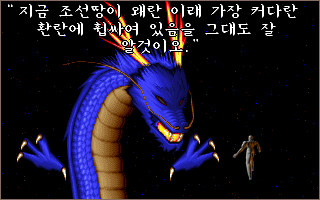
The immediate threat is satisfyingly mythic: a powerful warlord has made a pact with a dragon, and peace depends on music from a magical flute. It is broad fantasy, but it is broad fantasy with a specific cultural starting point. The combination of Iljimae’s folk-hero reputation, a dragon pact, and the flute gives the journey more character than the standard save-the-kingdom setup.
That premise carries the game through its more conventional RPG stretches. The story does not need the combat to be novel when the hero’s role and the magical objective already give you a reason to press on. If you like folklore adapted into game adventures, this is the part most likely to justify the trip.
Overall Experience
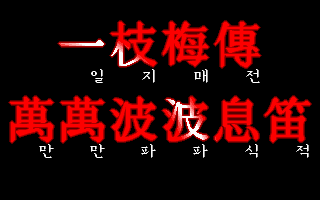
Iljimae-jeon: Manman Papa Sikjeok-pyeon is a fascinatingly uneven RPG rather than a consistently polished one. The town-side resemblance to Ultima VII invites one set of expectations, while the overworld and battles commit to much simpler first-person, turn-based RPG conventions. The shift can feel awkward, yet it gives the game a personality that a more uniform design might not have had.
The payoff is worthwhile for someone with affection for DOS-era role-playing games and enough patience for random encounters. You get a Korean take on the Iljimae legend, topic-driven town interactions, and a familiar travel-and-battle structure beneath it. You may not love every fight, but you are unlikely to confuse the game with a generic medieval fantasy quest.
Give it a chance if you enjoy seeing how different RPG traditions met in the 1990s. Skip it if frequent random battles and simple turn-based combat are deal-breakers. For everyone else, it is a curious, culturally specific adventure whose best moments come when its folk-tale hero and town exploration take center stage.


Reviews
There are no reviews yet.