 Retro Replay Retro Replay gaming reviews, news, emulation, geek stuff and more!
Retro Replay Review
Gameplay
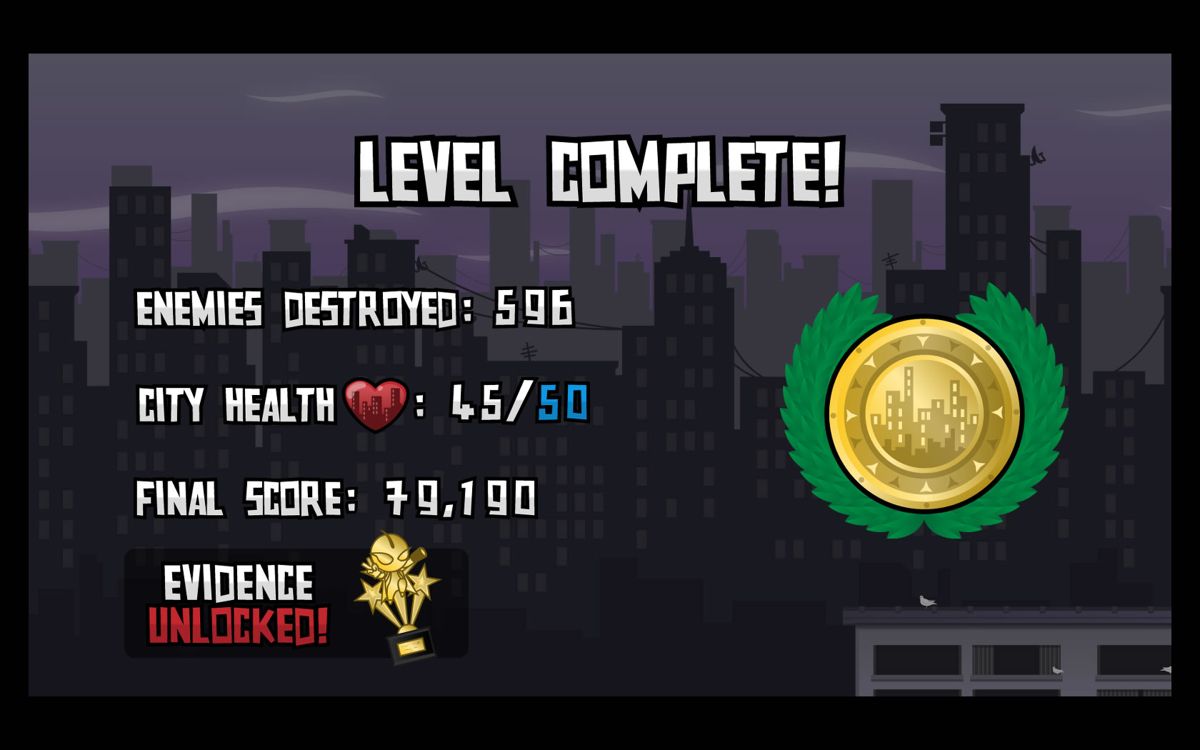
The first few minutes of Who’s That Flying?! feel almost disarmingly simple. Earth’s Guardian flies forward at a fixed pace, you move him anywhere on the screen, and his arm-mounted laser has unlimited ammunition. Then the real objective lands: you are not protecting your own health bar, because there isn’t one. You are protecting the left edge of the screen from a flood of small black Ravagers. Let fifty through and the level ends, so the game turns invincibility into a surprisingly effective source of stress.
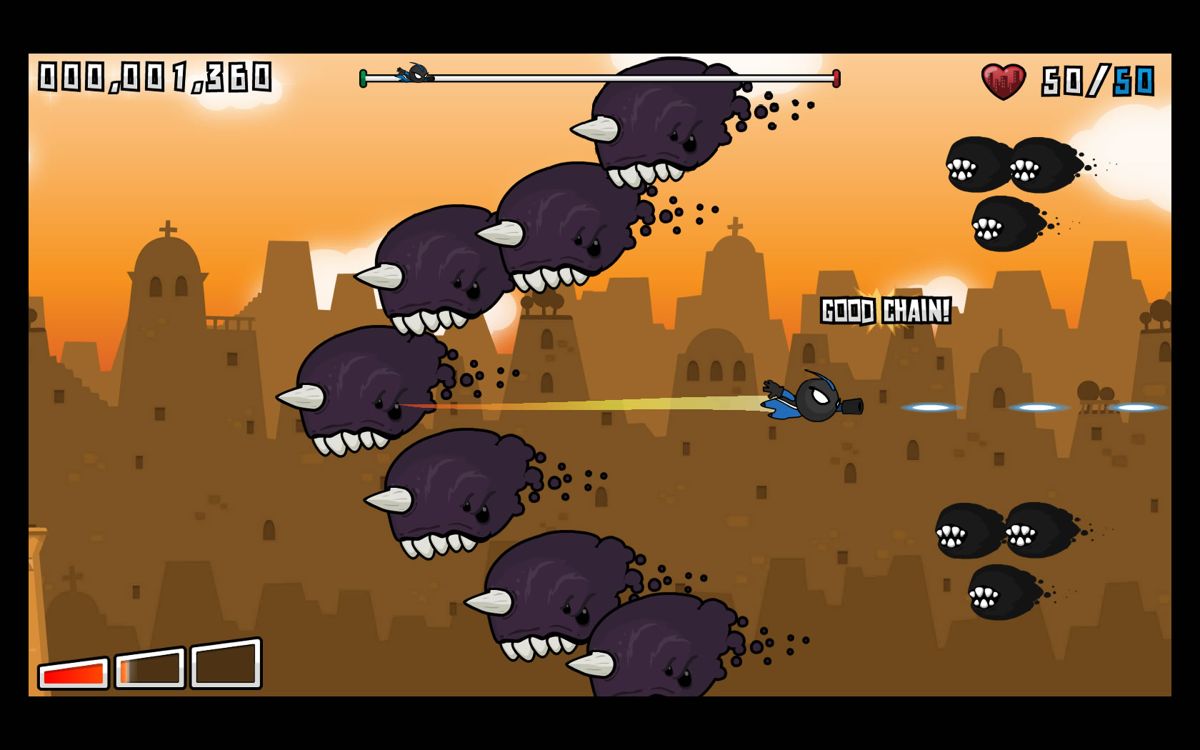
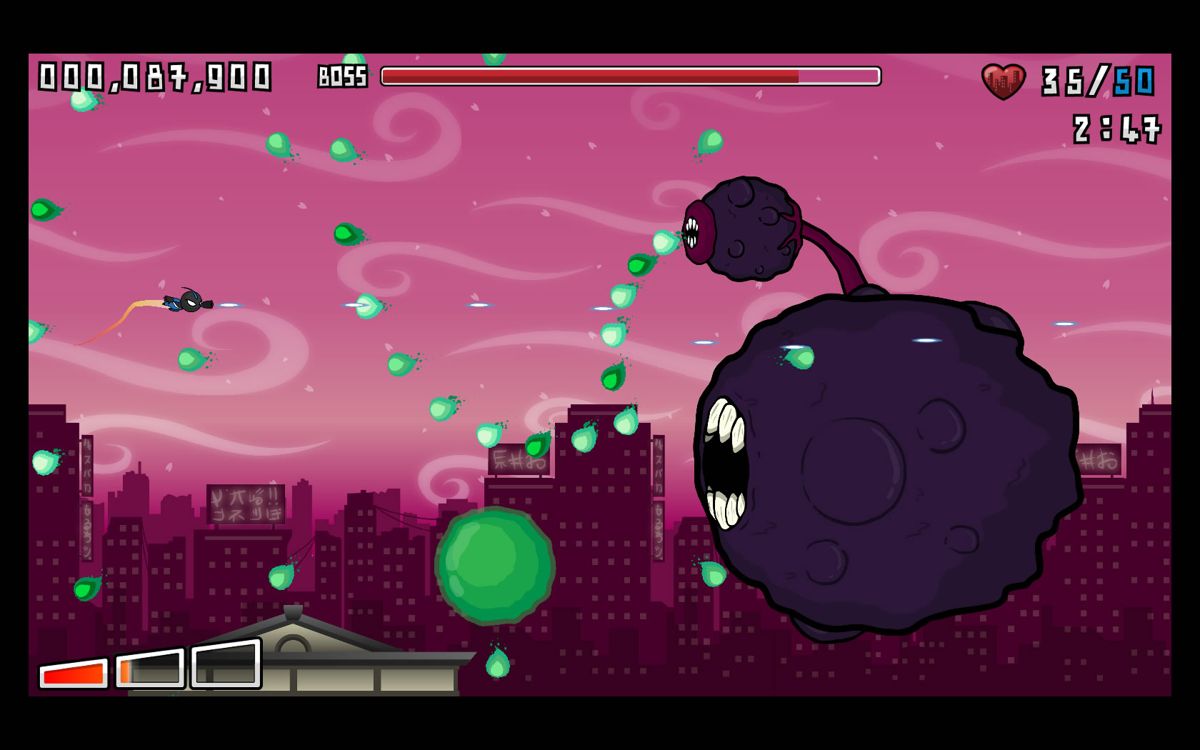
That rule gives the shooting a nice, nervous rhythm. Ravagers are easy to destroy and do not attack, but they arrive in numbers large enough to demand quick target switching. More dangerous creatures complicate things by soaking up laser fire, firing back, stunning the Guardian, or knocking him out of position. You can often ignore those bigger threats, yet doing so at the wrong moment lets them obstruct the shots you need to clear the actual objective. The best runs come from quickly recognizing when to keep firing, when to weave around a blocker, and when to fly in close and tear an enemy apart.
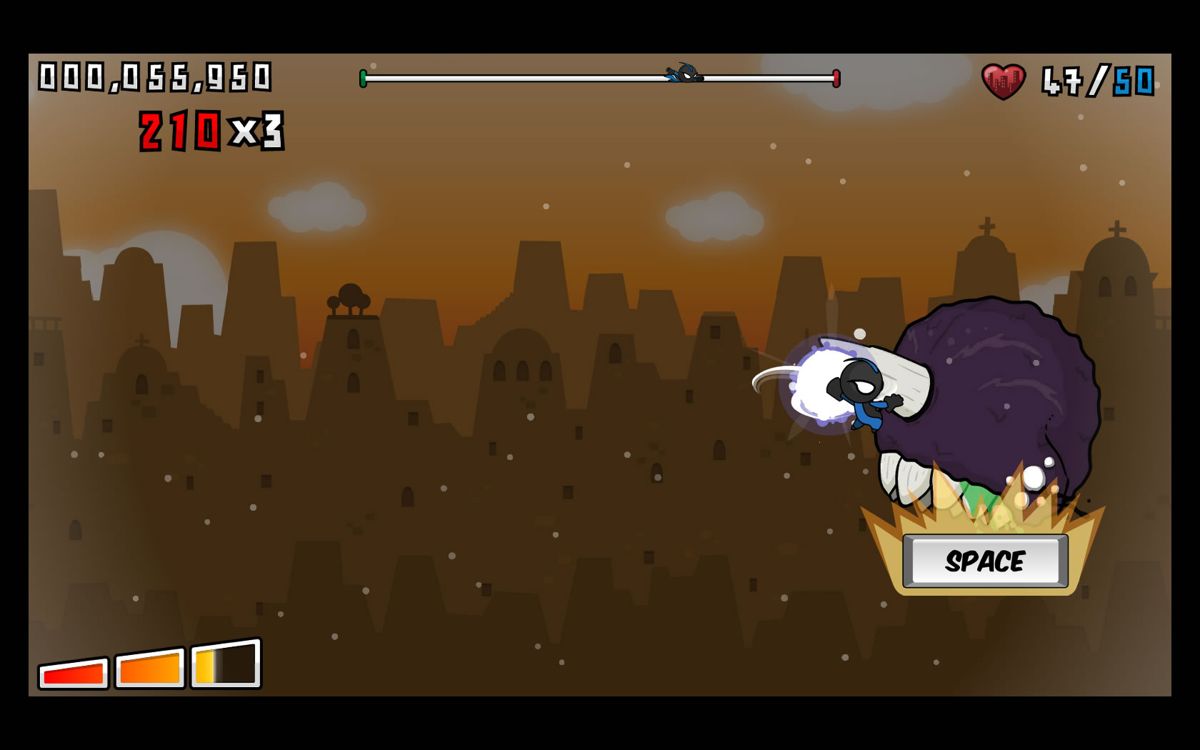
Grabbing monsters adds a welcome bit of aggression to a game otherwise built around shooting from range. Larger foes may need to be weakened first, then finished with a rapid button-input sequence. These takedowns make a successful close approach feel satisfying, although they can also interrupt the cleaner flow of managing an incoming horde. Bosses at the end of every level give each memory a proper finish rather than simply ending on another wave.
The power system is where the game’s score-chasing instincts become clearest. Holding back several waves builds a three-tier meter, unlocking stronger options such as faster firing and a huge laser beam. But one escaped Ravager wipes that progress away. That is harsh, and it can make a single lapse feel disproportionately costly, but it gives you a concrete reason to improve your routing and keep the pressure on. Story Mode’s four unlockable settings, plus Infinite and Challenge modes, suit a shooter that gets more compelling when you begin chasing consistency rather than merely surviving.
Graphics
The action is framed in a clear side-on view, with enemies pouring in from the right and the danger zone sitting plainly on the left. That simple layout matters in crowded waves: you can immediately see which Ravagers are about to escape and which larger monsters are getting in the way.
Ravagers are basic black creatures, while the larger attackers stand out through their size and behavior. The Guardian’s flying silhouette and laser-equipped arm are easy to pick out amid the chaos, which is exactly what this kind of fast screen management needs.

Story
The comic-book setup is much more fun than a generic “save Earth” excuse. The Guardian is on trial before the Galactic Council, accused of letting monsters ravage his world, and each stage is his attempt to reconstruct the invasion as evidence. Framing the action as a defense case gives failure a cheeky extra sting: every escaped Ravager feels like another point against your testimony.
Jupiter’s guardian leading the council gives the proceedings a specific focal point, while the other planetary guardians turn the premise into a broader interplanetary judgment. The story does not need to carry the action on its back; it mainly gives the levels a playful reason to be retold as memories. That is enough to make the structure feel more purposeful than a bare sequence of missions.
There is also a neat fit between premise and play. You are not asked whether the Guardian lived, because he is invincible. You are asked whether he made a sufficient effort to stop the destruction. The game’s obsession with escaped Ravagers and clean wave control directly supports that argument, making the trial framing more than a disposable joke.
Overall Experience
Who’s That Flying?! is at its best when the screen fills up, a tougher enemy is eating your shots, and you are desperately trying to preserve a growing power meter while picking off Ravagers before they cross the line. Its central idea is strong: remove the usual fear of death, then replace it with a more demanding responsibility. You can take punishment, but you cannot afford to lose focus.
The trade-off is that the game’s pressure comes from repetition as much as escalation. Waves of small enemies remain the heart of the challenge, and the power bar reset can turn an otherwise good effort into a deflating recovery job. If you want a shooter built around elaborate loadouts or careful survival, this is probably too narrow. If you like learning a compact arcade ruleset until your hands start making the right calls automatically, that narrowness becomes a strength.
With a 7.6/10, it lands as a lively, inventive side-scroller that understands how to make a simple objective tense. Give it a chance if you enjoy score-minded shooters, brisk replayable stages, and the satisfaction of turning a messy incoming horde into a controlled clear. Just be ready to treat every Ravager that gets away as a personal insult.



Reviews
There are no reviews yet.