 Retro Replay Retro Gaming History, Reviews & Emulation

Game Overview
Gameplay
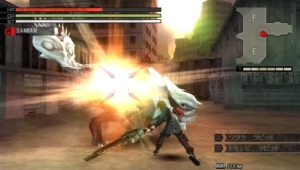
God Eater 3 is at its best when you want to get right into a fight and stay there. Its battles are built around high-speed clashes with Aragami, and the direct-control approach gives the action a more immediate feel than a distant, command-driven RPG. You are not simply preparing a party and watching a plan unfold. You make a character, bring a God Arc into the field, and face creatures that have already pushed civilization to the brink.
The wide range of God Arcs is a meaningful reason to give the game a look. Weapon selection is not just a decorative choice in a game centered on hunting dangerous enemies; it is where you can start finding the fighting style that makes the game click for you. If one approach feels awkward or lacks the punch you want, the premise encourages experimentation instead of locking the whole experience behind one combat identity.
That speed can also be the dividing line. The game is built for gamers who enjoy staying engaged during frantic encounters, not for anyone hoping for a relaxed, turn-by-turn RPG pace. Its ruined areas and new Aragami give the battles a clear purpose, but the moment-to-moment payoff comes down to whether you enjoy repeatedly testing yourself against large threats with increasingly familiar tools.
Story
The setup is unapologetically dramatic: Oracle cells consume life, conventional weapons fail, and the remaining hope rests with God Eaters carrying living weapons made with those same cells. It is a sturdy apocalypse story rather than a subtle one, but the central irony works. Humanity survives by wielding part of the force that destroyed its world, which gives the struggle more flavor than a generic monster-slaying assignment.
Overall Experience
God Eater 3 earns its reputation as a solid action RPG because it understands its main assignment. It puts the emphasis on fast combat, dangerous creatures, weapon choice, and a world that needs saving badly enough to make each hunt feel consequential. The opening pitch is easy to understand, and it does not bury that pitch under a more complicated genre identity.
Still, you should go in for the combat first. The apocalyptic setting and survival theme provide motivation, but they are not the reason to commit if you do not enjoy high-pressure action against recurring monstrous opposition. This is a game for the player who likes learning what a weapon feels like in motion and wants battles to carry more urgency than a standard fantasy quest.
For the right audience, the payoff is a tense, energetic monster-hunting RPG with enough weapon variety to invite personal preference and enough desperation in its premise to give the action weight. It is not trying to reinvent the end-of-the-world adventure. It succeeds by making the fight back feel fast, forceful, and worth joining.


Reviews
There are no reviews yet.