 Retro Replay Retro Gaming History, Reviews & Emulation
Game Overview
Gameplay
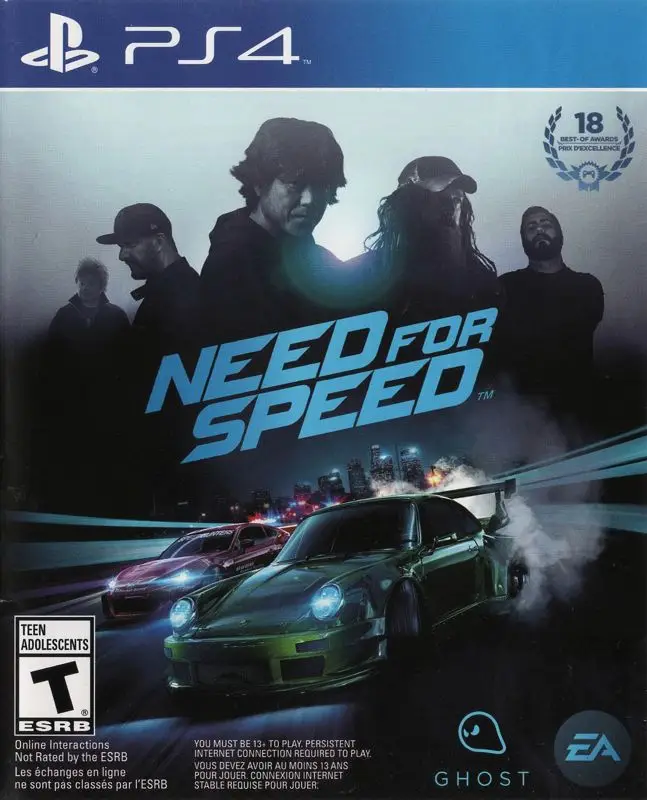
Need for Speed is at its best when you stop treating Ventura Bay like a checklist and start treating it like your personal car culture playground. You begin as an unknown racer, then choose how to build your reputation across five paths tied to Build, Crew, Outlaw, Speed, and Style. Since those paths overlap and can be pursued in any order, the game gives you a welcome amount of freedom in deciding what kind of racer you want to be.
The driving leans firmly arcade, which suits the game’s emphasis on fast races, drifting, and time-based events. Handling tuning gives you a meaningful choice between a car set up for grip and one made to slide, so your upgrades are not just about chasing bigger numbers. Better still, a starter car can be upgraded enough to compete with the fastest machines. You are free to stick with a favorite instead of constantly dumping it for the next purchase.
Customization is the heart of the experience. Cash pays for cars and upgrades, while unlocked parts and REP steadily open more options and events. Paint, wraps, body kits, and individual decals give you plenty of room to make a licensed car feel personal, and the garage limit of five cars encourages some actual decision-making rather than mindlessly hoarding everything. If you enjoy dialing in both appearance and behavior, this is where the game earns its hours.
There are compromises. Police chases give the outlaw side some tension, and the ability to occasionally bribe police adds a practical escape valve, but progression is closely tied to REP and repeated activity. The larger problem is the permanent internet connection. Even solo, you must stay connected, and races cannot be paused. That is a needless source of friction in a game that otherwise works well for jumping in alone.
Story
The story is mostly a framework for meeting Ventura Bay’s street-racing crowd and rising through their connected ambitions. Amy, Manu, Robyn, Spike, and Travis steer the five routes, while real-life racing figures serve as the icons you are working toward challenging. First-person full-motion-video scenes and regular calls and texts keep the game moving, though the real motivation is your climb from newcomer to local legend rather than a deeply developed narrative.
Overall Experience
This reboot understands why the underground-era games stuck with people. The satisfaction comes from turning a modest car into something capable, distinctive, and suited to your preferred driving style. The five-path structure keeps that climb from feeling completely locked into one discipline, so a drift session, a sprint race, and a police pursuit can all contribute to the same larger goal.
Online play is built around temporary crews and small AllDrive sessions of up to eight people. Joining friends for a race can add energy, while public crews offer an easy way to find company without committing to a permanent group. Still, the session-based setup and constant connection requirement make the social side feel less convenient than it should, particularly if you mainly want a dependable solo racer.
At a 6.8, Need for Speed lands as a solid, uneven revival rather than a series high point. Give it a chance if you want arcade street racing with deep enough tuning to reward attachment to one car and enough event variety to support different moods. Skip it if always-online solo play or an inability to pause is a dealbreaker, because those frustrations never stop being part of the ride.

Reviews
There are no reviews yet.