 Retro Replay Retro Gaming History, Reviews & Emulation
Retro Replay Review
Gameplay
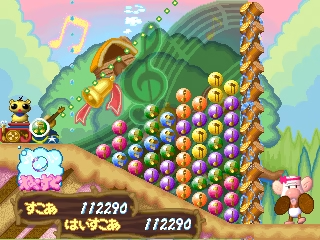
Pastel Muses starts from a puzzle language you already understand: fire a colored ball, connect it with matching balls, and clear the board. The twist is that aiming alone will not save you. Every shot also needs the right amount of force, because the ball travels in an arc and descends the slope rather than flying straight into place.
That change gives the game a more hands-on feel than a standard match-and-shoot puzzler. A gentle shot can settle into a useful spot, while a stronger one can carry farther down the field. When a match disappears and the rest of the pile falls down the slope, the board can suddenly become easier to clear or much harder to control. You have to think about the shot after this one, not merely the color sitting in your launcher.
The goal is clean and compelling: empty the entire screen of balls to win the level. Story Mode is one of the available options, versus mode invites direct competition, and Endless Mode is where the pressure of maintaining control can really settle in. If you enjoy puzzle games that reward touch and trajectory as much as quick color matching, this is a smart variation on a familiar formula.
Graphics
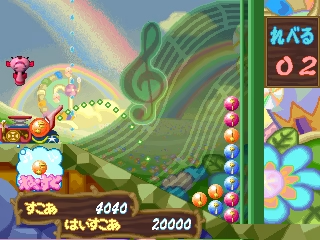
The playfield centers on colored balls rolling down a slope toward the pile at the bottom, so the important action stays easy to read. Character selection uses cute beavers, including a pink beaver available in Endless Mode, adding a light anime-styled touch around the puzzle action.
Story
Story Mode sits alongside versus and Endless Mode in Pastel Muses. It offers another way to engage with the ball-matching premise.
The central setup puts colored balls on a slope, with the player controlling both aim and shot strength. Arcing a shot into the pile gives the matching a distinct physical character.
The three modes give that same idea different contexts. You can choose Story Mode, a versus match, or an Endless session according to the kind of puzzle game you want to play.

Overall Experience
Pastel Muses earns its personality through one meaningful addition to the colored-ball puzzle template. Controlling shot strength sounds modest on paper, but it changes the rhythm of play. Missed shots are not just bad aim. They are bad reads of distance, slope, and what the remaining balls will do once a match breaks apart.
It will click most with gamers who like repeating a compact puzzle challenge until their instincts sharpen. The board physics can turn a promising setup into a scramble, and that uncertainty is either the game’s best feature or its most likely source of frustration. If you want every shot to behave like a neat grid placement, the rolling aftermath may test your patience.
For everyone else, the payoff is a pleasingly tactile puzzle game with enough mode variety to support different moods. Story Mode offers another option, versus mode adds a competitive angle, and Endless Mode lets you settle into the pure loop. It is a focused idea rather than a sprawling one, but the arc-and-slope system gives it a real reason to exist beside more conventional ball matchers.


Reviews
There are no reviews yet.