 Retro Replay Retro Gaming History, Reviews & Emulation
Retro Replay Review
Gameplay
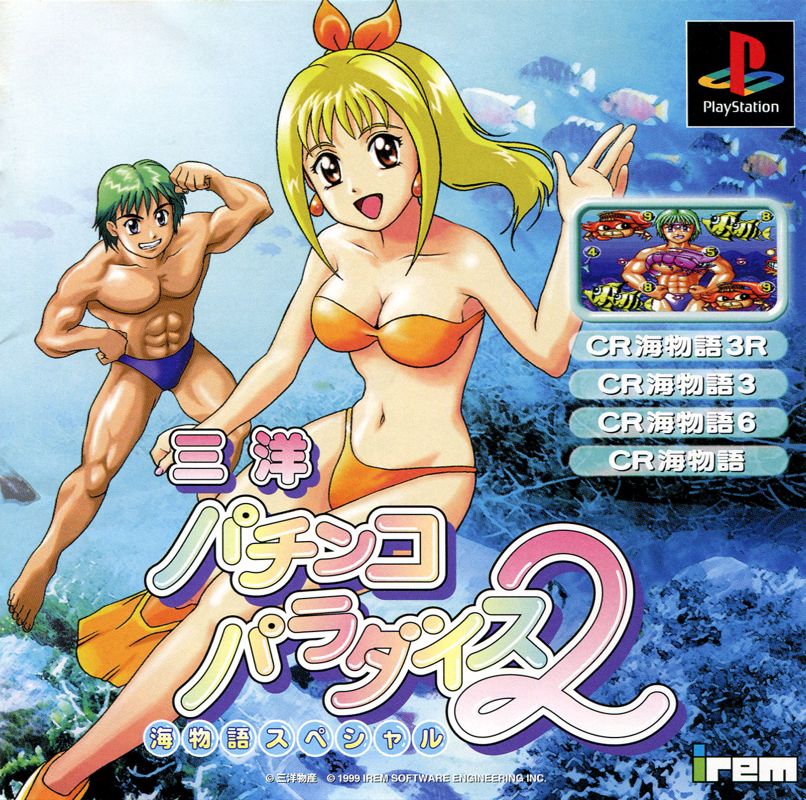
The first hour is all about learning whether the rhythm of these four Umi Monogatari tables gets its hooks into you. Sanyō Pachinko Paradise 2 does not distract from that central loop: you choose a machine, manage your balls, and live with the swings. If you already enjoy pachinko, that concentration is a virtue. If you need constant objectives or a campaign to push you forward, it can feel sparse very quickly.
Normal mode is where the simulation has room to breathe. Being able to adjust a wide range of settings for each machine gives you a reason to linger, compare tables, and experiment rather than treating every session as the same blind run. That makes it the better mode for patient players who want to understand the differences among the four licensed recreations.
Battle mode supplies the pressure that Normal mode deliberately avoids. Default settings, a limited starting pool, and a time limit turn the question from “what do I want to test?” into “can I build a worthwhile result before time runs out?” The format is clean and easy to grasp, though it also exposes how dependent the game is on your tolerance for pachinko’s inherent uncertainty. A bad stretch is not softened by a pile of side activities.
View mode is a modest but welcome extra for anyone who enjoys the machines’ animated displays. It is especially useful because it lets you watch those animations freely instead of treating them only as rewards glimpsed during a session. Still, this is a specialist package. The value comes from spending time with its specific machines, not from a wide variety of unrelated modes.
Graphics
The game centers its look on reproductions of the four Sanyo Bussan Umi Monogatari pachinko machines and the animations on their in-game displays. View mode puts those display sequences front and center, which suits a game aimed at fans who recognize and enjoy these particular tables.
Story
There is no story mode here, and that absence defines the tone. Rather than wrapping the tables in characters, progression, or a narrative excuse to keep moving, the game asks you to make your own reasons to play: improve a Battle run, try another machine, or alter settings in Normal mode.
That directness will please anyone who found a story layer unnecessary in a pachinko simulation. You can get straight to the part you came for without detours. It also means the game has little to offer when you are not personally invested in the machines themselves.
The four licensed Umi Monogatari recreations carry the entire package. For a fan, that is a sensible focus; familiarity with the tables can make each choice feel purposeful. For everyone else, the lack of a broader hook makes this a difficult game to recommend on theme alone.
Overall Experience
Sanyō Pachinko Paradise 2 knows exactly how narrow its audience is, and it stays within that lane. Its best version is a quiet, repeatable simulation session: adjust a machine in Normal mode, then see whether you can handle the tighter constraints of Battle mode. There is a satisfying contrast between free experimentation and timed, limited-ball pressure.
Frustration sets in when you want the game to generate excitement beyond the tables. The available modes are purposeful, but they all point back to the same core activity, and the missing story mode leaves no larger sense of progression. That is not a flaw for dedicated pachinko enthusiasts; it is a firm boundary around the experience.
Give it a chance if the Umi Monogatari machines mean something to you or if you specifically want a straightforward pachinko sim with adjustable settings and a challenge mode. Everyone else should expect a very particular kind of digital pastime: patient, repetitive by design, and rewarding mainly when the machinery of pachinko is already the draw.


Reviews
There are no reviews yet.