 Retro Replay Retro Replay gaming reviews, news, emulation, geek stuff and more!
Retro Replay Review
Gameplay
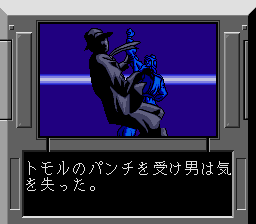
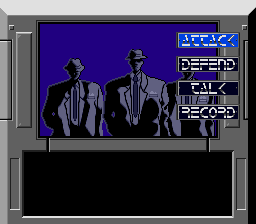
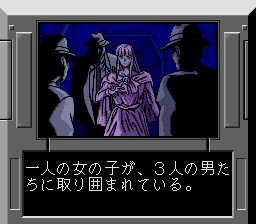
Detonator Orgun opens with a premise that sounds like it should explode into a mech brawler, then immediately asks you to slow down. You guide Tomoru Shindo through a traditional command-menu adventure, choosing actions such as Look, Think, Talk, and Move. The first stretch is about settling into that rhythm: inspect the situation, speak to the people around Tomoru, and keep pushing the investigation forward one decision at a time.
That approach will either be comfortably old-school or painfully deliberate, depending on what you want from a Sega CD science-fiction game. There is satisfaction in treating each new situation as a small conversational or observational puzzle rather than simply being pointed toward the next fight. The Think command especially fits a story built around a confused protagonist being drawn into a conflict he does not yet understand.
The trade-off is obvious. The game’s strongest idea—an ordinary student caught up in the fate of a machine-cyborg warrior—arrives through menus and dialogue rather than direct combat. If you came in for the image of mechanized knights battling across space, the interaction can feel restrained. Give it a chance if you enjoy methodical adventure games and want the plot to be the reward; skip it if you need constant mechanical variety.
Graphics
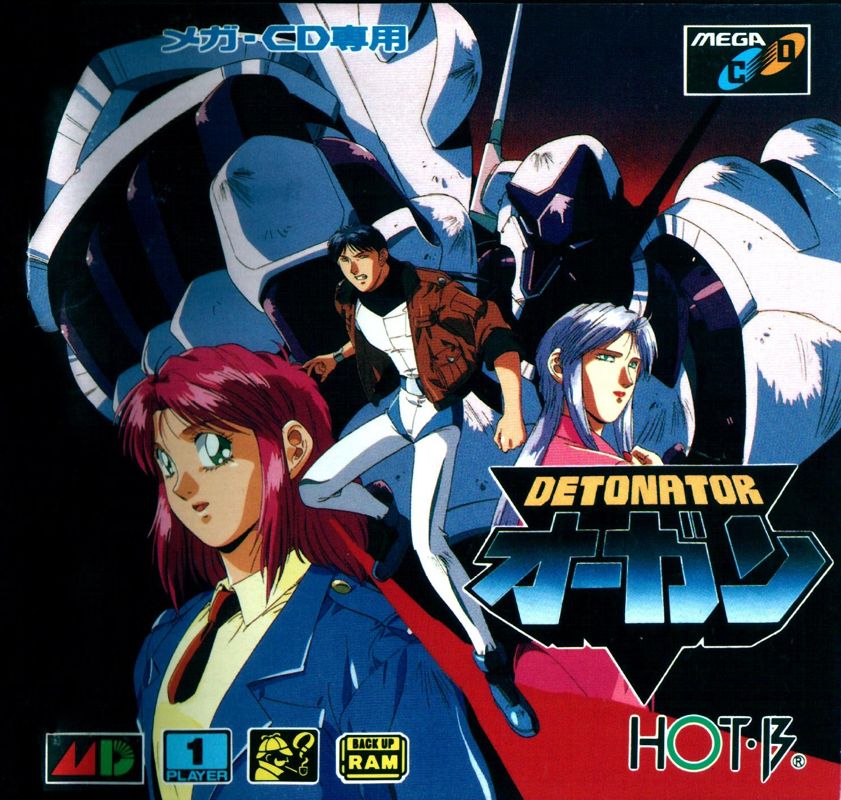
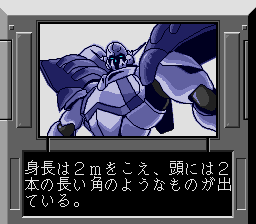
The imagery is rooted in its anime source and in a far-future Solar System setting: mechanized knights, the Moon, City No. 5, and the threat of the Evoluders give the game a firmly cyberpunk sci-fi frame. It is a more character-and-setting-driven kind of futuristic spectacle than a game built around hands-on action.
Story
The story has a strong opening question. Orgun, marked for death by his own Evoluder kind, is dying on the Moon when he somehow reaches Tomoru on Earth. That is a clean, compelling connection: Tomoru is not introduced as a hardened hero, but as a college student abruptly pulled into a war that seems much larger than him.
From there, the Earth Defense Force’s effort to build a new Orgun gives the plot its central source of momentum. Tomoru is destined to meet this new creation, while the Evoluders remain a suitably direct threat: a race of machine-cyborg conquerors whose violence has already turned on one of their own. It is broad anime sci-fi, but it has enough personal urgency to keep the larger conflict from becoming mere jargon.
The original anime voice actors are a real advantage. In a menu-led adventure, voices have to do a lot of work carrying personality and tension between your choices, and retaining that cast gives the adaptation a welcome sense of continuity. Fans of the anime have the clearest reason to play, since the game extends the time you can spend inside its world rather than merely retelling its premise at a distance.
Overall Experience
Detonator Orgun is a niche game with a clear audience. It is not trying to turn its licensed mech conflict into an action showcase; it uses that conflict as the foundation for a slower first-person adventure about Tomoru’s involvement with Orgun and the Earth Defense Force.
Its best moments come when you lean into the uncertainty. You are not simply commanding an unstoppable machine; you are following a student trying to understand a connection to a dying warrior, an approaching enemy, and a new Orgun being assembled on Earth. That is a more interesting angle than the premise initially suggests.
The payoff is worth pursuing if the anime, the voice cast, or early-1990s menu adventures already appeal to you. For everyone else, this is a harder recommendation: the setting is lively, but the pace and interaction style demand patience. Treat it as a story-first detour through cyberpunk anime rather than a mechanical-knight action game, and it has a better chance of clicking.


Reviews
There are no reviews yet.