 Retro Replay Retro Gaming History, Reviews & Emulation
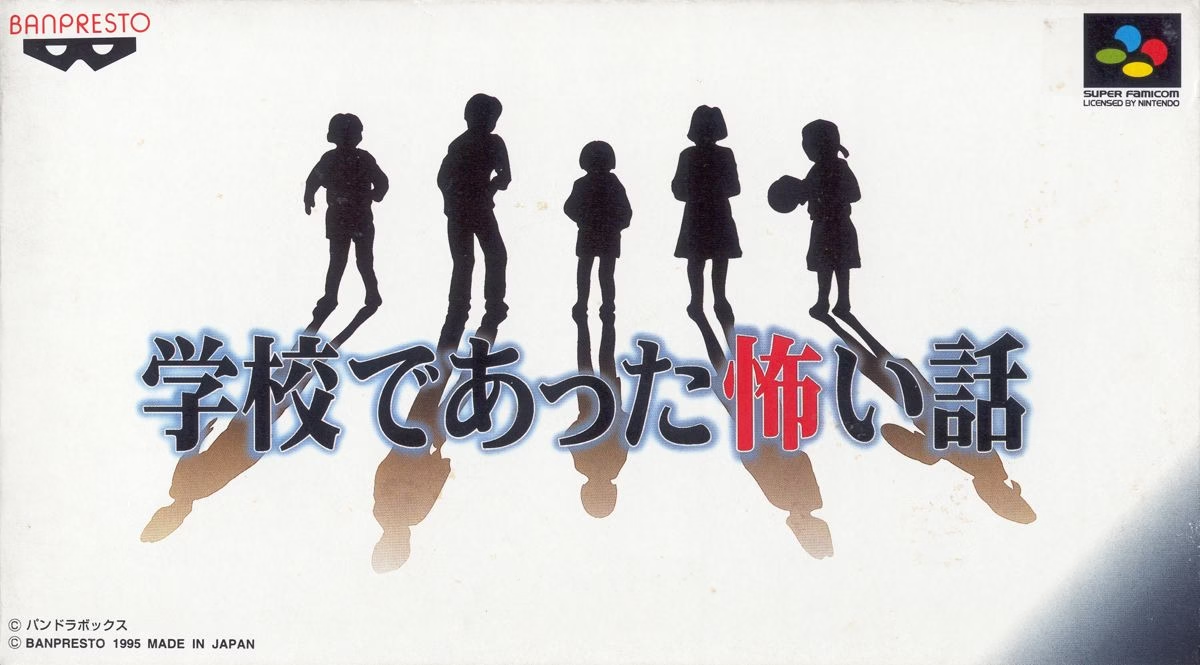
Retro Replay Review
Gameplay
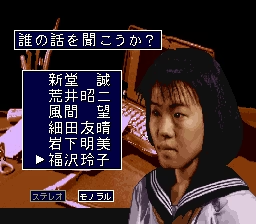
The first thing you do is pick whose story to hear, and that simple act is a strong fit for the premise. Rather than rushing you into action, Gakkō de atta Kowai Hanashi makes you feel like a student reporter settling in for a long, uncomfortable conversation after classes. The pressure comes from curiosity. You want to know what each student has seen, even when the game has already made it clear that these are not going to be harmless ghost stories.
This is survival horror in a text-driven form, so the payoff depends heavily on whether you can enjoy reading as the main source of tension. There is no need for fast reflexes to feel uneasy when someone begins describing a school mystery. The format lets the game linger on the setup, and the school setting gives every tale a useful sense of proximity. You have probably spent time in buildings like this, which makes the idea of something monstrous hiding around familiar halls land harder.
The structure is also its limitation. If you need frequent action or constant mechanical variety, the long stretches of reading can test your patience. Go in ready to listen, not to fight. For a horror fan who likes urban legends, anthology storytelling, and the slow turn from mundane conversation to dread, choosing the next account has a pull that becomes stronger as the seven mysteries pile up.
Graphics
Photographed faces are the game’s best visual weapon. The students do not look like idealized anime heroes, and that makes their expressions feel oddly direct and uncomfortable. Real-world school scenery adds to the effect, while the photographed character imagery gives even a plain after-school conversation a grim, late-night quality. The monster imagery has a rough, creepy edge that suits this kind of 1990s supernatural horror.
Story
Shuichi Sakagami begins with a straightforward assignment for the school newspaper: investigate strange incidents at school. The framing is smart because it gives him, and you, a believable reason to seek out stories that most people would rather leave alone. Meeting six other students after school immediately turns the familiar campus into a place of secrets and competing accounts.
The anthology approach is the heart of the game. Seven school mysteries mean the story is built around anticipation: who has the most disturbing tale, and how far will each account push the ordinary school setting into horror? That arrangement is especially effective for players who love horror collections, where the pleasure lies in moving from one unsettling rumor to the next rather than following a single straight chase.
Its focus on stories being told also gives the horror a personal angle. You are not just hearing about monsters in the abstract. You are sitting across from students as they recount what happened, which makes their faces and the uncomfortable stillness of the setup matter. The premise is simple, but it understands that a scary rumor becomes more dangerous once somebody swears it happened to them.
Overall Experience
Gakkō de atta Kowai Hanashi is an easy recommendation for patient horror fans and a much tougher sell for anyone who equates survival horror with exploration and combat. Its scares are carried by words, photographs, and the uneasy ritual of selecting another classmate’s account. When that mood clicks, the game feels more like being stuck at school after dark while somebody tells you something you wish you had not asked about.
The real photos are more than a novelty. They make the game feel specific to its era and help it avoid the safe distance that illustrated characters can create. The images can be awkward in a way that becomes useful, because awkwardness is exactly what a school ghost story told face-to-face needs. You may find yourself studying a character’s expression as closely as the text.
This is not broad, crowd-pleasing horror. It is a deliberate visual novel that asks you to meet it halfway, read closely, and let the atmosphere do the work. If that sounds like your kind of night, its collection of schoolhouse mysteries is worth seeking out. It offers a distinctive strain of Japanese horror that is quieter than most games in the genre, but not necessarily gentler.


Reviews
There are no reviews yet.