 Retro Replay Retro Replay gaming reviews, news, emulation, geek stuff and more!

Retro Replay Review
Gameplay
The first few minutes are inviting because Super Final Match Tennis does not bury tennis under layers of management. You choose a competitor, decide how long the match should run, and get to the useful question quickly: can you place the ball well enough to take control of the rally? That clean focus makes Exhibition a good starting point, whether you want a brisk one-set game or the fuller test of three or five sets.
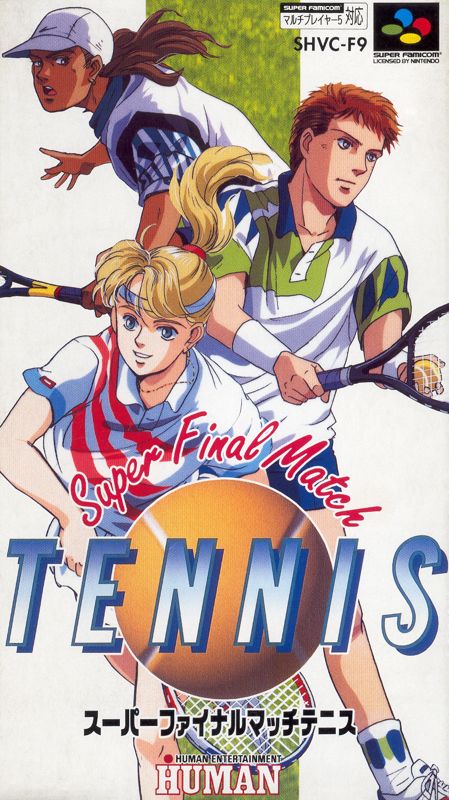
The roster matters more than a simple cosmetic pick. Fourteen players—seven men and seven women—bring distinct skill sets, so changing competitors gives you a practical reason to revisit the same matchup rather than treating everyone as interchangeable. The handicap option is especially welcome for uneven local games: preventing one player from competing close to the net can rein in a stronger opponent without forcing everyone to abandon the match.
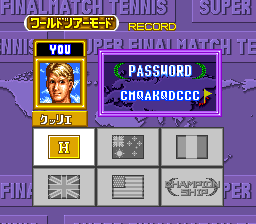
World Tour supplies the solo backbone, sending you through six tournaments around the world. It is a sensible structure for anyone who wants more than isolated exhibitions, since each tournament gives your wins a place in a longer run. Training is equally valuable instead of being throwaway filler; separating serving, receiving, rallying, and smashing lets you work on the part of your game that keeps costing points.
Multiplayer is where the format has the widest range. Up to four people can take part, and the selectable match lengths mean the game can serve a quick rotation of friends or a more deliberate session. If you enjoy sports games that leave room for rivalries, different skill levels, and a little house-rule-style balancing, this is built for that kind of repeat play.
Graphics
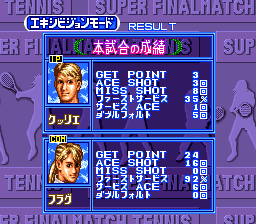
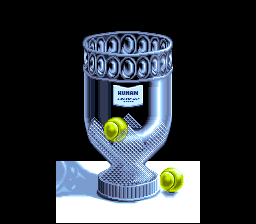
The diagonal-down court view is a practical choice for tennis, keeping the ball exchanges and each player’s position in view as a point develops. More importantly, it suits a game where judging space near the net and reacting during a rally are central to every match.
Story
There is no elaborate dramatic hook pulling you from match to match; the competitive through-line is the World Tour and its six tournaments. That is enough for a sports game whose real drama comes from turning a tight rally into a point and carrying that momentum into the next event.
Your chosen athlete supplies the personal angle. Since the fourteen competitors have their own skill sets, a tour run can feel tied to how you prefer to play rather than like a generic sequence of brackets.
The structure stays grounded in tennis: practice individual techniques, enter events, and try to come out ahead. If you want character scenes or a detailed campaign plot, this is not where the game places its energy. If a simple climb through tournaments is enough context for competition, it does the job cleanly.
Overall Experience
Super Final Match Tennis earns its value through flexibility. Exhibition handles immediate competition, World Tour gives solo sessions direction, and Training gives you a way to improve with intention instead of repeatedly losing while guessing why. That is a well-judged set of modes for a tennis game.
The strongest recommendation is for anyone who likes learning the rhythm of a sports game: when to serve well, how to receive, how to sustain a rally, and when to try a smash. The roster differences should keep those fundamentals from feeling identical across every match, while the net restriction can make shared play less lopsided.
It will not win over you if you need a huge suite of distractions around the sport. Its strengths are more direct: matches of adjustable length, a tournament route, targeted practice, and room for four people to compete. For a focused SNES tennis game, that is a satisfying foundation, and the World Tour gives the core play enough reason to stick with it.


Reviews
There are no reviews yet.