 Retro Replay Retro Gaming History, Reviews & Emulation
Retro Replay Review
Gameplay
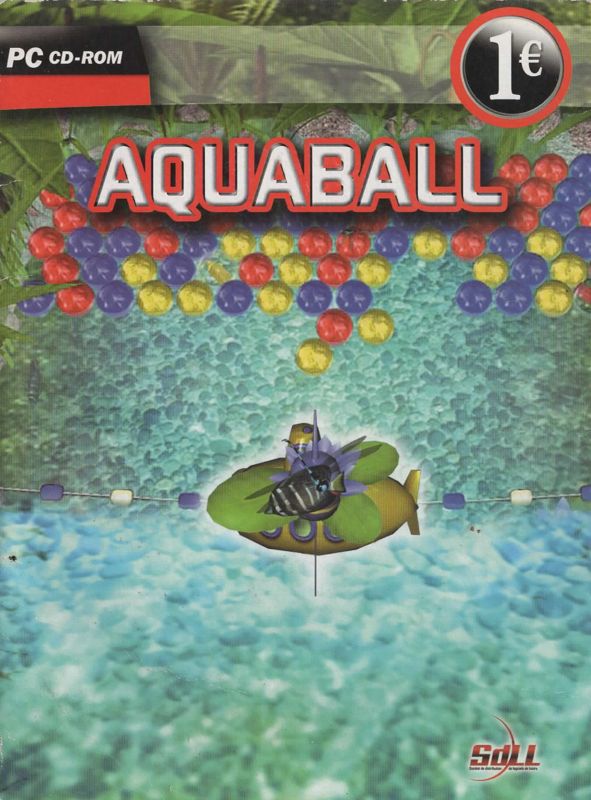
Aqua Ball gets right to the point. Bubbles descend from the top of the screen, and your entire job is to destroy them before the board is overrun. That immediate threat gives the first few minutes a pleasingly frantic arcade energy: you can understand the goal at a glance, yet every second spent setting up a better clear risks letting the bubbles creep closer to disaster.
The Bust-A-Move comparison tells you what kind of puzzle tension to expect, but Aqua Ball changes the feel by making the bubble mass move downward and accelerate. You are not leisurely tidying a board; you are trying to keep a problem from becoming unmanageable. That pressure is where the game either clicks for you or starts to grate. When you are clearing bubbles efficiently, the pace feels sharp. When the screen gets crowded, the same acceleration can make a setback feel punishing.
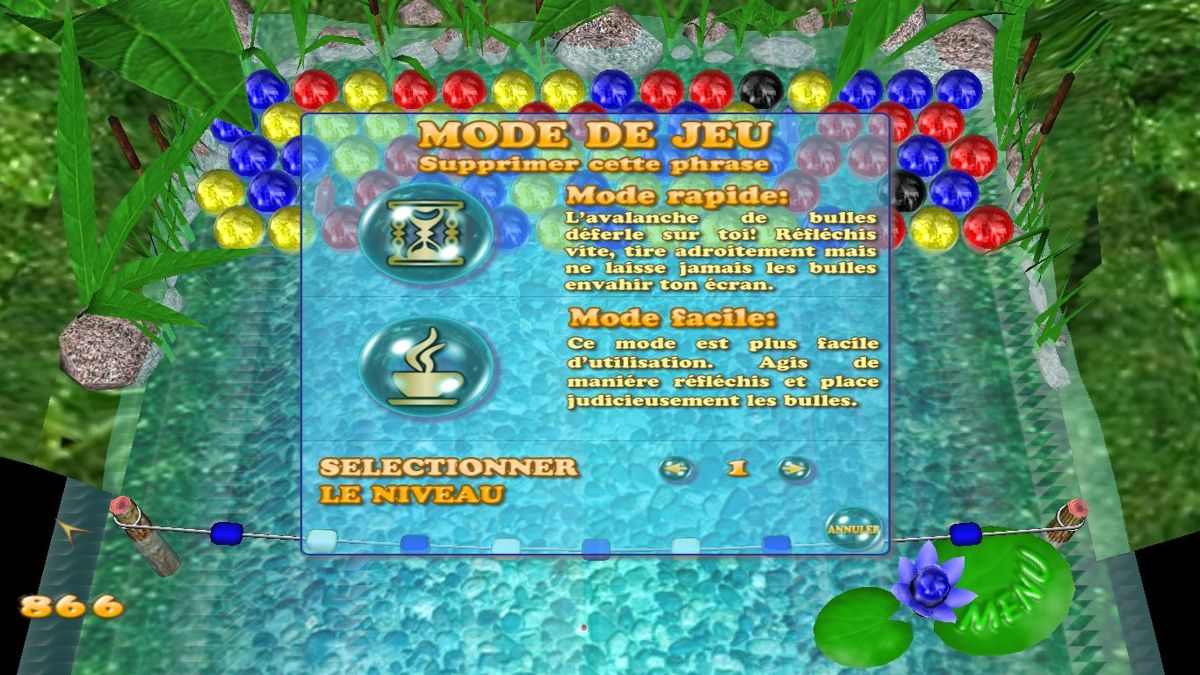
Easy mode is more than a token difficulty setting. By removing the time pressure and slowing the arrival of bubbles, it gives you room to settle into the basic matching rhythm instead of immediately wrestling with speed. Start there if descending-puzzle panic is not your usual strength. Once the underlying rules feel natural, the standard pace has a clearer purpose: it asks you to make decisions before the screen forces your hand.
This is firmly a solo game. The lack of a two-player mode matters because bubble puzzlers often shine as competitive distractions, and Aqua Ball does not offer that alternate way to play. What remains is a direct score-chasing-style challenge built around staying composed as the screen fills.
Graphics
The action is centered on a screen filling from top to bottom with bubbles, so the most important visual information is always close at hand: how much room remains and how quickly the incoming mass is becoming a threat. The descending bubbles make the danger easy to understand without needing much explanation.
Story
Aqua Ball is built around an arcade-puzzle scenario rather than a narrative journey. You begin with a manageable cluster of bubbles and create your own moment-to-moment drama from the fight to stop them reaching the bottom.
That stripped-down framing suits the format. There is no need to wait for a plot to get moving; the conflict is visible the instant the board starts filling, and the stakes rise naturally as the bubbles descend faster.
If you want characters, twists, or a reason to keep going beyond improving under pressure, this will feel bare. If you are happy to let a puzzle board supply the tension, its small-scale story is simply whether you can regain control before the screen is lost.
Overall Experience
Aqua Ball is a compact variation on a familiar bubble-matching formula, and its best idea is the downward-moving pressure. The faster-and-faster invasion gives ordinary clears a useful sense of urgency, making it satisfying when you turn a crowded board back into breathing room.
It is also a narrow game by design. There is one central challenge, no two-player option, and little distance between its opening moments and its core loop. That can be a strength when you want something immediate: launch it, face the bubbles, and see how long you can keep the screen under control.
Give it a chance if you enjoy Bust-A-Move-style matching but want more of an arcade countdown feeling than a relaxed puzzle session. Use easy mode first if the speed sounds intimidating. The payoff is straightforward rather than expansive, but the pressure of an advancing bubble wall can make a short session surprisingly absorbing.



Reviews
There are no reviews yet.