 Retro Replay Retro Gaming History, Reviews & Emulation
Retro Replay Review
Gameplay
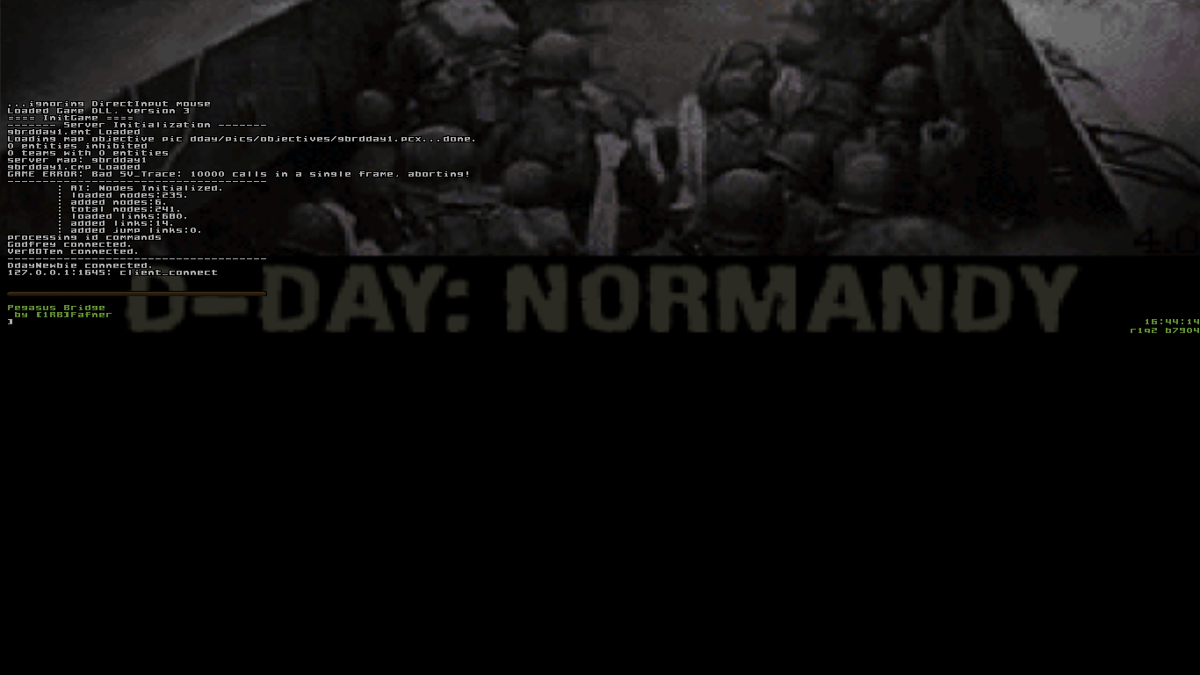
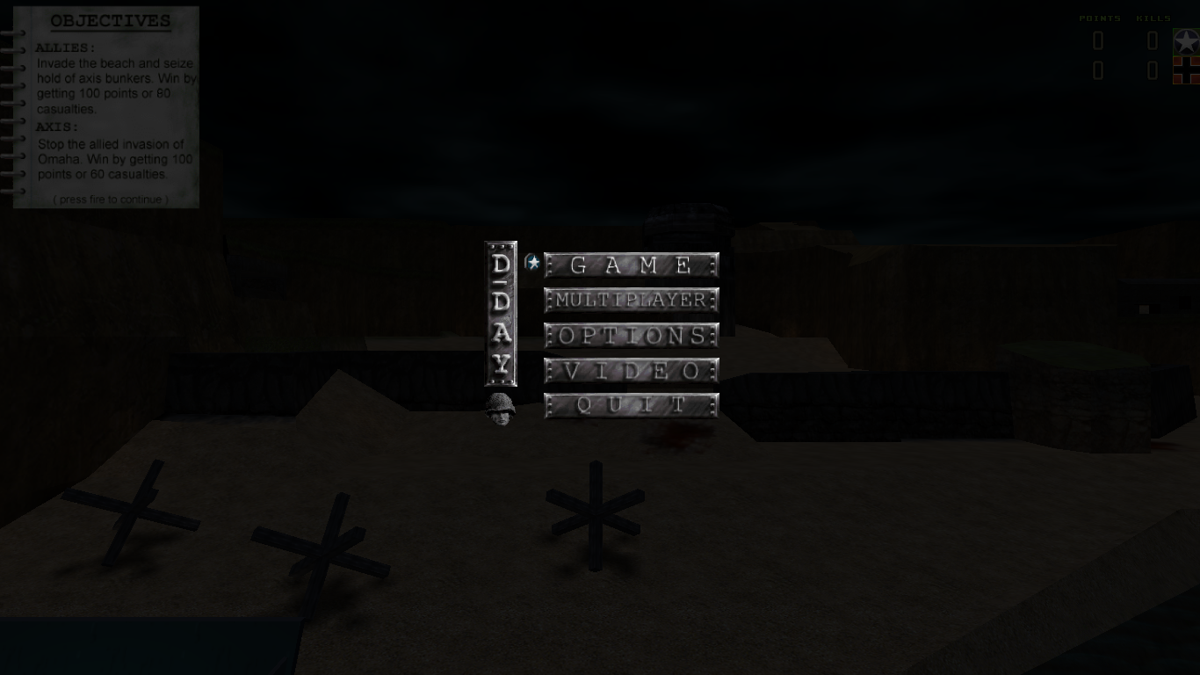
The first few minutes of D-Day: Normandy are refreshingly uncomplicated. You choose the Axis or Allies, select one of nine classes, and enter a first-person match with a concrete objective waiting. That is a better fit for the D-Day subject than a pure deathmatch would have been: every map asks your team to capture an area or build points, so gunfights have a reason to happen rather than feeling like disconnected arena laps.
Its Quake-style teamplay is the main draw. The game comes from Quake II mod roots, and that lineage points to a brisk, no-nonsense shooter built around getting into the action. You are not signing up for a slow military simulation. The fun comes from reacting quickly, contesting the important ground, and working around the classes your side has brought into the match.
Nine classes offer enough choice to make team composition more interesting than a same-loadout scramble, though the game’s objective design is what gives that choice value. If your group treats every match as a hunt for individual kills, progress can stall and the maps can feel more repetitive than they should. Play the objective, watch where the fight is concentrating, and D-Day: Normandy has a much clearer rhythm.
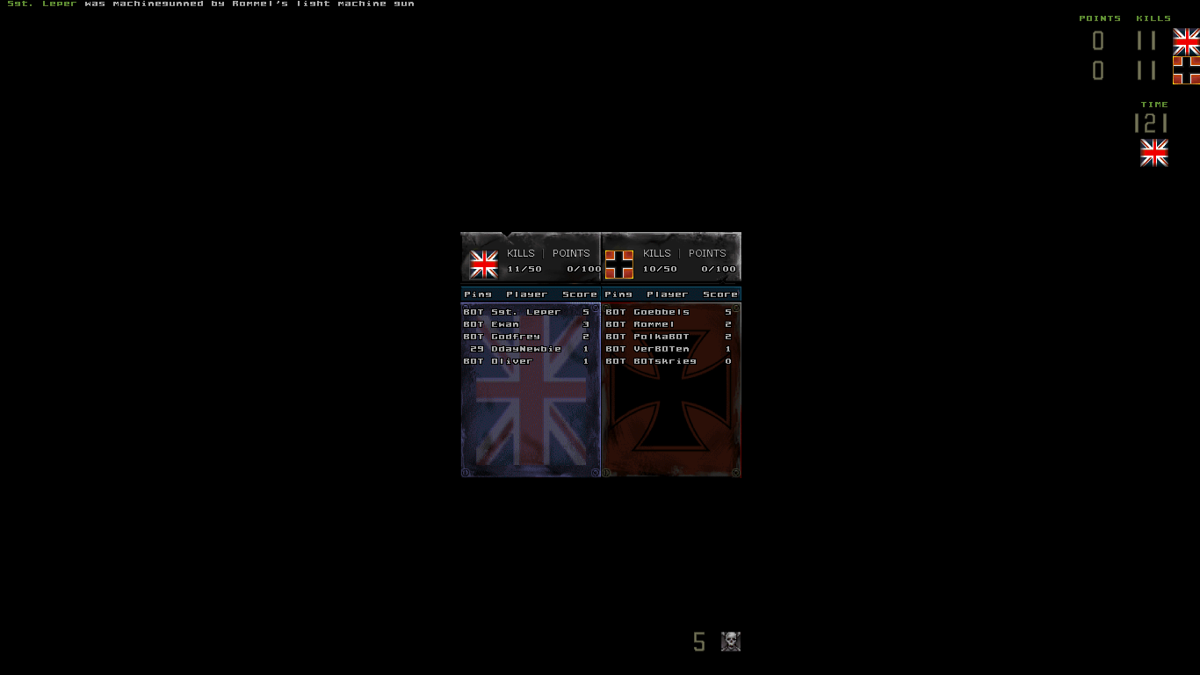
Single-player matches with bots are a useful way to learn the maps and classes or simply get a quick round going. Still, the game is plainly built around the push and pull of multiplayer teams. The moments worth chasing are the contested ones, when both sides are trying to force a breakthrough around the same goal.
Graphics
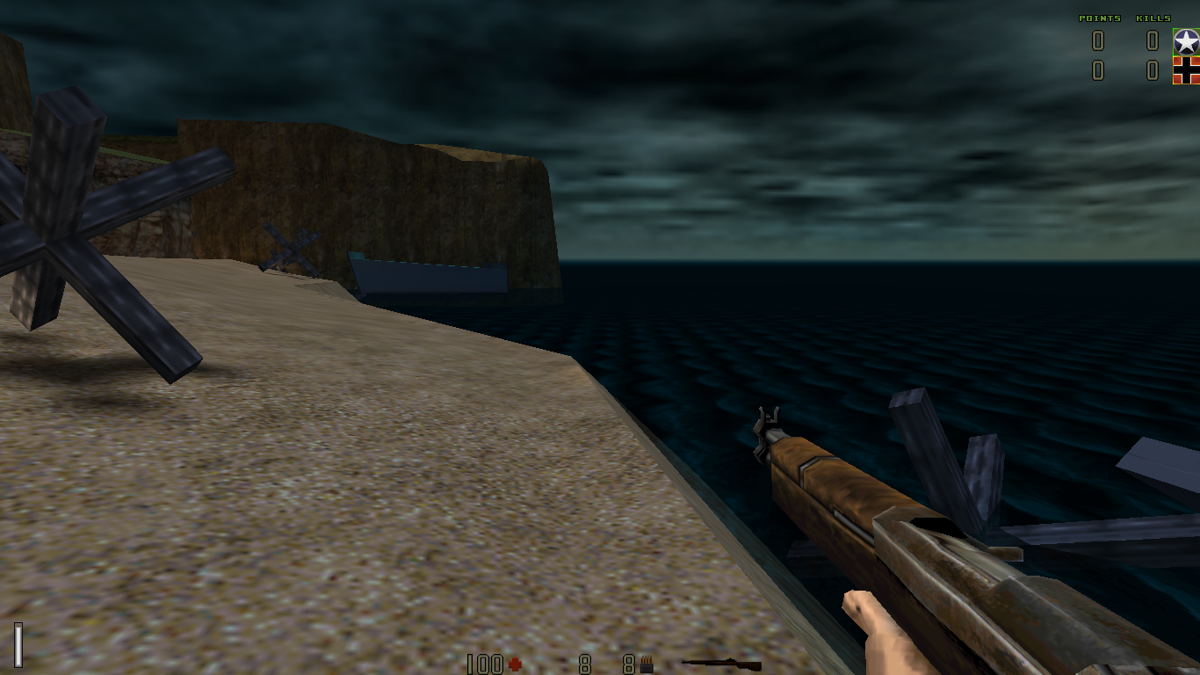
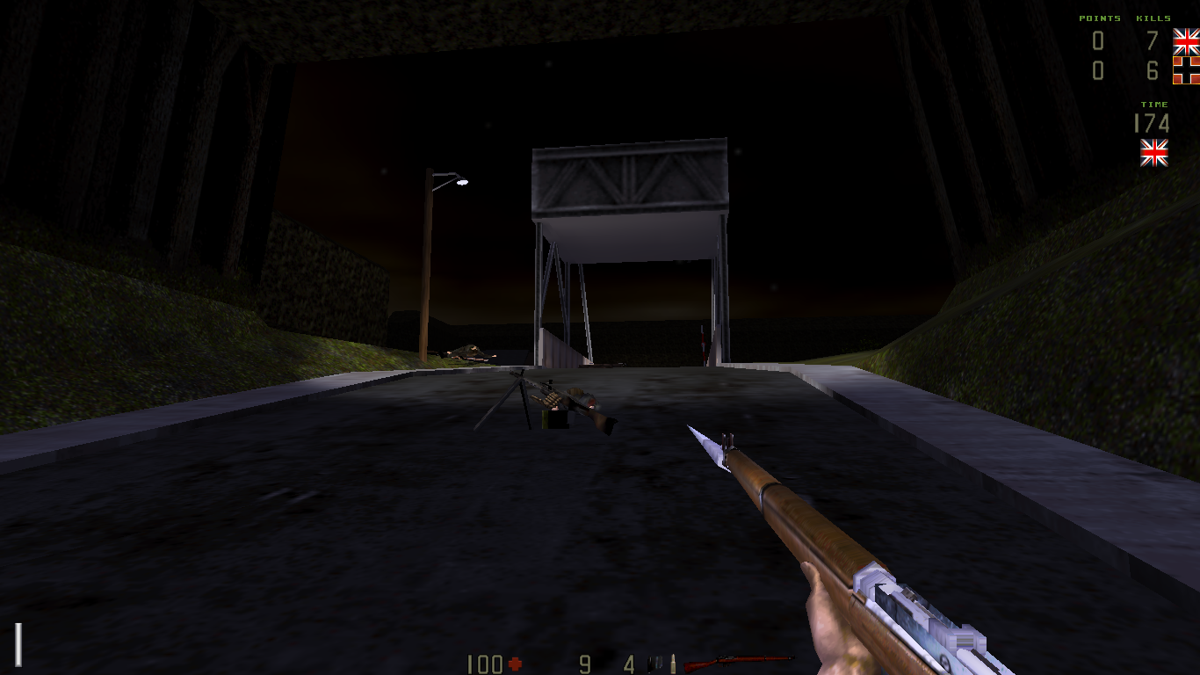
D-Day: Normandy uses the Quake II-era id Tech 2 engine and keeps you in a first-person view of its World War II battles. The visual language is old-school PC shooter through and through: functional 3D combat spaces made to keep the objective fight moving rather than to linger on battlefield detail.
Story
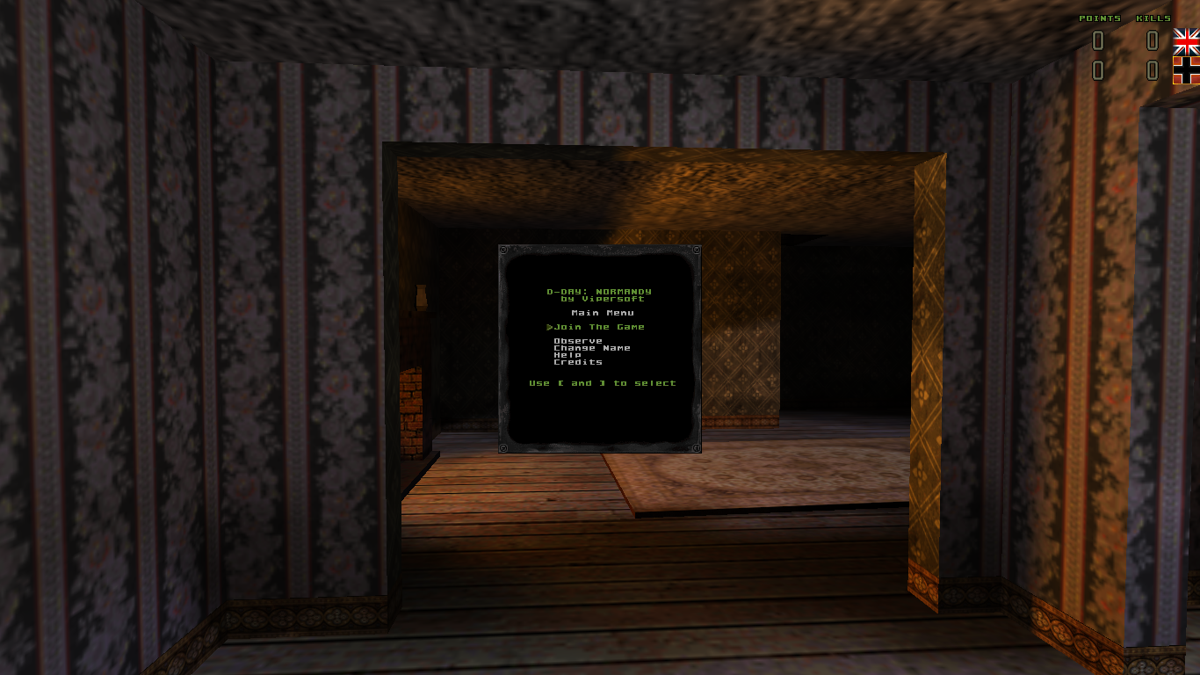
This is not a character-driven campaign about the Normandy landings. Instead, the historical frame supplies the sides, location, and conflict for individual matches. You fight as Axis or Allied forces on D-Day, June 6, 1944, but the game tells its story through shifting map objectives rather than a sequence of authored dramatic events.
That narrow focus works in its favor. Normandy is an inherently weighty setting, and the capture-area and point-based goals give the conflict a sense of territory and momentum. Do not come looking for a detailed retelling of the invasion; come looking for a multiplayer shooter that borrows urgency from one of World War II’s most famous battles.
The lack of a broader narrative also means every round needs to create its own drama. A close objective race can do that naturally. A lopsided match, on the other hand, has little story scaffolding to fall back on.
Overall Experience
D-Day: Normandy is a focused freeware shooter for anyone who misses the era when a strong map objective and a responsive team could carry an entire evening. Its strongest idea is simple: take fast Quake-style action, place it in a World War II setting, and give both sides something more meaningful to do than chase kills.
You will get the most from it if you enjoy joining a team, choosing a role, and accepting that the scoreboard is not the whole match. The bot option makes it approachable when you want to play solo, but this is fundamentally a game about opposing groups colliding over shared ground. That is where its class selection and map goals start to click.
There is some inevitable frustration in a game so dependent on coordinated objective play. A team that ignores the goal can flatten the experience, and its older Quake II foundation will feel firmly rooted in its period. Yet the payoff is real when a match becomes a proper contest over an area or points. For fans of classic multiplayer FPS design and World War II team battles, it remains an easy recommendation to try.

Reviews
There are no reviews yet.