 Retro Replay Retro Gaming History, Reviews & Emulation
Retro Replay Review
Gameplay
The first hour of Guild Wars 2 is compelling because it lets you get distracted. You can chase map objectives, roam toward a distant landmark, gather materials, craft, or jump into whatever public event is unfolding nearby. The game rarely makes you feel as though you have failed because you did not follow one narrow route, and that freedom still gives Tyria a welcoming, lived-in pull.
Combat asks you to pay attention. Your weapon determines your available attacks, while positioning, dodges, self-healing, and reviving downed allies keep even ordinary skirmishes from becoming a stationary button rotation. It is approachable at the start, then becomes more satisfying once you stop treating enemies like target dummies and start moving with purpose. Helping another player back onto their feet is a small touch with a big effect: strangers often feel like temporary teammates rather than background noise.
Dynamic events are the centerpiece. They turn shared spaces into places where you arrive, assess a problem, and pitch in without waiting for a private quest handoff. That does not erase MMO repetition. Hearts and recurring events can still become chores when you are clearing every mark on a map, and crowded battles can be difficult to parse. The better approach is to follow your curiosity instead of forcing total completion.
There is plenty to do away from the cooperative PvE path. Structured small-team PvP offers a more focused competitive mode, while World vs. World turns server conflict into a much larger struggle. Level scaling also helps keep exploration from feeling like a strictly linear march through disposable low-level zones. You have room to find the part of the game that fits your mood.
Graphics
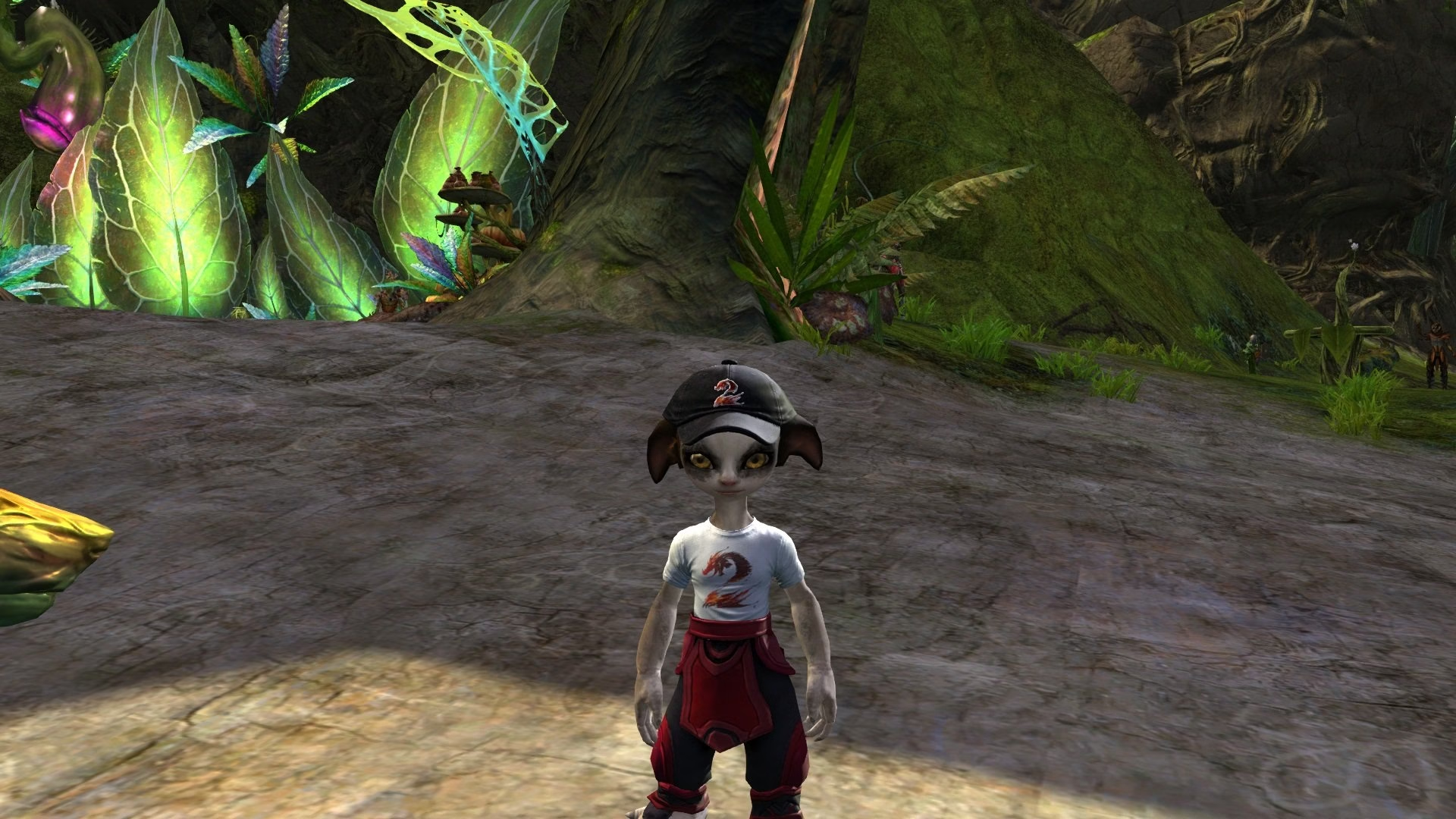
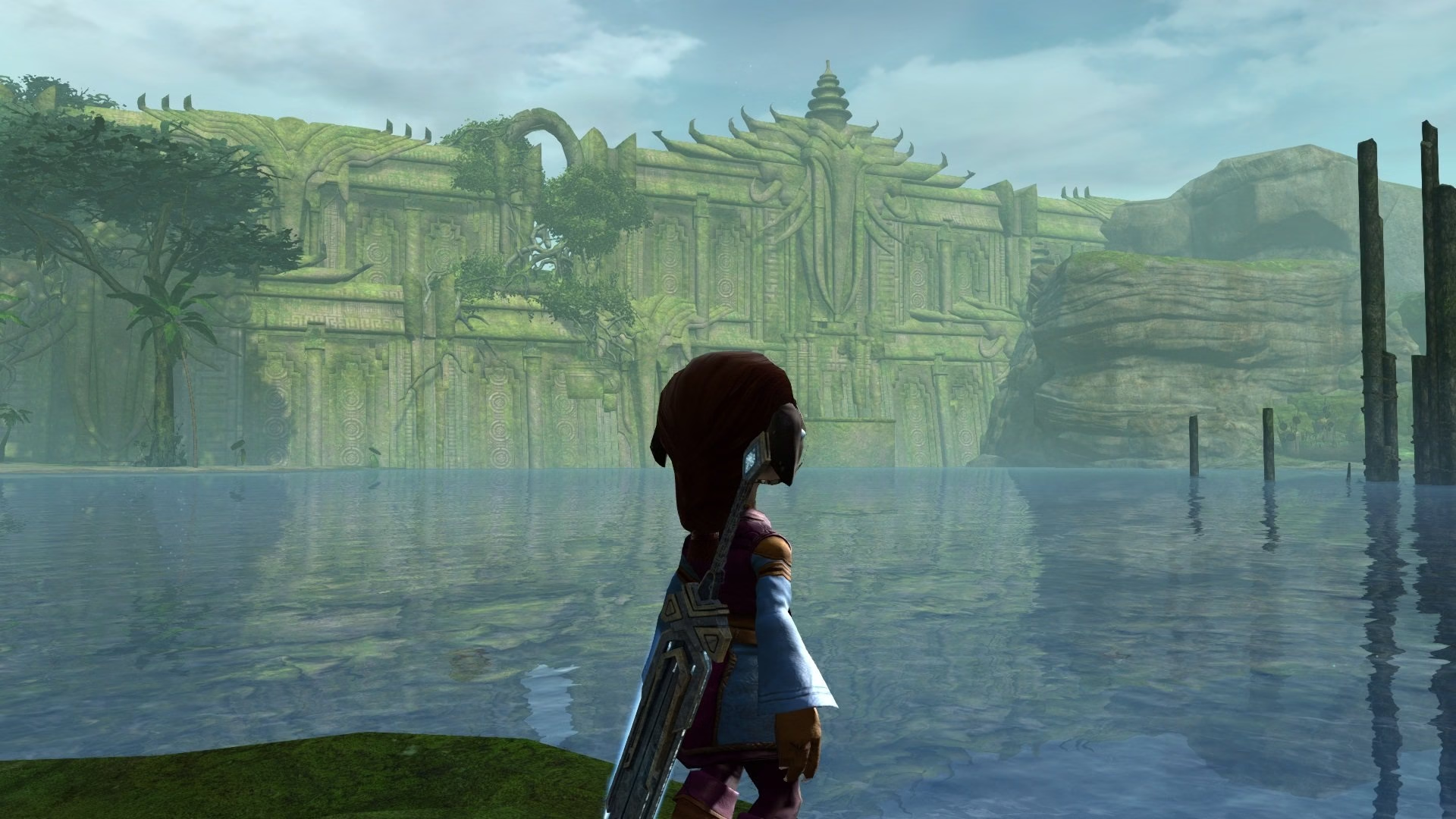
Guild Wars 2’s world exploration has a colorful, storybook sense of scale. Tiny asura characters, with oversized ears and bright eyes, look especially striking against enormous tree roots, glowing lime-green leaves, and blue-purple plants. Moss-covered carved stone walls and curved spires rising above the water make the larger regions feel monumental rather than merely oversized.
The stylized faces are memorable, and the contrast between small adventurers and massive fantasy architecture lands well. Rock and ground textures look rougher and less detailed than the big structures and dense foliage, but the scenery still gives wandering a strong visual reward.
Story
Tyria is set 250 years after the first game, with the Elder Dragons and the threat of Zhaitan hanging over the world. Your character’s race and background shape the early personal story, so the opening has more ownership than a one-size-fits-all hero introduction. The five races, human, norn, charr, asura, and sylvari, also give the setting a broader range than a standard medieval-fantasy continent.
As the campaign widens, your individual path feeds into a more cooperative conflict. That structure suits an MMO: you begin with a reason to care about your own character, then gradually spend more time confronting a threat big enough to involve the rest of Tyria. It does not rely on the player being the only person who matters in the world.
Veterans of Guild Wars will notice the important shift. The earlier game leaned heavily on instanced party adventures, while Guild Wars 2 puts its fiction and conflicts out in a shared landscape where other players are constantly part of the scene. That change makes the world feel more communal, even when the personal story remains yours.
Overall Experience
Guild Wars 2 earns its reputation by making the basic act of being in an MMO world more pleasant. You can log in with a plan, abandon it after five minutes, help with an event, explore a new corner of the map, and still feel as if the session counted. Few online RPGs are this good at rewarding a player who simply wants to wander for an evening.
The rough edges are real. Completion-minded play can turn its open-ended generosity into a checklist, and the repeated structure beneath hearts and events eventually shows through. Still, the game is at its best when you resist that impulse and let the world lead you from one small cooperative moment to the next.
Give it a chance if you want active combat, a large shared fantasy world, and an MMO that makes spontaneous cooperation feel normal rather than exceptional. The original Windows release arrived on August 28, 2012, as confirmed in ArenaNet’s tenth-anniversary launch note, and its central ideas still hold up remarkably well. It is a generous adventure with enough friction to keep it from perfection, but more than enough personality and momentum to justify the time.
Reviews
There are no reviews yet.