 Retro Replay Retro Gaming History, Reviews & Emulation

Retro Replay Review
Gameplay
The first hour has a pleasingly direct hook: Professor Timestein is missing, the Time Fugitive is to blame, and you have a time machine waiting in an attic. That is more momentum than many children’s educational games manage. Instead of dropping you into a dry encyclopedia, it sends you after map fragments through eight historical settings, so each stop feels like one step toward bringing the professor home.
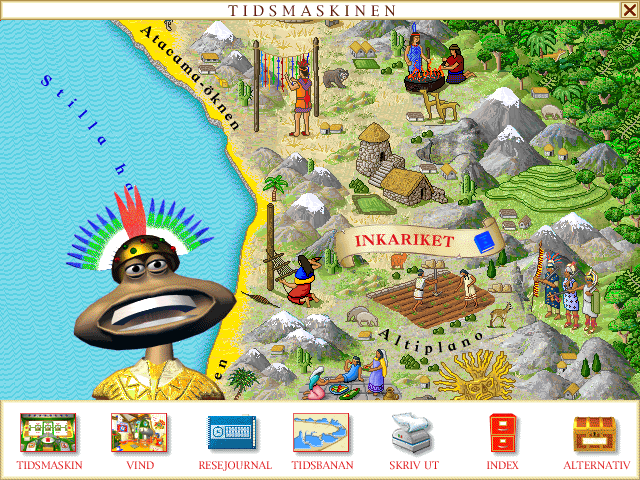
Each era follows a straightforward rhythm. You click around an interactive map, open hotspots, take in the information, then answer a question to prove you were paying attention. Correct answers earn journal stickers, and each location yields part of the time-trail map. It is an uncomplicated loop, but it makes the learning feel connected to progress rather than tacked on after the fact.
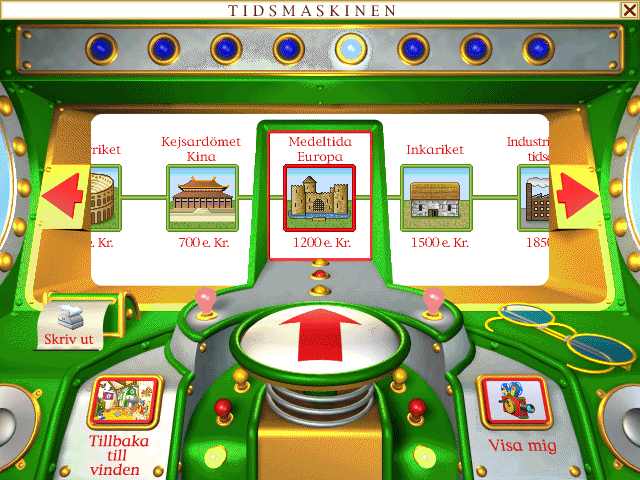
What starts to click is the way the game breaks an enormous subject into short, approachable visits. Ancient Egypt, Greece, Rome, Imperial China, Medieval Europe, the Inca Empire, the Age of Industry, and the 1920s all give you a different destination without demanding that you master any one period before moving on. The downside is that the interaction remains largely click, read, and answer. If you want a demanding adventure or deep simulation of historical life, this will feel thin quickly.
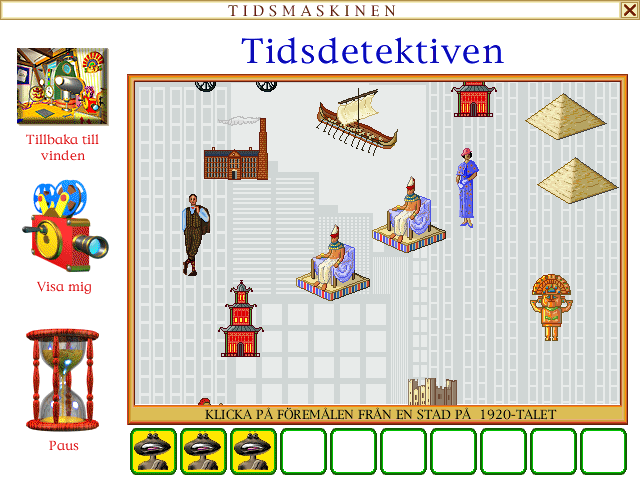
The extra activities help soften that repetition. Writing your name in hieroglyphs, designing a coat of arms, and being photographed at famous locations give you small, kid-friendly reasons to linger. They are not the main draw, but they keep the trip from becoming an endless run of quiz prompts.

Graphics
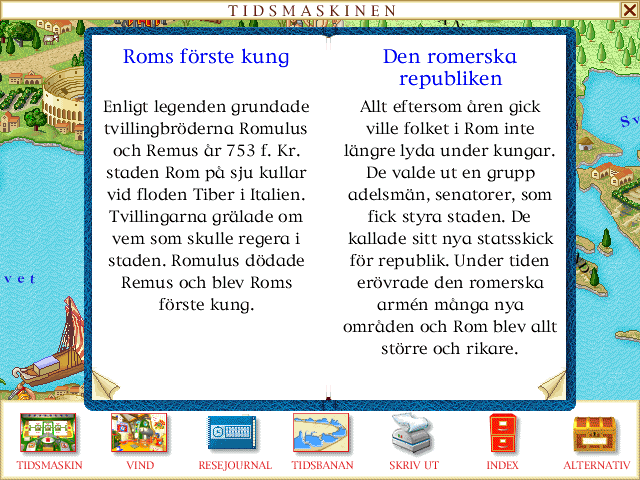
The game is viewed from a first-person perspective through interactive maps of each time period. Hotspots are the focus, inviting you to poke around each destination rather than navigate a complex 3D space. The journal stickers and photo activities also give its history tour a tangible, scrapbook-like sense of reward.
Story
The missing-professor setup is simple, but it does exactly what it needs to do. Professor Timestein is trapped in time, and recovering the scattered time-trail map becomes the clear reason to visit every era. For a young audience, that is a much better frame than being told to study a sequence of disconnected topics.
The Time Fugitive supplies a recognizable villain at the opening, though the story is primarily a thread tying together the educational stops. Don’t expect the historical periods themselves to become dramatic chapters in a larger adventure. They are destinations for discovery first, with the rescue mission keeping you pointed forward.
That modest story works because the game never asks it to carry more than it can. You are there to explore, learn a few facts, collect your pieces, and save the professor. The stakes are friendly rather than intense, which suits the tone.
Overall Experience
My First Amazing History Explorer is a solid fit for a younger child who learns best when information comes with a destination and a goal. The map-piece hunt gives the lessons structure, the quizzes offer immediate feedback, and the sticker journal makes correct answers feel like progress instead of homework.
Older players, or anyone hoping for rich puzzles and substantial historical depth, will likely run out of surprises. Its core interaction does not change much from place to place, and the simple questions are designed to reinforce what was just presented rather than test broad knowledge. That limitation is frustrating only if you come to it expecting a full-scale adventure game.
As an introductory history title, though, it has a clear strength: it makes eight distant periods feel like places you are visiting on the way to a concrete rescue. Give it a chance if you want a calm, guided learning game for a child who enjoys clicking through maps, collecting rewards, and turning facts into a completed mission.


Reviews
There are no reviews yet.