 Retro Replay Retro Gaming History, Reviews & Emulation
Retro Replay Review
Gameplay
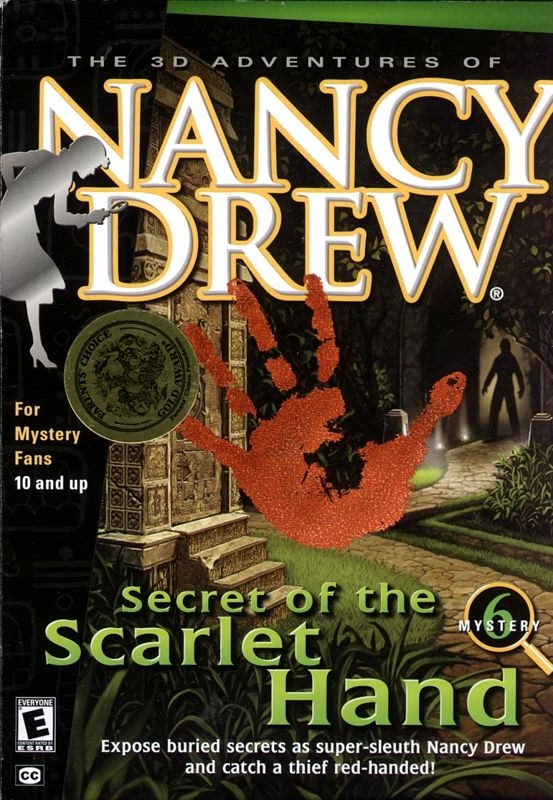
Secret of the Scarlet Hand starts with a strong piece of Nancy Drew wish fulfillment: you are the new deputy curator at a Washington museum, surrounded by artifacts and immediately handed a reason to snoop. The thefts and their red handprint calling card give even routine museum work a suspicious edge. You are not simply touring exhibits for flavor. The information around you matters because it feeds the investigation.
The point-and-click structure suits the case well. You examine museum material, speak with people connected to the work, and follow leads beyond Beech Hill to locations including the subway, a hospital, and the Mexican consulate. That broader D.C. route helps the mystery feel like an active investigation instead of a puzzle box trapped in one building.
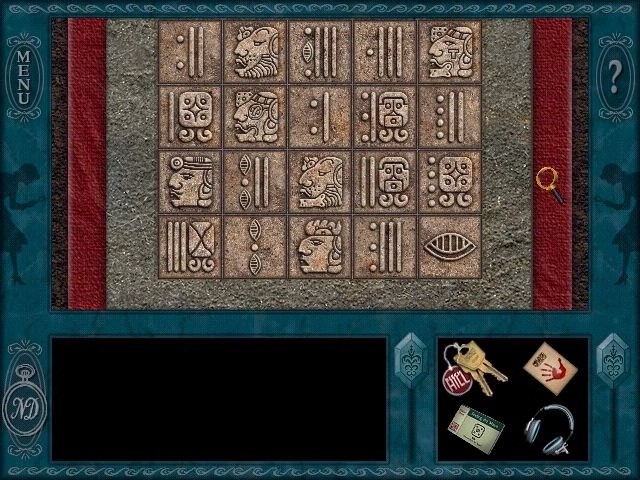
The best puzzles are tied to the Mayan focus. Rearranging tiles that represent Mayan numbers is the sort of challenge that asks you to understand what you are looking at, not just randomly try combinations. A calendar puzzle and artifact information push the same idea. If learning the context behind a code sounds satisfying, this is where the game clicks.
That approach can also be the sticking point. You need to be willing to read carefully, retain details, and spend time with the educational material before a solution becomes clear. Gamers who want a rapid-fire mystery may find the pace deliberate, but anyone who enjoys working through a clue until its logic finally lands will get a lot out of it.
Graphics
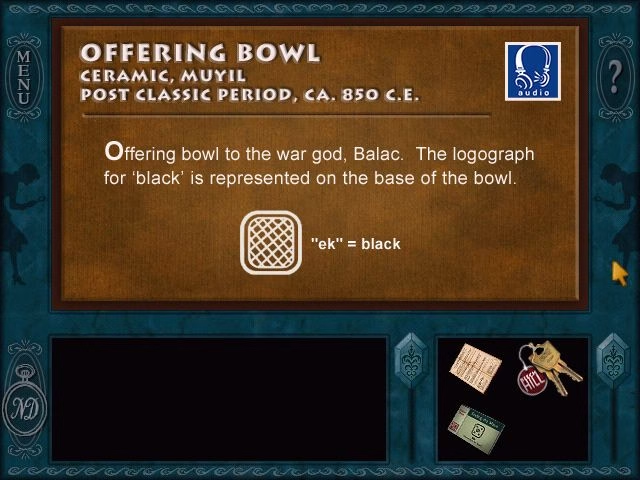
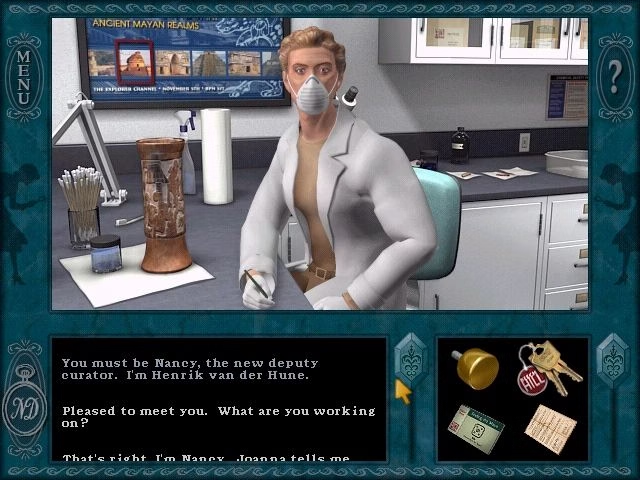
The museum and lab scenes have the clean, composed look of early-2000s first-person adventures. Henrik’s lab mixes white cabinets, sample containers, papers, and a tall artifact into a convincingly busy workspace, while the museum’s artifact plaque uses warm brown tones and clear illustrations that make the object feel like part of an actual exhibit.
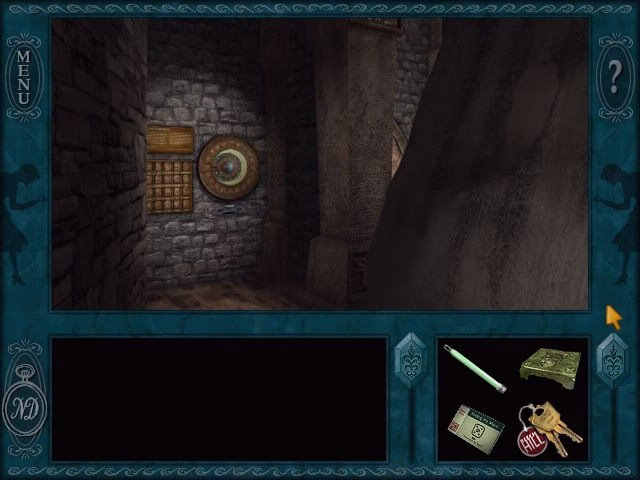
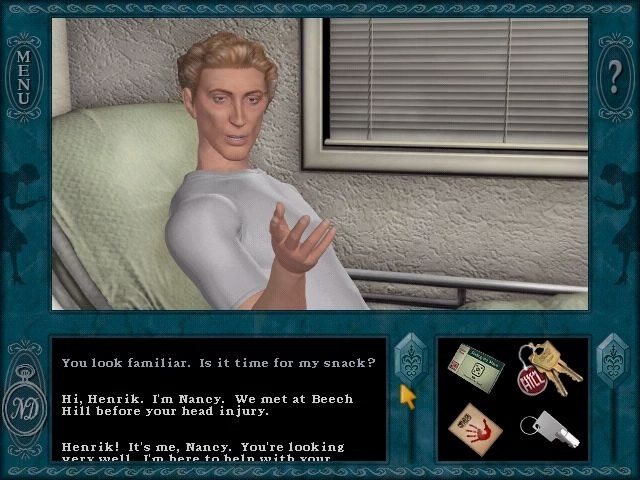
Character models are plainly dated, especially in close conversation scenes, with rigid-looking faces and simple hair and clothing. The more atmospheric image is the darker stone passage around the calendar puzzle, where rough walls and a recessed circular device give the ancient-material side of the case some welcome texture.
Story
The mystery has a solid hook because it begins with thefts that appear unrelated. The red handprint is the one obvious connection, and Nancy’s position inside the museum gives her a believable reason to learn about both the missing material and the people around it. The case grows out of her job instead of dropping her into danger for no reason.
Ancient Mayan culture is more than a backdrop here. Artifact labels, number systems, and calendar knowledge all sit close to the central investigation, so the story’s educational material has a practical payoff. That makes the case feel more cohesive than a mystery that pauses for trivia and then returns to a wholly separate plot.
The supporting cast adds another useful layer of suspicion. Meeting museum-connected figures such as Henrik van der Hune, then pursuing leads through other corners of the city, gives you reasons to keep questioning what each person knows. The game works best when you treat every conversation and museum detail as a possible part of the same larger pattern.
Overall Experience
Secret of the Scarlet Hand is an easy recommendation for Nancy Drew fans who want a mystery with more substance behind its clues. The museum internship setup is immediately appealing, and the Mayan material earns its place by shaping the puzzles and the investigation. It feels like you are solving a case through a specific subject, not merely solving generic locks in themed rooms.
The tradeoff is clear: this is a thoughtful, detail-oriented adventure. The game asks for patience with reading and deduction, and it will frustrate you if you prefer puzzles that reveal their answer at a glance. Give it your attention, though, and the pleasure comes from noticing a useful detail, understanding why it matters, and moving one step closer to explaining the thefts.
Its dated character visuals do not undermine the core experience, because the locations and artifact-focused puzzles still carry the mood. The D.C. stops keep the investigation from feeling too confined, while the museum remains a strong home base for the case. For gamers who enjoy old-school detective adventures with educational texture and a real willingness to make you think, this is one of the more satisfying Nancy Drew cases.


Reviews
There are no reviews yet.