 Retro Replay Retro Gaming History, Reviews & Emulation

Retro Replay Review
Gameplay
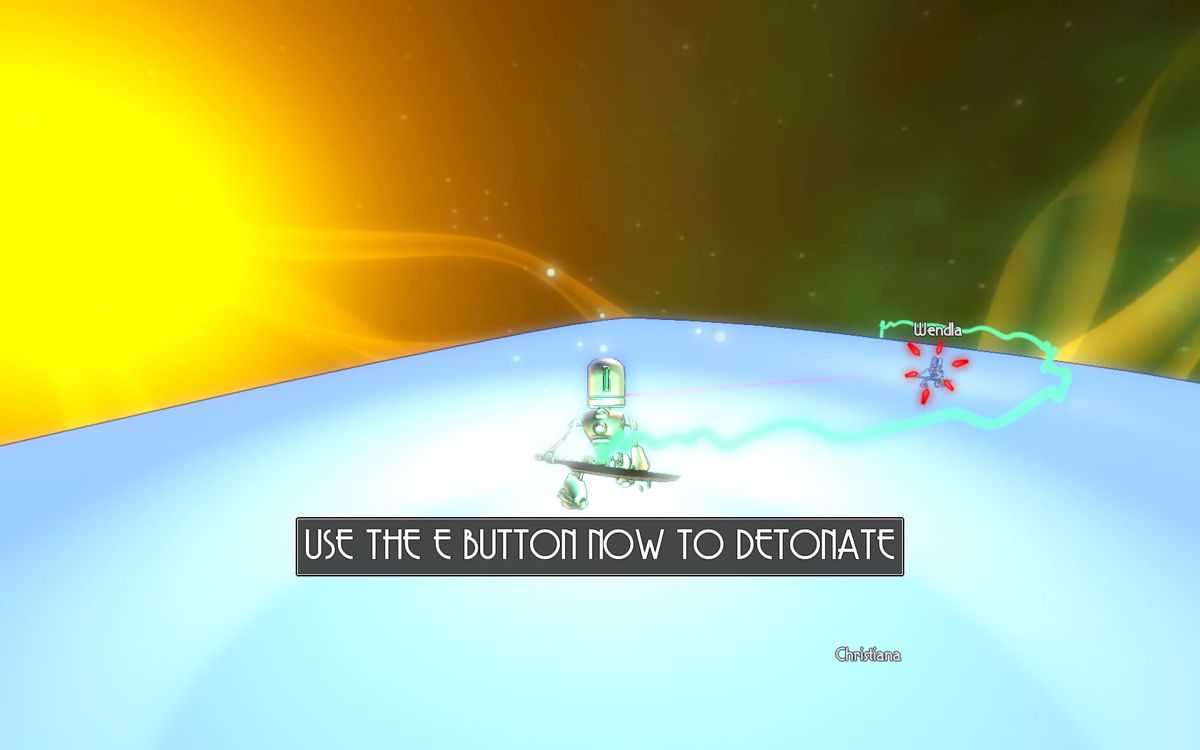
Plain Sight is built around a cleverly aggressive loop. You acquire energy by destroying rival robots or collecting stars, but that energy only becomes score when you deliberately detonate. Staying alive makes your robot larger and more dangerous, while dying before cashing out hands your accumulated energy to the player who killed you.
The core attack asks you to lock onto a target and charge a body-smashing dash. A red cursor signals a likely hit, though opponents can evade by jumping away or slipping behind arena objects. That keeps attacks from being automatic victories and makes positioning, timing, and escape routes central to every confrontation.
Match-long upgrades give the action more texture without permanently burdening progression. Experience can improve movement, defenses, warnings, detonation, and dash capabilities, with mega perks available for completing an upgrade group. Temporary pickups such as stealth and a flaming sword add further volatility, while the post-match reset keeps the field level.
Graphics
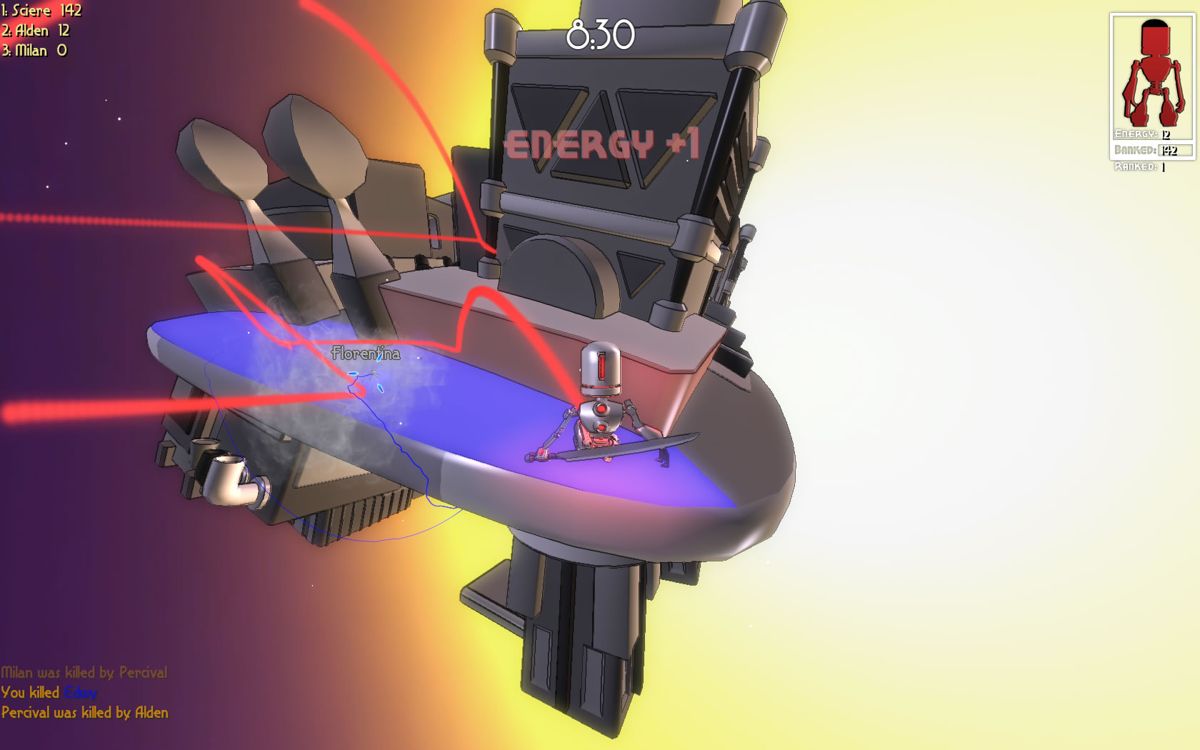
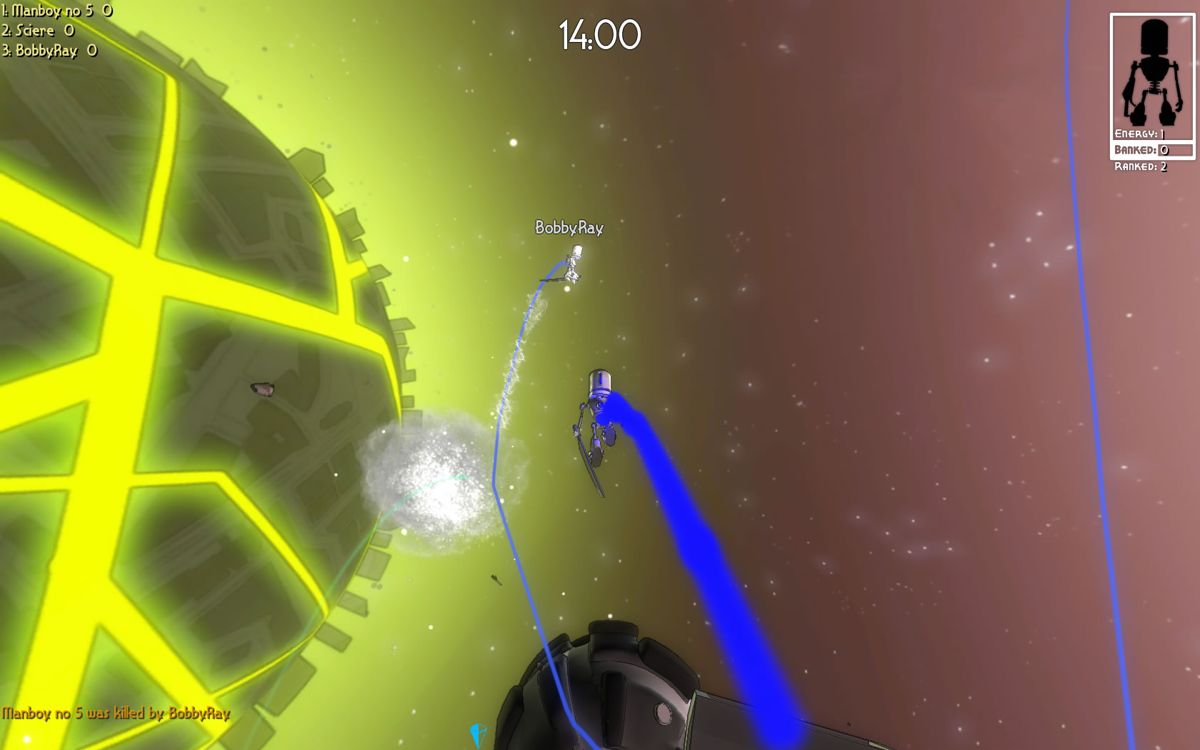
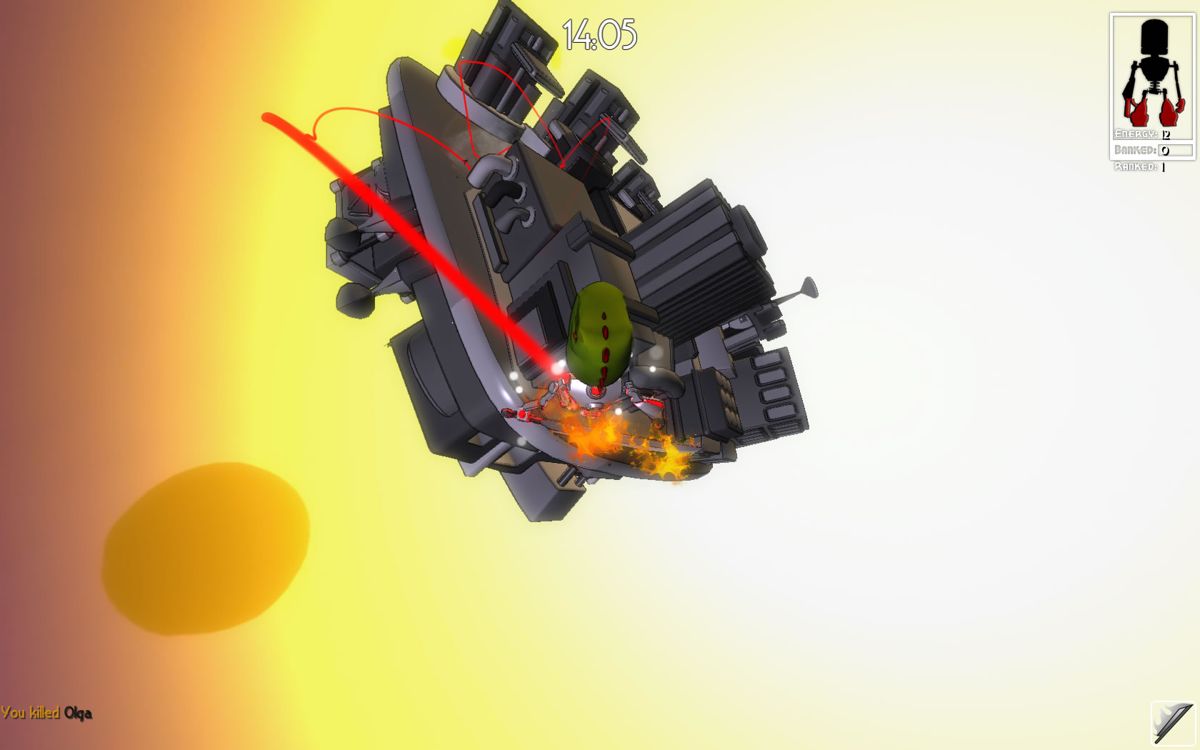
The presentation favors bright color, clean readability, and unusual arena geometry over a grounded science-fiction look. Its 13 fighting spaces are generally made from disconnected planetoids, creating an immediately recognizable backdrop for aerial pursuits and sudden reversals.
Robots can run along platform sides and undersides as well as their upper surfaces, so the arenas are not simply flat stages viewed from behind. High jumps let players cross open space without entirely escaping gravity, giving the playfield a buoyant, three-dimensional character.
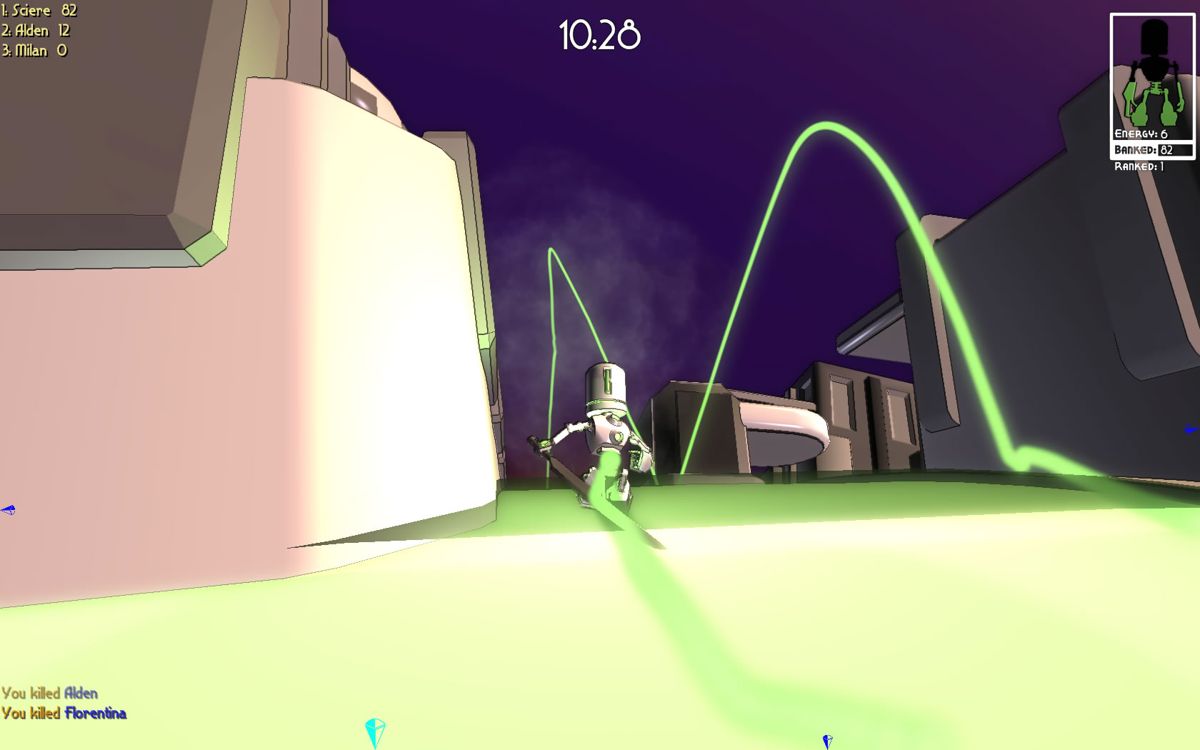
Color also communicates gameplay state. As energy rises, a robot’s trail changes color and its body grows taller, visibly marking the threat posed by a successful player. That direct visual feedback suits a multiplayer game in which identifying a valuable target quickly is part of the tactical decision-making.
Story
There is little emphasis on a conventional narrative. The game’s identity comes from its premise of suicidal ninja robots competing in futuristic arenas, a setup designed to support its combat and detonation mechanics rather than a character-driven campaign.
That premise does useful thematic work: self-destruction is not a failure state alone, but the means of securing score and potentially taking nearby opponents with you. The fiction and the rules point in the same direction, making each robot’s willingness to explode feel fundamental to the game’s tone.
Players looking for plot development, named characters, or a sustained single-player arc will find the focus elsewhere. Offline bot matches are available, but the game’s real subject is competitive momentum: build power, invite danger, and choose the moment to blow up.
Overall Experience
Plain Sight stands out because it makes scoring an exposed, tactical act. The best moments should come from resisting the urge to detonate too early, using a strengthened robot to extend a streak, and then converting that risk into points before an opponent can claim the reward.
The five online modes provide meaningful changes of emphasis. Deathmatch and Team Deathmatch center direct combat, Capture the Flag broadens the objectives, Lighten Up rewards the largest detonation on a lit area, and Ninja! Ninja! Botzilla! lets players take turns as a giant robot battling many smaller ones.
The game is most likely to appeal to players who want fast multiplayer action with mobility, upgrade choices, and a push-your-luck scoring system. Its 6.9 score reflects an inventive central idea and strong mode variety, tempered by a design that depends heavily on embracing its chaotic online competitive focus.


Reviews
There are no reviews yet.