 Retro Replay Retro Gaming History, Reviews & Emulation


Retro Replay Review
Gameplay
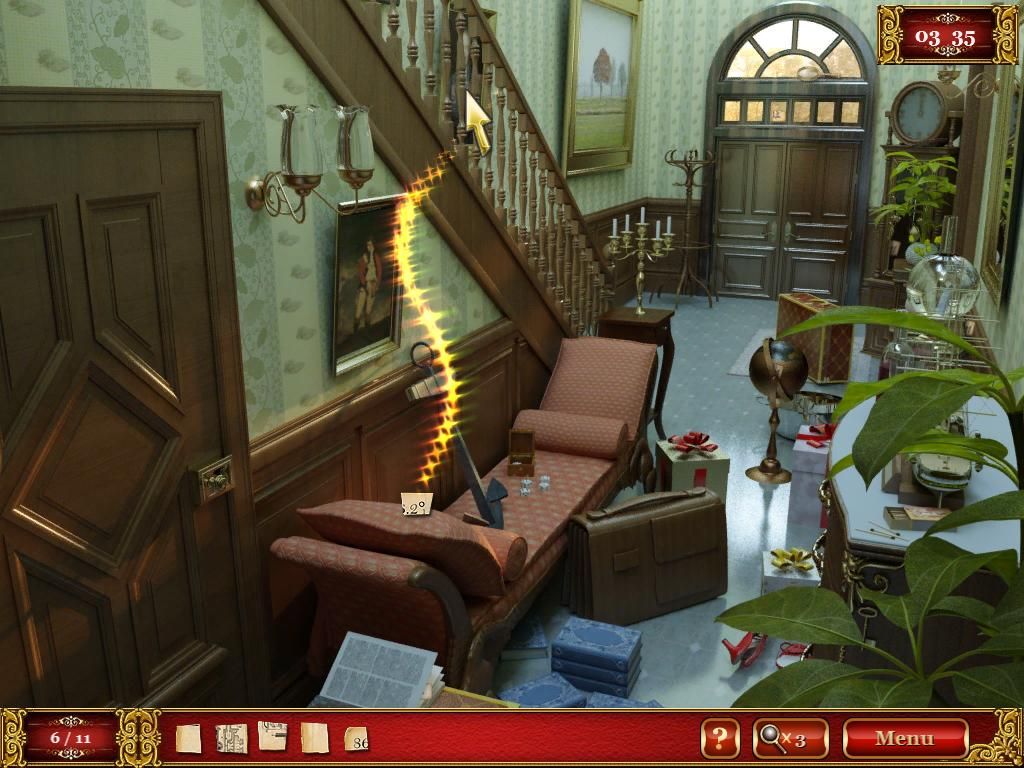
The first few searches ask you to stop treating every scene like a word-matching exercise. Instead of being handed a precise list, you may need to locate a set of objects connected by an idea, such as things associated with the sea or a collection of tools. That is a modest change, but it makes the hunt feel more active: you are judging what belongs rather than merely matching names to shapes.
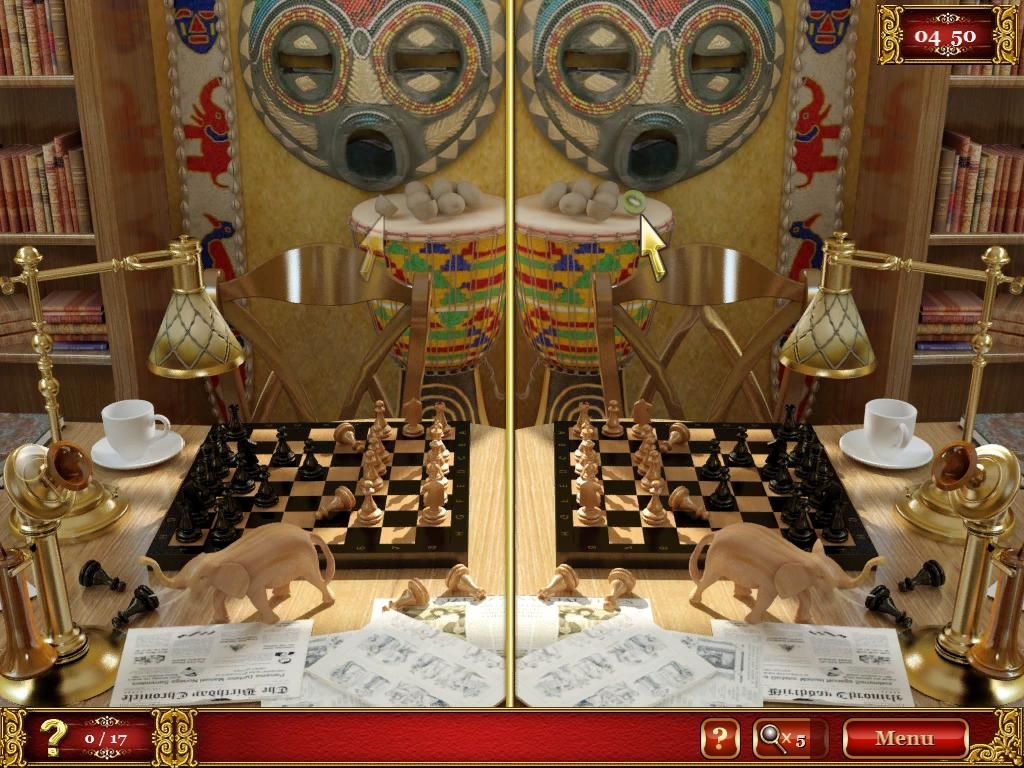
That broader brief can also be the game’s main source of friction. When the clock is running, speculative clicking is a bad habit because several wrong selections in quick succession cost time. You need to slow down, inspect the screen, and commit only when an object fits the request. The tension works when you are close to finishing a category, though it can sting when a missed item ends the attempt and sends you back to the main menu.
There is some welcome hands-on searching beyond simply staring at the scenery. Drawers can be opened, and certain objects can be moved aside to check what is behind them. Each location also hides a magnifying glass that becomes a clue, with room to save up to six for later. That creates a useful decision: spend help to protect a strong run now, or bank it for a tougher screen.
The box-moving mazes and train-switch challenges break up the object hunts without taking over the game. Being able to replay them from the main menu is a nice touch, especially if one of those brief diversions suits you more than another timed search.

Graphics
The game is built around object-filled location screens from the journey, where drawers and movable items can conceal the things you need. The view has to carry a lot of small details at once, since success depends on picking out objects and spotting the hidden magnifying glass in each scene.

Story
Phileas Fogg’s trip around the world supplies the framework, drawing on Jules Verne’s Around the World in 80 Days. You accompany him through dozens of locations, so the travel premise gives the repeated searches a clear sense of forward motion.
Do not come for a heavily dramatized adaptation. The narrative arrives in short sentences between screens, usually setting up the next task rather than lingering on characters or scenes. It is functional, brisk, and suited to a game that wants you back in the hunt quickly.
That light touch is enough for the format. The story does not need to carry the game; it gives the sequence of searches a destination and makes the changing locations feel like stops on one long race.
Overall Experience
Reis rond de wereld in 80 dagen understands that hidden-object games live or die by the quality of their searches. Its category-based requests are the important idea here, making many rounds more thoughtful than a pile of unrelated nouns. When you start recognizing how broadly a theme can be interpreted, the game becomes a quick visual sorting challenge rather than a rote checklist.
The strict failure loop is the trade-off. A lost timed screen means restarting from that level via the main menu, and penalties discourage frantic clicking. If you enjoy a hidden-object game as a low-pressure wind-down, that structure may feel more punitive than exciting. If a clock improves your focus, it gives every clue and concealed object more weight.
Give it a chance if you want a compact Jules Verne-flavored search game with a sharper edge than usual and a few replayable puzzle breaks. The payoff is not a sweeping adventure story; it is the satisfying moment when a vague category suddenly clicks and the last few objects finally reveal themselves.



Reviews
There are no reviews yet.