 Retro Replay Retro Gaming History, Reviews & Emulation


Retro Replay Review
Gameplay
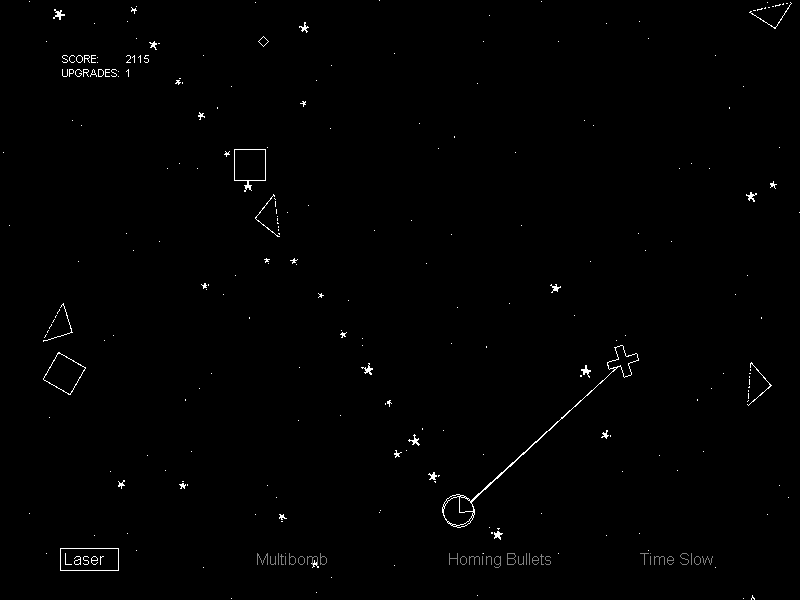
Retro II starts with the kind of rule set you can understand in seconds, then makes that simplicity feel demanding. Your circular ship fires a stream of bullets, but every shot spends energy. Bombs cost energy too, and that immediately stops them from being a panic-button you can mash without thought. Since the meter refills quickly, the trick is not conserving everything; it is spending hard enough to stay safe without leaving yourself empty at the wrong instant.
The orbiting bombs are the standout. They travel around your ship as though tied to it, destroying anything they touch, so their use has a physical, close-range feel that ordinary shooting lacks. You are not merely aiming at enemies in front of you; you are positioning the ship so the bomb’s path catches them. That becomes especially important against cross-shaped enemies, which ignore normal bullets and demand bombs, lasers, or homing fire. It is a smart wrinkle because it makes weapon choice matter in the middle of a scrolling fight.
Power-ups give each run a welcome jolt. Lasers, homing weapons, and the multibomb can change how confidently you attack, while time slowdown offers breathing room when the action threatens to get away from you. The upgrades to energy capacity and bomb count are equally important: they do not replace careful positioning, but they let you lean further into the game’s most interesting tool. Frustration will come from the instant-contact deaths, especially when you get too greedy with a close bomb pass, yet the restart-and-improve loop suits a shooter built around quick decisions.
Graphics
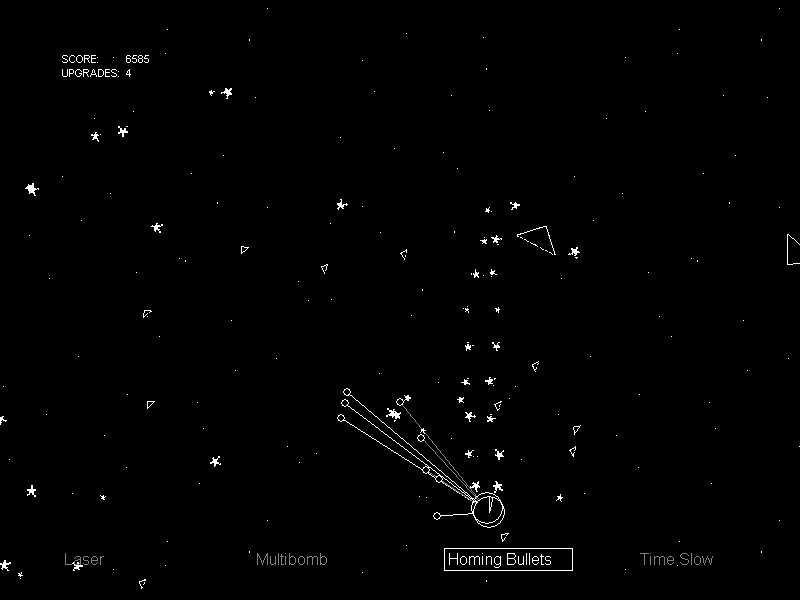
The visual information is built around clarity: a circular player ship, scrolling space action, and distinct cross-shaped enemies whose special resistance has a direct gameplay purpose. The bomb orbit is also easy to understand as a moving ring of danger around the ship, which matters when you are threading close enough to destroy enemies without touching them.
Story
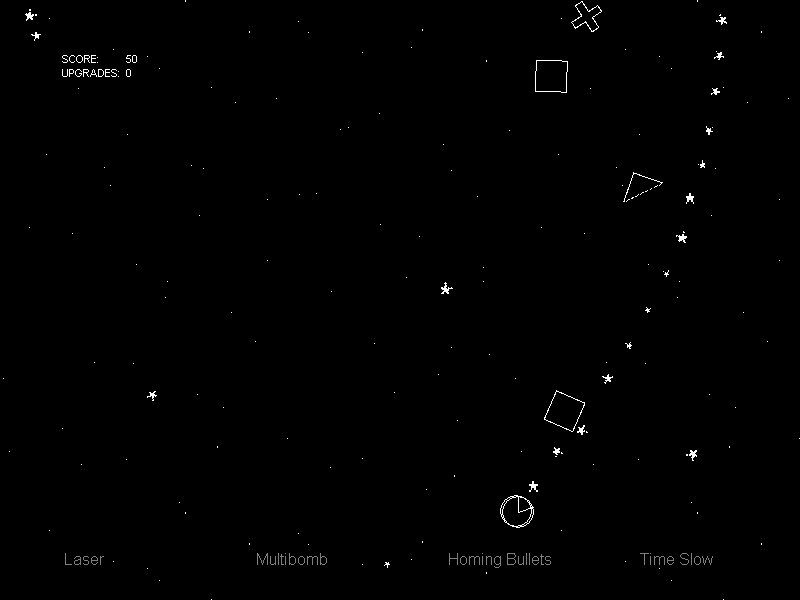
Retro II tells its story through pressure rather than plot. A screen becomes dangerous, your regular shots stop solving the problem, and a bomb-assisted escape becomes the next small victory.
That stripped-back approach fits the arcade-minded structure. The tension comes from the changing relationship between your energy reserve, your available bomb coverage, and the enemies closing in.
There is a satisfying little narrative in learning the cross-shaped foes are not targets to be handled by habit. They force a rethink, turning a familiar shooting rhythm into a problem of timing and placement.
Overall Experience
This is a focused scrolling shooter whose best ideas are easy to explain and worthwhile to master. The regenerating energy meter keeps combat active, while the orbiting bombs ensure that surviving is about more than pointing a weapon forward. When the flow clicks, you are constantly deciding whether to shoot, maneuver a bomb into contact, or wait a fraction longer for energy to return.
It will reward you most if you like games that ask for repeated, deliberate improvement rather than passive endurance. Instant deaths can be harsh, but they also make the game’s central lesson clear: learn which enemies require special tools, and do not drift carelessly into contact range.
Give Retro II a chance if you want a concise shooter with one genuinely memorable defensive-offensive trick. Its upgrades and temporary power-ups add variety, but the reason to stay is the bomb orbit: it turns each close call into a small geometry problem, and solving those problems is where the payoff lives.


Reviews
There are no reviews yet.